Showing posts with label James Joyce. Show all posts

Monday, November 19, 2012

NW by Zadie Smith

I have just read NW by Zadie Smith; in fact I have just read it for the second time. I watched the first in the series of FILM 2012 on the BBC and when they reviewed The Master the reviewer said I loved this film and when it had finished I wanted to watch it all over again; well with a book you can do that quite easily: you go back to page one – or back to 101 as they say in Los Angeles – and this is what I did.
I always knew Zadie Smith was a wonderful writer by reputation and I saw a dramatisation of her first novel, White Teeth, which I think was made by Channel 4 when I was in America.
I was attracted to it by the reviews; they mentioned that this novel could be put in to the same bag as Ulysses as it was written with the 'stream of consciousness' technique which James Joyce was famous for; he was also renowned for not using inverted commas to denote when someone is speaking; he used a dash; for example – Come in, he said.
Zadie uses them sometimes, uses the dash at others and sometimes doesn't use anything at all as in this passage:
The rain got heavy. They stopped in a pub's doorway, Jack Straw's Castle
  Them shoes are bait.
  They're not shoes, they're slippers.
  They're bait.
  What's wrong with them?
  Why they so red?
  I don't know. I think I like red.
  Yeah, but why they got to be so bright? Can't run can't hide.
  I'm not trying to hide. I don't think I'm hiding. Why are we hiding?
  Don't ask me.
  He sat down on the damp stone step. He rubbed at his eyes, sighed.
  Bet there's people that live in them woods, blud.
  On the Heath?
  Yeah. Deep in.
  Maybe. I really don't know.
See what I mean; it's quite easy to see who's doing the talking without the inverted commas or the dashes. I think James Joyce called them 'perverted commas' when the publishers of his first novel put them in. He ordered them to be removed by the 'sergeant at arms!!'
As well as Joyce calling them perverted commas they are also called quotation marks or speech marks
As I mentioned I was drawn to the novel by the reviews and I know that part of London a little bit, the part with the NW postal code: Willesdon, Kilburn, Notting Hill and the novel is about a few people who come from the Caldwell council estate and the lives they try to make for themselves in the nearby suburbs.
One of the leading characters, a black girl called Natalie who looks like Angela Basset, has become a barrister and in that passage above she is wandering, towards the end of the book, with Nathan who came from the same estate and is high on drugs and homeless.
He was a charmer when he was at school with a lot of girls fancying him.
Another character called Felix is a tragic character; we know what's going to happen to him before it happens but we have forgotten that we have been told so when it does happen it comes as a bit of a shock but . .. that's up to you to find out.
There is also the mystery of Chapter 37 – it comes between Chapter 11 & 12 and is on page 37. It starts off - Lying in bed next to a girl she loved, many years ago, discussing the number 37. Dylan is singing. The girl has a theory that 37 has a magic about it, we're compelled towards it.
It goes on to say that the number 37 is used in movies and poetry etc and that web sites discuss it (I don't know I haven't looked) and then, later in the book, she skips from Chapter 36 to 38 – the 37 bus also runs through NW by the way.
It isn't like Ulysses at all as it's not so dense or nearly as long; Ulysses is about 720 pages and NW about 295; but Zadie does write in a stream of consciousness as I think many writers do these days.
It's a kind of interior dialogue and the reader will know what the character is thinking all the time and once in a while the stream of consciousness will be interrupted by some external dialogue as someone might pass them in the street or they might order a pint in a bar.
You have to concentrate when reading it as you can miss bits – which I did about Felix the first time I read it – but if you are at one with the author it's a great experience in reading.
NW is set in the time leading up to the Notting Hill Carnival which is a Caribbean celebration that takes place once a year. There's Caribbean food, reggae and dancing but it also attracts trouble and the metropolitan police haven't quite learned how to handle it yet.
In the novel various people are getting ready for the big weekend, planning what they are going to wear and who they are going to dress up as and the mood of the novel reminded me of The Trouble With Harry by Jack Trevor Story.
It's a long time since I read it but that novel seemed to be set in the sun and NW seems to be too, even though it is set in London.
London gets very humid in the summer months and there is a pregnant woman on the tube who is sweating and in other scenes people are sitting out on their balconies playing music. A haziness and laziness is there all the time and now I'm going to put the book away and hoping to read it again one day.


Tuesday, November 16, 2010

audio Books, James Joyce and Mark Zuckerberg.


There they are above and left - James Joyce and Mark Zuckerberg - which one would you rather be?

I have always liked to write and this little outlet allows me to vent my avocation without getting into too much trouble; I am admonished now and again, mainly by my brother, for using Americanisms and American spellings but I plead not guilty; The Guitar Center is spelled like that because it is a company who spell it that way. I know he didn't pull me up on that one but he has on others in the past.

So what am I on about here? Well nothing to do with the above; I was thinking that apart from writing I like reading; my last novel is on all the various media available to it: audio book, electronic book and paperback. I suppose it could have been in hard back but I didn't get that kind of a deal.

My latest is up on Amazon's Kindle and this week I am starting to record the audio version and I hope that Audible take it.

The first one sold better as an electronic book than anything else with a few selling on Smashwords but the majority to Kindle. Personally I haven't tried any of the electronic books as a reader but I have tried audio books.

Audio books are an acquired taste; if you like the book at bedtime on Radio 4 in the UK the audio book is for you. Personally, when I read, I like to see the punctuation and it's hard to see that when someone is reading it to you. The great thing about reading James Joyce is that you can see where genius Jim puts his semi-colons, his full colons and when he uses commas for parenthesis. In Ulysses, for example, he doesn't use inverted commas for speech; he uses a dash and then a comma before 'he said' for example and it's interesting to see where he puts an exclamation mark.

So it's hard, sometimes, to know whether the book has been written well or not when you are listening to a reader. So I tend to listen to biographies and read the novels.

Sometimes you only want information from books and I have been reading the hard back version of The People's History of the United States by Howard Zinn and to be honest I don't care how well it was written. It was well written, by the way, but it is a heavy book and I don't mean the subject; it must weigh a good few pounds from its 800 pages so I am having a break from it and reading Dubliners again by James Joyce.

In Dubliners he used inverted commas for speech (quotation marks in American) and it's very hard to believe why it wasn't published in Ireland; it was turned down by George Roberts of the publishers Maunsel – Joyce certainly had a go at him in Gas From a Burner his famous poem. He wasn't a great poet, even though some of his poetry is beautiful, but he certainly gets to the point in the aforementioned poem.

George Roberts was a red headed Scot from Ulster; Joyce mentions a Belfast man in one of the stories in a derogatory manner so you never know; that might have been the reason.

Another line in the poem:

I printed the great John Milicent Synge
Who soars above on an angel's wing
In the playboy shift that he pinched as swag
From Maunsel's manager's travelling-bag.

Well I don't know what he knew about John Millington Synge but he is saying something about him there; suggesting he is effeminate?

Synge's most famous play was The Playboy of the Western World and when the word shift was used in it, there was a riot at the Abbey Theatre. Shift!!!! What would they say if they used the language they use these days?

Of course they would accept it - eventually.

But I didn't start to write this to write about Jimmy Joyce; I just kind of drifted into it; I wanted to say I like reading and writing and also talking to people and I like to talk as opposed to texting – there we are I knew it; no such word! The same as texted.

I suppose there will be one day but I should have said I like talking as opposed to sending texts!

Yesterday Facebook added something else. A way to keep the history of all your e-mails in the same place – at your facebook page, of course.

In ten years time all the history of every e-mail you have ever sent will be there with the guy who owns facebook; Mark Zuckerberg.

It will be the most comprehensive list of information ever and facebook, in competition with Google, are trying to get it all into another place - your mobile phone; and I am wondering . . . where is it going to end?

The more sophisticated it all gets the less exciting I am about it; I check my e-mails on my computer when I log on; I don't want Instant Messenger, I don't want a text to let me know when I get an e-mail and I don't really want my friends and relations to know when I'm on line – am I the only one?

Here's the poem from a literal time – it has a good rhythm and Billy Walsh, by the way, was the Lord Mayor of Dublin.

Gas From a Burner
by James Joyce (1912)
Ladies and gents, you are here assembled
To hear why earth and heaven trembled
Because of the black and sinister arts
Of an Irish writer in foreign parts.

He sent me a book ten years ago.
I read it a hundred times or so,
Backwards and forwards, down and up,
Through both the ends of a telescope.

I printed it all to the very last word
But by the mercy of the Lord
The darkness of my mind was rent
And I saw the writer's foul intent.

But I owe a duty to Ireland:
I held her honour in my hand,
This lovely land that always sent
Her writers and artists to banishment
And in a spirit of Irish fun
Betrayed her own leaders, one by one.

'Twas Irish humour, wet and dry,
Flung quicklime into Parnell's eye;
'Tis Irish brains that save from doom
The leaky barge of the Bishop of Rome
For everyone knows the Pope can't belch
Without the consent of Billy Walsh.

O Ireland my first and only love
Where Christ and Caesar are hand and glove!
O lovely land where the shamrock grows!
(Allow me, ladies, to blow my nose)
To show you for strictures I don't care a button
I printed the poems of Mountainy Mutton
And a play he wrote (you've read it I'm sure)
Where they talk of 'bastard', 'bugger' and 'whore'
And a play on the Word and Holy Paul
And some woman's legs that I can't recall
Written by Moore, a genuine gent
That lives on his property's ten per cent:
I printed mystical books in dozens:
I printed the table-book of Cousins
Though (asking your pardon) as for the verse
'Twould give you a heartburn on your arse:
I printed folklore from North and South
By Gregory of the Golden Mouth:
I printed poets, sad, silly and solemn:
I printed Patrick What-do-you-Colm:
I printed the great John Milicent Synge
Who soars above on an angel's wing
In the playboy shift that he pinched as swag
From Maunsel's manager's travelling-bag.

But I draw the line at that bloody fellow
That was over here dressed in Austrian yellow,
Spouting Italian by the hour
To O'Leary Curtis and John Wyse Power
And writing of Dublin, dirty and dear,
In a manner no blackamoor printer could bear.

Shite and onions! Do you think I'll print
The name of the Wellington Monument,
Sydney Parade and Sandymount tram,
Downes's cakeshop and Williams's jam?

I'm damned if I do-- I'm damned to blazes!
Talk about Irish Names of Places!
It's a wonder to me, upon my soul,
He forgot to mention Curly's Hole.

No, ladies, my press shall have no share in
So gross a libel on Stepmother Erin.
I pity the poor-- that's why I took
A red-headed Scotchman to keep my book.

Poor sister Scotland! Her doom is fell;
She cannot find any more Stuarts to sell.
My conscience is fine as Chinese silk:
My heart is as soft as buttermilk.
Colm can tell you I made a rebate
Of one hundred pounds on the estimate
I gave him for his Irish Review.
I love my country-- by herrings I do!

I wish you could see what tears I weep
When I think of the emigrant train and ship.
That's why I publish far and wide
My quite illegible railway guide,
In the porch of my printing institute
The poor and deserving prostitute
Plays every night at catch-as-catch-can
With her tight-breeched British artilleryman
And the foreigner learns the gift of the gab
From the drunken draggletail Dublin drab.

Who was it said: Resist not evil?
I'll burn that book, so help me devil.
I'll sing a psalm as I watch it burn
And the ashes I'll keep in a one-handled urn.

I'll penance do with farts and groans
Kneeling upon my marrowbones.
This very next lent I will unbare
My penitent buttocks to the air
And sobbing beside my printing press
My awful sin I will confess.
My Irish foreman from Bannockburn
Shall dip his right hand in the urn
And sign crisscross with reverent thumb
Memento homo upon my bum.

Sunday, June 13, 2010

James Joyce, Bloomsday and Shakespeare.


It's going to be Bloomsday this week – June 16th – and on Bloomsday I think I'll put up here on the blog the 'Bloomsday' episode from my novel Alfredo Hunter; the Man With the Pen.

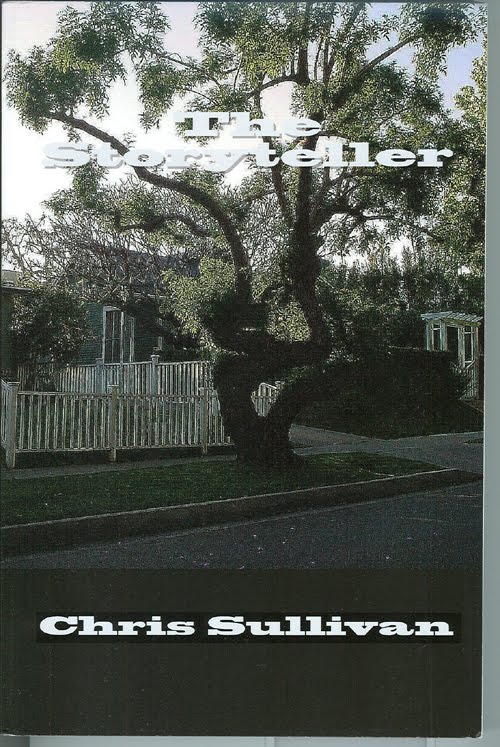
Of course I have changed the title of my novel from The Storyteller and on Amazon.com you can see excerpts from it under the former title. In fact on Google they have the whole novel somewhere in their library of all books ever written – or whatever it's called.

Bloomsday is taken from the novel Ulysses which takes part in the day of June 16th 1904 and the leading character therein Leopold Bloom – not Leo Bloom from The Producers by the way.

James Joyce set Ulysses on June 16th 1904 because that was the day he met the love of his life Nora Barnacle; well he did not actually meet her on that day but it was the day they first walked out; it was the day she did a small sexual favour for him which might have affected his mind; he thought if she can do that for me on the first day she would do it for anybody. It wasn't necessarily true, of course – what do I know? - but it led to bouts of jealousy and anxiety from the genius Jim which would upset Nora.

They left Dublin soon after and never returned to live there again – everything he wrote about Ireland he wrote from abroad. At one time they lived in London where they married – some time during the 1930s.

There is a lot of James Joyce in my novel; number one the leading character writes a play about him, there are various references to Ulysses and the prologue is actually a pastiche of his first novel A Portrait of the Artist as a Young Man. That novel starts off with 'Once upon a time and a very good time it was there was a moocaw coming down along the road and this moocow that was coming down along the road met a nicens little boy called baby tuckoo . . .' and my novel starts off with 'Once upon a time and a long time ago it was in the city of Dublin in the land of Ireland there was a man with a pen' – and then there are other phrases I use in the prologue; Joyce talks of the world being 'a great ball surrounded by clouds' and I use that phrase adding 'as the great man once said' and he also uses the phrase a 'greasy leather ball' which I also use to denote, as he did in the novel, the way some boys from the past were forced at school into sport and I remember at school trying to head that greasy leather ball they call a football.

But even though James Joyce is a subject of my novel I don't think I am influenced by him at all. I know every writer, especially the Irish ones, feels James Joyce looking over their shoulder as they write but I am more influenced by Charles Dickens, if anybody, or even William Shakespeare. Now that might sound as if I am comparing myself to Shakespeare and Dickens but nothing could be further from the truth.

I can't remember ever learning anything at school; I never did any work at school I didn't have to and the only subjects I liked had to have a story to it – like stories from the bible; the English Literature was non existent unless you want to count Seven Pillars of Wisdom by T.E. Lawrence (Lawrence of Arabia) being passed from pupil to pupil to read out loud in schoolboy monotones and turning into Seven Pillows of Sleep for me!

So I didn't do English Literature till years later after I'd read lots of books and even been to drama school – I was a mature student studying D.H. Lawrence (surprising what one letter makes), William Golding and First World War Poetry by a teacher who loved the subject.

At drama school I was reading and trying to perform Shakespeare when I hardly knew English!! Of course I was in a lot of trouble as I hadn't heard of any of the plays or even the characters and the only way I could even understand it was by sorting out his use of parenthesis and semi colons; without sorting those out I would have been up the creak without a paddle.

I eventually did Shakespeare professionally although not as much as I would have liked to; I earned a lot of money once doing a Shakespeare play for the BBC, even though it was a small part, and when I first came over here I 'workshopped' Richard III playing Richard which went very well – I guess some of the training must have gone in.

When I write I bear in mind Shakespeare's use of the English language – again I am not comparing myself to the greatest genius that has ever lived or the two greatest novelists in the English language but I would recommend anybody who wants to write to follow them as opposed to Dan Brown.

So remember on Wednesday that it is Bloomsday; there will, more than likely, be something on near you, if you look for it, and if you are in Dublin go on the walking tour if you can; go to Mulligan's Pub in Poolbeg Street and drink a pint of the best Guinness in the world and then come back and read my blog about my two leading characters celebrating Bloomsday in Los Angeles which was based on a true incident in 1995.