Saturday, July 31, 2010

The saga of the lost guitar by FedEx has come to a sad end.


Well here we are having arrived at Southampton and after a few days in London we are in Suffolk ready to be off for Edinburgh tomorrow morning; the guitar did arrive, by the way, a few days ago and when I opened the parcel upon our arrival yesterday I found it was broken at the neck; so isn't that a pisser? The guitar you see above is no more.

I went out this morning to Bury St Edmunds, had a cup of coffee and a scone at Harriets, and bought another guitar. It cost $186 and now I have to try and get some kind of compensation from FedEx. I know it will be difficult as they are already asking whether the claim goes to International FedEx or National FedEx so we shall see.

The crack is right at the neck and the action is a little higher because of this. When I took it out I played an open chord and my daughter said 'that doesn't sound too good' and it didn't.

I tried to re-tune it and that's when I saw the crack.

It's a shame because I've had that guitar for about fifteen years; it belonged to a country singer and I really liked the sound.

So have a last look at that guitar above.

Apart from the claims form I have to obtain a PPL licence for my show. A PPL licence is when you use recorded music during the show and I plan to recite a poem by WB Yeats called The Song of Wandering Aengus to some music by Áine Minogue; it's beautiful Celtic music and the poetry of Yeats is superb – which leaves me to do the rest; here's hoping.

We open on August 9th so keep watching this space!!

Thursday, July 22, 2010

Life on the Queen Mary 2 - and did Fed Ex lose my guitar?


I'm all at sea for this post; literally.. We are half way across the Atlantic on the Queen Mary 2 and it is truly the only way to fly.

It was a pain in the arse getting to Brooklyn to get the ship but since then all has been easy and slow cruising across on the same route the Titanic took only in reverse.

I would like to do this again as it's all so relaxing; maybe the next time I'll take the train across America to New York; we have excellent food, service and facilities and compared to a first class flight there is no comparison.

I saw the people getting on to the flight from Los Angeles on Sunday and, of course, the first class passengers got onto the plane first. One man stood at the front for a long time before the passengers were called; I presume he wanted to be on the plane first and we could all see him waiting there and we could see what kind of fella he was and we knew how lucky he was to be the first one on.

There was a piece of red carpet maybe about one yard by two yards which had a boundary rope across it and he and his fellow first class people duly stood behind it waiting for the magic word to go; as soon as it did the first class people showed their tickets to the United Airlines person and they were let passed the boundary rope and into the red carpet and they were away.
Then the United representative put the boundary rope back up so that the rest of us – the hoy-poloi – could get on the plane via the regular blue airport carpet.

But getting back to the Queen Mary 2: we have everything here from a casino to dog kennels from a theatre with a big show to a pianist/singer in a pub and in various places there are little bits of entertainment – there was a woman playing a harp in one place and a string quartet playing a classical version of the Billy Joel song Piano Man.

Of course we're off to Southampton as I am due to do my show at the Edinburgh Festival – A Bit of Irish – did I mention it before?

As we are sailing I have very little knowledge of what is going on in the world and what is going on with my guitar – didn't I tell you about that?

Well at the risk of boring my friends and relations, who have heard all about it, I will tell you:
I sing a song in my show about a building labourer with a sick note who tries to tell his boss why he can't come in to work; it seems he tried to move some bricks with a barrel from the 14th floor of a building and when he untied the rope the barrel fell like lead and he went up on the pulley rope and kept going up and down????

Well a similar tale may be in the offing; it just needs somebody to write the song.

United Airlines told me they wanted $200 just to ship my guitar to Brooklyn. So I went to Federal Express – FedEx - and asked them if I could send the guitar to one of their offices in Brooklyn and pick it up when they landed. Yes, they said, so I bought a big box and took it into their Los Angeles office for shipment.

They told me which address in Brooklyn to send it to and it cost me $51; I followed the progress of the guitar on the Internet and last Thursday it reached its Brooklyn destination. When I checked, the Internet told me that delivery had been refused and the box was being 'Returned to Sender.' The guitar had been sent to Maspeth in Queens - no I'd never heard of Maspeth either - so I called FedEx and they eventually put me through to that office where I spoke to a very nice woman who said that the particular FedEx office it had been sent to didn't accept things to be picked up; now they tell me, I thought. But she said all would be well if I picked it up from her office in Maspeth, Queens upon my arrival in New York.

I looked on the map and the journey from JFK Airport would mean taking two trains (the J train, the L train) and a number 59 bus; it would take an hour.

Would it be better to take a taxi to Maspeth, I thought, and back to the airport and then off to the Queen Mary, or would I take the one cab and be in it for maybe two hours and in any case should I leave my wife at JFK with the rest of the luggage; I slept on it. Next day I looked on the Internet and saw that the Guitar had been sent to New Jersey on its way back to Los Angeles.

I called the very nice woman at the Fed Ex Maspeth office, and she hadn't got a clue what happened. She said she had finished work the night before and when she came in to work again the next day the box had gone and was on its way to Phoenix Arizona but she said “we can stop it in Phoenix and get it back here to Maspeth by next week.”

“What day next week?” I asked and she said “Thursday.”

I'm supposed to be at sea on Thursday on the Queen Mary 2 so I asked them to send the guitar to my daughter's house in Suffolk as soon as it reaches Phoenix; they said they could do that but I seem to think I might be playing the air guitar in my show in Edinburgh!!

By the way Fed-Ex are charging me for the shipment to Suffolk; I had to agree to it but I will try and get a refund.

Whatever happens I won't know till the ship docks in Southampton on July 26th.

Friday, July 16, 2010

The First Day of Spring. Part 3

We are off on Monday to the UK where I do my show at the Edinburgh Festival and instead of flying we are going on the Queen Mary from New York to Southampton; it seems more civilised and we may arrive without any jet lag; the journey take seven days and I will try and post on this blog at least once.

I have sent my guitar, by the way, via fed-ex to New York as United Airlines, in their wisdom wanted to charge $200. So I sent it fed-ex to their Brooklyn office for me to pick up when I am there in Monday and I did everything they told me and when it got to Brooklyn the office there refused delivery and returned it.

So now it is on its way to Phoenix. I have put an order in for them to intercept it and send it to an address in the UK but watch this space – isn't it amazing how incompetent most things are these days?

Anyway part three of my novel; this is called Gertie:

Gertie
Eddie's mother didn’t like the fact that he lived in the flats; she told Eddie they were for the common people, and she never stopped telling him that even after he had taken up residence there with his bride. The phrase ‘the common people’ amused Eddie as he had always thought that they were all common people; they didn’t live too far from the centre of the city and their neighbours were working class so they were all common people.
They had very thick north Dublin working class accents and some of the so called common people, who lived in the flats, spoke a lot posher than his parents did; but to be fair to his parents at that time the prospect of living in a flat was new to the people of Dublin; it was new to the people of most places away from London and other world capitals.
Nuala’s mother left the west of Ireland and ended up in Dublin; the first person she met when she walked along the street, that day, was Eddie. He was standing outside Mulligan’s pub in Poolbeg Street having a cigarette. He took a huge pull of his Woodbine and sucked the smoke deep into his lungs and stared into space as he enjoyed the sensation. Then he leaned against the pub wall and blew smoke rings across the narrow street.
“Excuse me” she said.
He almost jumped to attention as she spoke: “What?”
“I need to get passed.”
“You need to get passed?”
“Yes.”
She looked at him.
He looked at her.
“It’s only a little pavement.” she continued.
Of course it was a narrow pavement, just there, but she could easily have stepped into the road to get passed but as she had approached she saw his lovely black wavy hair, his beautiful blue eyes and his long black eye lashes so she decided to speak.
“Do you mind?”
“And what’s the matter with walking around?” he said.
“I don’t want to get walk around; I want to walk on the pavement where it’s safer.”
“Oh!” he said and stood up from the wall “Don’t want you to be getting run over.”
“Thank you” she said as she started to walk.
“Don’t want you to getting run over by the streams of bleedin’ cars that are rushing passed here all hours of the day and night.”
He squinted at her for some kind of response as there hadn’t been a car in Poolbeg Street for as long as he’d been standing there.
“You never know” she said then she turned and looked at him “are you waiting for the holy hour?”
“It is the holy hour so why would I be waiting for it?”
“Funny wonder” she said and she walked off.
In those days the Dublin pubs would close at two thirty for an hour; that hour was called the holy hour; it was also the hour when everybody wanted a drink; even though the licensing hours in Dublin were very generous, and the pubs seemed to be open all day, the hour between two thirty and three thirty was so much more attractive and dangerous, somehow, if you were drinking a pint of porter in a pub.
Nuala’s mother, or to be more precise, the future mother of Nuala, walked away from Eddie and Eddie looked at her and the way she walked; he loved the way she had given him a smart answer and the way she nearly glanced back at him, almost looking over her shoulder, and he was interested; interested in knowing what was going on in that mind.
She was dressed very differently from the other young girls of the day; she was wearing buttoned up shoes and a three quarters coat over a frilly dress, which showed below the hem of the coat, as she walked. Her hair was also quite short and she reminded him of a pixie.
He followed her up Corn Exchange Place; she could see him peripherally now and again, so she knew he was there, and she led him into George's Quay; she didn’t lead him there on purpose, as she didn’t know Dublin at all, and when she could see the River Liffey she stopped by the wall and gazed across.
He stopped and looked at her; she seemed like something from another age; a beautiful creature that had dropped out of the sky like an angel.
“It’s called the Liffey” he said stopping beside her.
“Aren’t you the clever one?” she said.
It was a nice day for March and Eddie leaned against the wall.
“Smoke?”
“I don’t mind.”
He opened his packet of Craven-A and offered it to her; she found it difficult to take one as she was wearing white gloves.
“Take one out for me” she said.
He handed her a cigarette then put the packet back into his pocket and pulled out the packet of Woodbines for himself.
“Prefer these” he said lighting her smoke “Don’t like the cork tips.”
“You carry the Craven-A for the girls?”
He winked and she leaned forward and took the light then took a deep drag of the cork tipped Craven A and went into a fit of coughing: “First one?” he said.
She nodded and he patted her back lightly.
“You’ll get used to it” he said.
After a few minutes her eyes stopped watering and she managed to clear her throat.
“Thanks very much” she said.
He took a deep pull on the Woodbine and said “Are you going to try another pull?”
“I don't think so” she said and put her foot on it.
“Where did you get the Craven A?” she said.
“England.”
“You in the British Army?”
“Go way” he said.
They talked till the end of the holy hour then Eddie had to go; he had to go back to his job at Mulligan’s and he told her all about it and how he was an apprentice barman; it was a trade to be proud of in Dublin where the Irish barmen led the world; by the time he had finished his time as an apprentice he would know everything from a Black Velvet to a Pink Gin and she was impressed by that; not that she knew what a pink gin was but it sounded interesting.
*******************************
Eddie arranged to meet the new girl the following day; he was to meet her at Nelson’s Pillar at two thirty, the holy hour, and he spent the entire morning trying to remember her name.
Was it Kitty or Grace? Something beginning with a ‘G’ maybe or was it Betty? It wasn’t Grace, he came to accept, and got to thinking about other names; he didn’t think it was Mary as he would have remembered that one easily enough.
He stood at the Pillar feeling as smart as he’d ever felt when he saw her approaching along O’Connell Street; she looked as beautiful as she had the previous day; he hadn’t noticed how blue her eyes were or how the sun reflected off her soft chestnut coloured hair and as soon as she got there he remembered her name – Gertie.
“Why did your mother call you Gertie?” was the first thing he said to her.
“How do you know it was my mother?”
“Well who was it?”
“I don’t know” she said.
A moment of silence; he didn’t know what to say to that so took the cigarettes out and offered her one.
“No thanks” she said “I just passed a shop near Parnell Street where they sell those.”
“You did?”
“Yes” she said – “it is Parnell Street with the big statue at the end?”
“It is” said Eddie lighting his cigarette.
“England!” she said.
“What?”
“England my arse! Where you ever there?”
He skulked a bit and turned to look towards the GPO.
“Here” he said “I brought you something.”
He took a palm from his pocket and gave it to her.
“Thanks; were you at mass?”
“Yes” he said “were you?”
She shook her head and put the palm into her pocket.
“Don't you have a bag?”
“No” she said.
“Well I'll get you one.”
She smiled.
“I'd like to go to England.”
“I'd like to live there” she said.
“Oh I don't know about that; I'd like to visit. I was reading about the Olympic Games there; I'd like to see them.”
“I never heard of it” she said.
“You never heard of the Olympic Games?”
“No.”
“Where have you been hiding?”
“I just dropped out of the sky” she said “what are they – the Olympic Games?”
“In the summer in London – they sound great; would you like to come across with me and see them?”
She laughed.
“I meet you one day and then next you want me to run away with you?”
“We don't have to run away – we just get in that bus and we're at the airport in no time.”
He took a deep drag on his cigarette as the bus to the airport went passed; they both watched it disappear.
“Were you ever up in a plane?” he said.
“I wasn't even on a bus.”
They both laughed.
“You really did fall out of the sky - where do you want to go?”
“When?”
“Now.”
“Up the Pillar” she said “I used to have a post card of it.”
He looked up at the height of the pillar and back at her ‘Are you sure?’
“Sure I’m sure.” she said.
“All right.” he said “If it's open.”
He’d lived in Dublin all his life but had never been up the pillar.
He took a deep pull of his woodbine, scratched his chin and they walked over; it didn’t cost very much and he paid for both of them as they went inside the archway entrance; somebody had once told him that the place stunk but he didn’t smell anything.
As they walked through the arch they had to go down a few steps then they had to climb a stone spiral staircase.
He wasn’t sure whether he should walk in front or not; if she walked first he might be accused of looking up at her arse and if he went first he might lose her; so he walked beside her.
It was a steady climb but not very hard; another thing he had heard was that it was exhausting which was also untrue; then about half way up he saw a woman who was exhausted so he gave that another thought.
The woman was with three young children; she was totally out of breath and one of the children was frightened to go any further; “I’ve had it” she said “I’m not going any higher.”
Gertie and Eddie walked passed them on the narrow staircase.
When they got to the top they could both feel the coolness of the air as it hit them and he could see Gertie shiver slightly.
He had a yearning to put his arm around her but it was too early; he wasn’t sure how she would take it so he stood there and put his hands in his pockets.
Gertie went to the edge and looked over the side at Dublin: first of all she looked down to the street down below where she had been standing a few minutes earlier; she thought she could see the cigarette he had put out on the pavement but it was her imagination; at around one hundred and twenty feet it was the highest building in Ireland and the highest she would ever be.
She looked ahead of her and could see a few cars in O'Connell Street below, parked in the middle of the street, a bus was below too and various people crossing over.
“There he is” said Eddie, looking up at the statue of Nelson, “the old bastard.”
A pigeon shit on the head of Nelson and she laughed.
In the distance she could see a church “What church is that?”
“That one . . now . .” said Eddie “that will be . .er Christchurch – a bleedin' good walk.”
“One little step” she said “and all my problems would disappear.”
She turned to him and smiled but there was no smile in her eyes; then she softened, twinkled and held on to his arm.
******************************
Saturday, July 10, 2010

The First Day of Spring - next part.

I had a few requests from friends to read the rest of my novel and I sent it off to them; so bearing in mind that this is a first draft I am putting the next chapter here today.

If you would like to read it let me know and I'll send a PDF.

There are no chapter numbers; last week's chapter was called 'Eddie' and this week's is called 'Nuala.'

I will conclude next time with the next part called 'Gertie.'


THE FIRST DAY OF SPRING. FIRST DRAFT.
Nuala

Eddie's funeral took place at Fairview Church; the same place where he took his other sacraments: baptism, communion, confirmation and marriage.


“When Eddie was here just after Christmas attending his father's funeral he had no idea that his own demise would be so soon; he was here ten days ago and as usual, after mass, he lit a candle to his dearly beloved Gertie. After all these years he will be joining his beloved wife Gertie in the . . . . ”


As he spoke Nuala sat in the big church which was full as Eddie was very popular; she let her mind wander and thought about the mother she had never known, the father she had hardly known and her grandparents who had, more or less, brought her up.


She was sitting next to her grandmother, herself a new widow.


She followed the coffin, to Eddie's resting place in Glasnevin cemetery in the back of a hearse and she sat there as quiet as a mouse next to her grandmother, aunt and cousin; the only relatives, as far as she knew, that existed.

Nuala looked around her father's bedroom; his double bed was in the middle of the room underneath the window; it had been there for as long as she could remember. When she was little she would stand on the bed and see the River Tolka through the window.


On one side was a chest of drawers and on the other a small bedside table with a jewellery box on top; the jewellery box had been there forever but she had never opened it; it was time. In the tiny top drawer she found some brown necklaces and a turquoise bracelet; the second drawer had more necklaces and some rings and the bottom drawer had a small purse, a post card of Dublin and a soft brown feather.


The only thing in the purse was the stub for a ticket to a cinema in Sligo.


She turned the post card over and read it; it was signed by Gertie; her mother. Nuala had never met her mother and this was the first time she had seen her hand writing; she held the post card in her hand and stared at the words her mother had written; as she looked tears came into her eyes and one of them fell, just missing the card, as it dropped to hit her knee before splashing onto the floor.


The writing was fairly clear, although a little childish, and it was written in pencil. She put the card back into the drawer and looked out of the window at the Tolka; she must have stood there for at least half an hour staring at the river below; she didn't really see the river or the Fairview Strand as the thoughts were racing through her head.


She wasn't consciously collecting any of her thoughts, although some of them must have been going into her brain and being stored there as brains very cleverly do, as they were coming in and going out so fast she couldn't control them.


Her father had never told her anything about her mother and it was a shock to be so close to her; she had seen her mother's grave in Glasnevin Cemetery many times and was just there to bury her father; as the grave lay open awaiting her dad's body she felt a connection to what was under that ground; that was her mother down there; she couldn't see anything as she looked but she knew that if it were possible she would have opened the coffin and looked at her; nothing morbid but just to look at what clothes she was buried in. Her father said she had been buried in blue, as she was a child of Mary, and she often wondered how her father knew that as he had always said he didn't know anything about Gertie's family or her past and it seemed strange, to Nuala, that any of the conversation when they were courting would be about being a child of Mary.


Eventually she sat on the bed and closed the bottom drawer; then she opened the top one with the jewellery in it and ran her fingers through the necklaces; they felt smooth and clean and there was a very attractive smell from the drawer. She tried the turquoise bracelet on and it was a perfect fit. She knew she looked a lot like her mother, as she had seen the few photographs of her, but she hadn't known her size.


She put her fingers to the bottom of the small drawer and a pin pricked her finger; she took it out and fastened the clip at the back of the offending broach; it was about half an inch long and half of that wide and it was some kind of black stone surrounded by smaller stones; they might have been diamonds for all she knew. She put it back into the drawer and put the turquoise bracelet on top.


Nuala went out of the flat and into the Dublin air; as she walked towards the gates of the flats she could hear children playing and the sound of their play grew quieter as she walked up Poplar Row towards North Strand Road and into Fairview Park.


Being a Saturday there were plenty of people about; couples laying in the grass, some fella throwing a ball for his dog and the inevitable hurlers hitting their hurling ball a good hundred yards to each other; it's a wonder someone didn't end up with a cracked skull the way they hit it.
Something desperate was going on in Nuala's head as she walked. She was trying to plan what she would do with her life now that she was alone – totally alone in the world except for one cousin and an aunt in Finglas, who she had never felt close to for years, and her granny.


Her granny had been like a mother to her but, with her father's death, things were suddenly different. There were things she needed to know.


Was it time to go away and start a new life? She didn't know. What she did know was that somehow she needed to go west to where her mother came from; she wanted to find out who her mother was and more importantly who she, Nuala, was; where she came from.


Her grandmother lived a couple of miles away on Malahide Road and after wandering around Fairview Park, Nuala walked up to her flat; her granny knew that Nuala would be moving into Ballybough House and after a while Nuala left Malahide Road for her new home.


Nuala was still at school but she had a part time job visiting old people in their homes and helping them; she would sometimes cook a breakfast, cook some lunch – maybe do a bit of shopping for them and she would also help some of the really infirm people to get in and out of the bath tub or bed.


She had been doing this for a few years and had managed to put quite a bit of money away but now in the space of six months in her eighteenth year she lost both her father and grandfather; things were different.


In O'Connell Street there are lots of employment and temp agencies and Nuala had been in to every one; she was after a job in Sligo but the only jobs available were in Dublin.


She didn't tell anybody of her plans


Nuala was no stranger to her father's flat as she would see him there most days and many years earlier she had given up trying to shake him out of his mourning. She could see him serving customers at the pub with a smile on his face and a joke on his lips but as soon as he was alone with her he was miserable again; to her it was as if he blamed her for his misery.


Now that he was dead she decided to move into his bedroom and sleep in the bed he had shared with her mother; there was something spiritual about the experience and after the first night she couldn't wait to go to bed early.


The things she was learning about herself took her a few days to digest and she spent a lot of time alone in the flat thinking about them.


Her mother had mentioned someone called Sorcha as the post card read: 'Dear Sorcha; I fell in love in Dublin with the first man I bumped into; a beautiful blue eyed Dubliner. We went to the top of Nelson’s Pillar and he pointed out it was the first day of spring the twenty first of March; how romantic – I wish the circumstances were different and I wished I could give you my address but I can’t and I think you will know why. Lots of love; G.'


The post card didn't have a stamp and was addressed to Sorcha to an address in Sligo Town, Sligo. Who was Sorcha? She had never heard her father talk about her.

Saturday, July 3, 2010

Red Channels and Brain Washing.

Red Channels; now what does that mean to you? It didn't mean anything to me till the other day when I heard a piece on the radio about the subject.

Red Channels started sixty years ago in the television industry; it was a booklet delivered to the desks of media executives in 1950 exposing writers, actors, journalists and directors as being soft on communism; 151 individuals in total.

The introduction to Red Channels, running just over six pages, was written by Vincent Hartnett, an employee of the Phillip H Lord agency, an independent radio-program production house, or "packager." Hartnett later founded the anti-Communist organization AWARE, Inc.

On the list were people like Orson Welles, Leonard Bernstein, Artie Shaw, Lena Horne, Marsha Hunt and many others.

This was separate from the House Unamerican Activities Committee and McCarthyism of the time and the executives that received the Red Channels pamphlets very rarely admitted to receiving them or even saying that such a thing as the Red Channels pamphlet even existed.

In 1950 Marsha Hunt's career was in the ascendancy with the three big television networks competing for her services but after a few months of waiting she called her agent and was told the news that she was on the Red Channels list.

Eventually she found what she was being accused of and it was because she had signed certain petitions, had said certain things, had attended certain meetings and was considered a Communist sympathiser.

On her own volition she wrote to the networks and told them that she was a 'good' American and not planning to overthrow the country but to no success.

Jean Muir was cast in a series for NBC called the Aldridge Family even though she was on the Red Channels list and even went into rehearsals and recording but so many protest letters went to the sponsors about her that, even though it was embarrassing, she was dropped before the first programme was broadcast.

The Red Channels blacklist was eventually broken by a 1962 lawsuit.

Now what does this have to do with the price of toast I hear you asking?

Since being here in America I have found only one person who agreed with the McCarthy witch hunts of the late forties early fifties; I must admit I have only known a few right wingers but fifty or sixty years later you would think there would have been more survivors of those sympathies; I have heard nobody being interviewed who sympathised with McCarthy although I'm sure that many still exist.

At the time of the McCarthy witch hunts Hollywood produced movies with titles such as I Married a Communist and I Was a Communist for the FBI in fact between the years 1948 and 1954 more than forty anti-Communist films came out of Hollywood.

In the 1951 Mickey Spillane novel One Lonely Night the hero, Mike Hammer, says “I killed more people tonight than I have fingers on my hands. I shot them in cold blood and enjoyed every minute of it . . . The were Commies . . .red sons-of-bitches who should have died long ago”
Liberals often criticised the committee, but in Congress, Liberals and Conservatives alike voted to fund it every year. By 1958, only one member of Congress (James Roosevelt) voted against giving it money.

The above information about Hollywood, Mickey Spillane and Congress I got from Howard Zinn's powerful book A People's History of the United States.

A wonderful book and in it are also facts about the early visitors to the Americas and how Christopher Columbus and his men ill treated the Indians here and in the West Indies.

In the West Indies they encountered a friendly people and abused them; all they wanted was gold for their King; the invaders would sharpen their knives and try them out on the natives. There was one case of a couple of Columbus's men encountering a pair of twin youths with a parrot who beheaded the twins and stole their parrot.

The incidents in the book are well researched and documented and I have to ask why men would do such things. Why would the whole nation believe McCarthy when he was obviously so evil?

Why would so many people follow Adolph Hitler? An unattractive monster who told the stock market and the ruling classes what they wanted to hear.

Isn't it very easy for me to look back with 20/20 hindsight and be so cute?

The people who came with Columbus knew no better but wouldn't you think they could have a modicum of empathy, sympathy or just a slight regard for their fellow man? Maybe they didn't think they were fellow men but a decent person wouldn't even do that to an animal.

And aren't we so clever looking back at the Communist witch hunts and saying that we wouldn't have had anything to do with it.

The people of the time were brainwashed with the continuous articles about Communism – I mean even Captain America was hunting Commies.

So what are we being brainwashed with these days?

Sunday, June 27, 2010

The First Day of Spring; chapter one.


Yesterday I finished my novel and pretty soon I'm going to read another; I jest, of course but I have finished the first draft. Now I'll give it a few days and start all over again.

At the moment I have written 73,116 words and I suppose when I do the next draft it will be more.

It's called The First Day of Spring; my last novel had three or four changes of title but I think I like The First Day of Spring already.
The story is about two Irish women - mother and daughter – and is set in Ireland. The daughter, Nuala, never knew her mother, Gertie, and knows very little about her and when her father, Eddie, dies she sets out to find out about her.

It's set in the 1940s and 1966; the year England won the world cup and there is not mention of it in the novel.

Anyway, here is the first chapter and I hope you like it.


On March 8th 1966 Nelson's Pillar, in O'Connell Street, Dublin was bombed. The statue, itself, came falling down together with Nelson's head which, for one hundred and forty eight years, had nestled on top of the pillar one hundred and thirty four feet from the ground.
The explosion, which was carried out by a rogue element of the Irish Republican Army, the IRA, led by Joe Christle, a qualified barrister and socialist revolutionary, didn't cause any damage to O'Connell Street and there was nobody injured but a taxi, parked nearby, was destroyed. Two days after the timed explosion the Irish Army Engineers blew up the plinth and broke many of the windows in O'Connell Street and the rubble from the monument, including the head of Horatio Nelson himself, was taken to a dump near the North Wall.
For a student prank, Frank Dolan and six other students stole the head and leased it to an antique dealer in London to grace his shop window; it was also used in a television commercial shot at Kilkenny Beach and made its stage début with the Irish traditional music band The Dubliners at the Olympia Theatre, Dublin.
The students eventually gave it to the Lady Nelson of the day and it is now in the Gilbert Library in Pearse Street Dublin.
Thirteen days after the explosion, on March 21st, the first day of spring, Eddie went for his annual visit to the pillar.
Eddie was the widower of Gertie and the father of the seventeen year old Nuala and he would visit the pillar every year to commemorate the day he first walked out with his late wife.
Nuala was born and lived in Ballybough Dublin in a little street called Poplar Row. Some people might say that poplar Row was actually in North Strand or even Fairview, but the people that lived there called it Ballybough. At one end of the street there was a block of flats called Ballybough House; now why would they call it Ballybough House if it was anywhere else apart from Ballybough?
Ballybough has a history of being a place where prostitutes hung out and had the nick name of Mud Island at one time; when Sean O'Casey's play 'The Plough and the Stars' was presented at the Abbey theatre the audience booed and rioted when he introduced an Irish Catholic prostitute to the proceedings; the audience, who said there was no such thing as a Roman Catholic prostitute, had obviously never been to Ballybough!
For most of her life Nuala lived with her granny and granda in a house in Poplar Row only visiting her father who lived in Ballybough House.
All of his working life Eddie had worked as a barman; once upon a time he had aspirations about owning his own bar but when Gertie died he just carried on working to put food on the table and pay the rent.
His work mates said the life went out of him as soon as he lost Gertie and he lived a solitary life in his flat just going through the motions of life.
He would sit in his chair and think of the days he had spent with his blue-eyed beauty walking through Fairview Park, going out to Dollymount or once in a while taking the bus to Portmarnock.
He worshipped Nuala but didn't like to have her near him as she reminded him so much of Gertie.
He was a good barman, having served his time, and he could mix any kind of drink from any part of the world you would wish to name.
If you want a Guinness in Dublin you ask for one and you will be given a pint; the barman will put about one third into a pint glass and let it 'settle' for a few minutes; for a good pint of Guinness needs to settle and Eddie could pour a really good pint; however, he hadn't taken an alcoholic drink of any kind since losing Gertie.
Dubliners have travelled to other countries and seen how they treat Guinness and sometimes have drunk something else rather than see their beloved black stuff being treated like any other beer.
An Irishman walked into a pub in Birmingham, England, and asked for a pint of Guinness, one day, only to see the excuse for a barman put a pint glass under the 'Guinness' tap and press a button; this opened the pipe and dropped a pint of Guinness into a glass; dropped being the operative word as this had as much to do with pouring and caring for a pint of Guinness as throwing a pint of paint at a canvas and calling it art; people have called this art, of course, just as the people from Birmingham used to call that drink a pint of Guinness; they were both wrong.
Of course if you only wanted a half of Guinness in a half pint glass you would ask for a glass but if tourists would ask for a half pint he would know what they meant and give them a glass with as much care as he would give to a full pint; a half in Dublin usually meant whiskey.
After Gertie died he changed jobs – or changed bars more like – and took a job in a bar closer to home where as well as going to work he could go to mass most days.
He was thirty seven years of age when he went on his annual pilgrimage to the pillar and on that day he died; people thought he was drunk but you will know from reading the above that he wasn't. He was standing near where Nelson's Pillar used to be and looking up to where he figured Nelson used to stand.
As he looked he thought he could figure out the exact spot where they stood on their first date and he was sure, as he looked, that he could see a bird hovering at the spot in the sky where he had stood with Gertie, and as he tried to follow the flight of what he thought was the bird he wandered out backwards still looking up and thinking of Gertie, as the bus travelling to the airport went over him on that first day of spring.

Wednesday, June 23, 2010

The World Cup.


Well there we are; England move slovenly into the last 16 of the World Cup (pun intended) and the USA streak to it and should be proud. I didn't watch the England match but watched USA v Algeria and it was very exciting; lots of goalmouth incidents all end to end stuff and after watching England's two boring games can you blame me?

The big problem with the football generally is the standard of play all around; where are players like Pele, Maradona even Nobby Styles you may ask – well they are all there. There are loads of players with the skills of the past greats – not Georgie Best, I'm afraid – but they have developed further skills; acting skills, diving skills, shirt pulling skills all the skills that the game of Association Football, soccer for short and known to the world as just plain football, just doesn't need.

It's almost impossible for a player to dribble the ball for any length of time without either getting tripped up or making a dive when a defender comes close; there they are rolling on the grass with agony and pain on their faces only to jump up two minutes later as soon as the free kick has been awarded or the defender has been given a yellow or even a red card.
And where do they get the referees from?

Every world cup as long as I can remember have used piss poor referees; we can see it as soon as the first game starts with bad off-side decisions, goals being disallowed, fouls being called that are not fouls and the general momentum and flow of the game being interrupted by referees and linesmen with no nous or experience.

The referees in the English football league are excellent with good reputations and in depth training. I know a lot of fans of the Premier League there might not agree with me but even they would have to agree that the difference between the refs in England and at the World Cup is vast.

I don't advocate bringing in replays on television cameras for disputed fouls and you can never reverse decisions after the game is over but something has to be done about it.

My opinion is not worth a plum nickel, I know, and most of the time I am like everybody else who has an opinion about football – I don't what I'm talking about. I accept this just as I accept that everybody from a child in the street to the drama critic of The Guardian is free to criticise me and my profession as an actor so let's have some free flowing football shall we.

Another thing I don't like about the TV coverage – and this seems to be general these days – is that I have a regular sized TV; I somehow don't want a wide screen TV dominating my life and I am satisfied with what I have so when it comes to watching football on TV I like to see close ups of the play. Not close ups of the players faces or even faces in the crowd, which they are also overdoing, but close ups of the players skills.

I know they have to take the wide shot so we can see the moves, and players running off the ball, but it seems they spend too much time on the wide shots so we can see the banner advertising surrounding the field of play. They are not seen at the ground, like they are seen on TV, as they are computer generated into different languages, but how can you see the intricate skills when the camera is so far away?

Have a look next time you watch a match and see the steadicam operators running up and down the touch lines – why doesn't the director use their shots more?
And who's going to win the World Cup? Who knows - and he's on first base!!


Tuesday, June 15, 2010

Happy Bloomsday


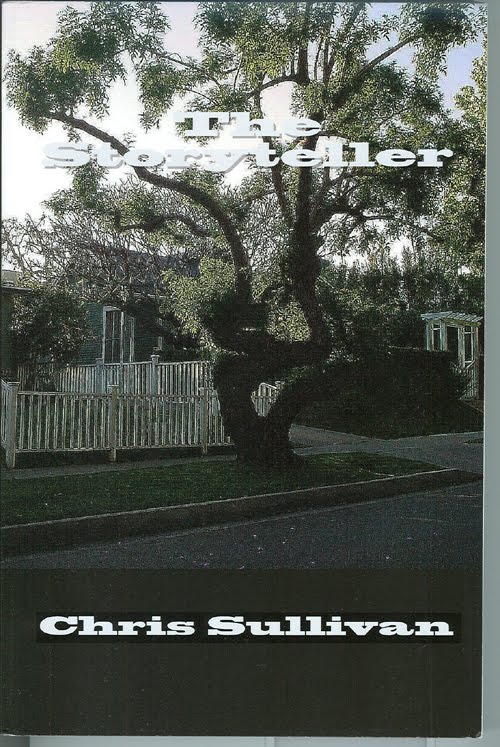
As I mentioned the other day here is the Bloomsday episode from my novel; the novel has a new title and cover as above; yes I am the model for the picture which is a self portrait.


Alfredo has been on a sun deck at night looking at the stars; as he is searching for inspiration he hears six gun shots in the distance and tells his friend when he arrives; they chat:

Excerpt from Alfredo Hunter; the Man with the Pen. By Chris Sullivan.


. . .. . . . . . . he said: “Bloomsday is next week. You got anything planned for next Friday?”
“No.”
“I want to go to an Irish theatre group at Fountain and Fairfax. They’re doing some of Ulysses. Do you want to come?”
“Yes” I said.
I knew that people walked around Dublin on each June sixteenth to celebrate Bloomsday and visit all the bars that were mentioned in Ulysses, which took part on that famous day but as with Saint Patrick, it didn’t seem important to me when I lived there but in Los Angeles it was different.
“There’ll be helicopters here soon” but he was wrong.

Chapter 5

Alfredo didn’t like the production at the Bloomsday celebration: I could see that. I liked it as they performed pieces of Ulysses that I knew: one was an excerpt from the Nighttown episode, which made me laugh. I looked towards Alfredo, as I laughed, and his face seemed to be in pain. When one of the girls was doing a monologue a newspaper critic shouted out:
“Speak up Gertie, I can’t hear you!”
I could tell he was a critic as he was sitting with a clipboard on his lap and when he spoke Alfredo gave me strange look. He thought it interesting that we could see up the girl’s frock as she sat doing her monologue and he whispered to me:
“Are we supposed to be seeing next week’s laundry?”
I laughed!
The street lights were out when we left the theatre. Some kind of major electrical outage as it also affected the traffic lights at the junction of Fairfax and Fountain Avenues so we couldn’t even see the hands in front of our faces. Not that we had our hands in front of our faces but if we did we wouldn’t be able to see them. We had to risk life and limb to cross the street.
Alfredo took it as a kind of omen.
“What do you see?”
“What?” I replied.
“The stars! Look up.”
We both looked up and it was a clear night. There were a few cars around and they were too busy trying to cross the Fairfax-Fountain junction to worry about two pedestrians, but Alfredo didn’t take his eyes away from the stars as he crossed Fountain to the north side.
“Look, at that” he said, and he stopped walking. He had spotted something in the sky. Something that affected him emotionally which was in his voice as he almost recited:
“The lights in Los Angeles went out on Bloomsday!”
We looked up the hill towards Sunset and everything was black. Usually, when traffic lights fail in Los Angeles, the red light flashes and the rules of the road change to that of a four-way-stop. I mentioned this to Alfredo:
“That is one of the most telling things about the Americans” he said “or maybe just the Angelinos. In an emergency they click into ‘emergency mode’ – plan ‘B’ - but then, on the other hand, it shows me that they are fucking brainwashed.”
They didn’t do that this night though. Everything was in darkness. I couldn’t really see him, as we walked, so his deep Dublin accented voice seemed to come to me through the darkness.
I had only been in Los Angeles, indeed America, for six months so everything was still new to me but with the eyes of a novice I could see things that the natives probably didn’t see and which I would cease to notice eventually.
“They only use one word for everything “he said. “Did you not notice that gobshite on the door at the theatre?”
I had asked the fella on the door, at the theatre, if there was an interval and the fella didn’t understand me. He was supposed to be an Irish-American but was probably standing as close to Ireland as he had ever been so his word for interval was intermission.
“Oh! Do you mean intermission?” he had said.
This would happen on many occasions as I got to know the language of America realising, eventually, that it was a language made up of words and phrases from the rest of the world and the American Indian languages. Because the majority of the people who used English were American their use of it would influence the rest of the English speaking world and in time would wipe out many languages leaving just one. The one left will be the American English Language with its one word for everything lowest common denominator limited vocabulary language. These thoughts went through my head more often than I wanted them to after Alfredo had pointed them out to me but not on this night; the night of the Bloomsday blackout. My vocabulary was limited enough without having it limited even more.
Alfredo mentioned the Indians as we traced our way along Fountain Avenue in search for his old car.
“This is what it was like for the Indians,” he said “This is how dark it was for them. You never see an Indian here and this is their country. The white man came along and fucked them off to oblivion but you know” and he stopped walking again, “can you blame them for not wanting to fight at night? The poor bastards! The poor fuckers kicked out of their land to make way for the settlers. You should read about the trail of tears or, to translate it from the Cherokee, ‘the trail where they cried.”
“Do you speak Cherokee?”
“Don’t be a gobshite.”
“I’ll try and read something about it” I said.
He laughed at this: “You’ll need to read a lot of books by the time I’m finished with you.”
There seemed to be a complete lack of traffic along Fountain Avenue, so our way wasn’t even lit by the headlights of cars. The neighbourhood was not the safest of places to be at that time of night and the thought of being stuck up by somebody with a gun crossed my mind a few times. The lack of cars also made it very quiet, which wasn’t natural for that part of town.
Alfredo’s car seemed to be parked further away than I had imagined and I didn’t know where we were.
“Do you know where we are?” I asked “Do you know where we’re going?”
“Follow me” he said striding forward like the wagon train scout he thought he was.
As he walked ahead we could see in the near distance the glow of a cigarette butt. He started to walk real fast when he saw it, leaving me behind, and when he got closer we could see it was a girl. He slowed down and waited for me and she said “Good night for a party, boys?”
Alfredo gave her a strange look then turned to me and said “Nighttown!”
He giggled as we walked on and said “Did you see the instinct of the survivor? I put space between us. I surrounded the enemy.”
Him and his imagination!
I couldn’t understand why there was so little traffic and when we turned into Ogden Avenue it got even creepier; all the houses with their lights out and a few people standing in the front gardens. There were more trees in Ogden, which made it a lot darker, and some of the people were leaning on the trees or sitting on the tree stumps. They were mumbling to each other, which was strange: normally when Angelinos want to talk they talk out loud and don’t care what time of day or night it is. They laugh out loud, shout and scream, if they feel like it, no matter who is trying to sleep or get some peace. This time it was weird. It was as if some bomb had exploded and we were walking through the aftermath of a holocaust. We walked passed people smoking dope, we could smell it, looking at us as if they were in a dream and we were reality stopping by. But we didn’t stop by we looked and made our way to the car which Alfredo seemed to know the whereabouts of all the time. When we had almost reached Sunset Boulevard we got to the car; clipped to the screen was a parking ticket.
“Fucking place,” Alfredo said as he ripped it from under the wiper, “getting a parking ticket at ten-o-clock at night!”
I looked around at the darkened street “Look over there” he said.
“What?”
“Over there – look at that tree.”
There was a very strange shaped tree on the other side of the street.
“I think it’s a jacaranda tree” he said “but look at the shape. It’s two jays; James Joyce!”
I thought it looked like two esses but he saw two jays.
Three people from the street were standing around it. They had put a couple of candles on the horizontal bits which they frequently used to light whatever it was they were smoking. It seemed to light the tree up.
“If that’s not an omen I don’t know what is. We are in a street named after a poet . . ”
“Who?” I said.
“Ogden Nash.”
“How do you know this wasn’t here before Ogden Nash?” I said.
“I don’t!” he said “but what you don’t know doesn’t mean shite. We are in a street named after a poet, on the night of the Bloomsday blackout and the tree we are looking at is shaped like James Joyce’s initials.”
“Or Sarah Siddons” I said.
“Who?”
“Sarah Siddons: the English actress.”
“What a load of shite – I’m inspired and you talk of an English actress.”
He didn’t say anything he just looked at the tree as if it was the second coming; the people around it looked over at us. One was a woman of around fifty five who was sitting on the kerb; she had black heavily made up eyes, with the mascara running down her face and long black hair and when Alfredo opened his window she looked over at him and said “Farinelli!” When she said this she clenched her open fist as if she was castrating Alfredo.
He laughed as he started the motor.
“What was that about?”
“There’s a movie playing in West LA called Farinelli about a castrato.”
“The trail of tears?”
“Yes” he laughed “it would certainly make your eyes water.”
He got the parking ticket and kissed it then he flung it into the back of the car.
“But I’m inspired” he said “I’m inspired.”
“How come you know so much about Indians?” I asked.
‘You should know. The Indians are like the Irish. Like the Irish before Christianity hit Ireland; in any case I’m a John Ford fan.”

Sunday, June 13, 2010

James Joyce, Bloomsday and Shakespeare.


It's going to be Bloomsday this week – June 16th – and on Bloomsday I think I'll put up here on the blog the 'Bloomsday' episode from my novel Alfredo Hunter; the Man With the Pen.

Of course I have changed the title of my novel from The Storyteller and on Amazon.com you can see excerpts from it under the former title. In fact on Google they have the whole novel somewhere in their library of all books ever written – or whatever it's called.

Bloomsday is taken from the novel Ulysses which takes part in the day of June 16th 1904 and the leading character therein Leopold Bloom – not Leo Bloom from The Producers by the way.

James Joyce set Ulysses on June 16th 1904 because that was the day he met the love of his life Nora Barnacle; well he did not actually meet her on that day but it was the day they first walked out; it was the day she did a small sexual favour for him which might have affected his mind; he thought if she can do that for me on the first day she would do it for anybody. It wasn't necessarily true, of course – what do I know? - but it led to bouts of jealousy and anxiety from the genius Jim which would upset Nora.

They left Dublin soon after and never returned to live there again – everything he wrote about Ireland he wrote from abroad. At one time they lived in London where they married – some time during the 1930s.

There is a lot of James Joyce in my novel; number one the leading character writes a play about him, there are various references to Ulysses and the prologue is actually a pastiche of his first novel A Portrait of the Artist as a Young Man. That novel starts off with 'Once upon a time and a very good time it was there was a moocaw coming down along the road and this moocow that was coming down along the road met a nicens little boy called baby tuckoo . . .' and my novel starts off with 'Once upon a time and a long time ago it was in the city of Dublin in the land of Ireland there was a man with a pen' – and then there are other phrases I use in the prologue; Joyce talks of the world being 'a great ball surrounded by clouds' and I use that phrase adding 'as the great man once said' and he also uses the phrase a 'greasy leather ball' which I also use to denote, as he did in the novel, the way some boys from the past were forced at school into sport and I remember at school trying to head that greasy leather ball they call a football.

But even though James Joyce is a subject of my novel I don't think I am influenced by him at all. I know every writer, especially the Irish ones, feels James Joyce looking over their shoulder as they write but I am more influenced by Charles Dickens, if anybody, or even William Shakespeare. Now that might sound as if I am comparing myself to Shakespeare and Dickens but nothing could be further from the truth.

I can't remember ever learning anything at school; I never did any work at school I didn't have to and the only subjects I liked had to have a story to it – like stories from the bible; the English Literature was non existent unless you want to count Seven Pillars of Wisdom by T.E. Lawrence (Lawrence of Arabia) being passed from pupil to pupil to read out loud in schoolboy monotones and turning into Seven Pillows of Sleep for me!

So I didn't do English Literature till years later after I'd read lots of books and even been to drama school – I was a mature student studying D.H. Lawrence (surprising what one letter makes), William Golding and First World War Poetry by a teacher who loved the subject.

At drama school I was reading and trying to perform Shakespeare when I hardly knew English!! Of course I was in a lot of trouble as I hadn't heard of any of the plays or even the characters and the only way I could even understand it was by sorting out his use of parenthesis and semi colons; without sorting those out I would have been up the creak without a paddle.

I eventually did Shakespeare professionally although not as much as I would have liked to; I earned a lot of money once doing a Shakespeare play for the BBC, even though it was a small part, and when I first came over here I 'workshopped' Richard III playing Richard which went very well – I guess some of the training must have gone in.

When I write I bear in mind Shakespeare's use of the English language – again I am not comparing myself to the greatest genius that has ever lived or the two greatest novelists in the English language but I would recommend anybody who wants to write to follow them as opposed to Dan Brown.

So remember on Wednesday that it is Bloomsday; there will, more than likely, be something on near you, if you look for it, and if you are in Dublin go on the walking tour if you can; go to Mulligan's Pub in Poolbeg Street and drink a pint of the best Guinness in the world and then come back and read my blog about my two leading characters celebrating Bloomsday in Los Angeles which was based on a true incident in 1995.

Thursday, June 10, 2010

you say tomato and I'll say . . .


This is for all the people in the USA and the UK who have never been to the 'other' place – you know if you've never crossed the Atlantic.

I wrote the other day about working in 'rep' in the theatre and somebody pointed out to me something that was pointed out to me years ago. In the UK when you do one play after another in the theatre it is called in repertory. If you do one play a week, a fortnight or a month it's still the same in repertory.

If you do – shall we say – three plays in the one week every week those are said to be in repertoire; just like a musician or a singer has so many songs or pieces of music in repertoire.

In the USA that is not so; they call doing plays consecutively, one after the other, in repertoire and the three plays that gets done each week all the way through the season in repertory. Now I don't argue with the other things they say and their phrases but this time they have got it wrong.

There are lots of other things you will notice – well you might not – and the first thing I noticed was the traffic lights; they're great. When you come to the traffic lights and the lights are on red and there's no other traffic there you are allowed to nip around the corner; you can't go straight ahead or turn across the road but you can nip around the corner. Now don't you think that is absolutely fantastic? You have to stop first or you'll get a ticket but it's saves fuel and time.

I find it amazing that nobody has been over here from Europe and taken that idea back as it seems the most sensible of things.

The other thing that has always fascinated me is why things here are opposite from the things over there.

I have always known, from the movies, that when the Americans put the light on they click the switch up; in Britain to turn on the light you click the switch down. It doesn't matter does it really so why do they do it? Or we do it? Why do the two things have to be opposite?

You will know about the driving on a different side of the road and the driving position in the car being opposite but did you know that in America the back brake on a bicycle is on the right handlebar. That's something I didn't know till relatively recently.

I did worry that the controls inside a car might have been the other way around but I needn't have worried – they're the same although most of the cars are automatic.

When I first came here fifteen years ago they didn't use or even know what the word queue meant; they would use line. Not may people knew or even know now what a fortnight is.

My pal bet me that nobody in a crowded bar would even know what a spanner is – I took the bet and went around the bar asking – and lost.

So maybe George Bernard Shaw was right when he said Britain and America were two countries separated by a common language.

Monday, June 7, 2010

my blog and the theatre.


I looked back at how many words I had written for my novel last week and came to about 5,200; so that, to me, is great; I put the increase of output down to this blog.

When you do things on a regular basis you get better at it; even though I might be writing a load of shit in both places – the blog and the novel – I am getting better at it.

It was the same starting a season in the theatre; the more you worked the easier it became to learn the lines.

As you will probably know when working in the repertory system in the UK you do a new play every two weeks, or every three weeks or however amount of weeks the particular theatre advocates.

One of the theatres I worked at, in rep, was the Royal Theatre in Northampton and that theatre would put a new play on every two weeks.

What would happen is you would start the job on Monday morning and rehearse for the two weeks before putting the first play on; in the evenings we learned our lines and by the end of the second week of rehearsals we would, more or less, know the them and then after a technical rehearsal and a dress rehearsal we would perform the play to the press and public on the Tuesday evening.

Then the next morning we would start the next play.

We would rehearse during the day and do the other play at night; so when did we learn our lines?

The rehearsal day would start at around 10.00 am or at least 12 hours after the previous night's performance closed; so if the play came down at 10:30 the night before we were not allowed to start the following day till 10:30 am.

We would break for lunch at around 1:00, finish rehearsals at around 4:30 – 5:00 then have to be back at the theatre at 6:55 for the 7:30 show – we learned our lines during the tea breaks, lunch time, the time between the end of rehearsals and the evening show and maybe after the evening show and my point is he more we had to learn the easier it became. That job lasted for eleven months – I had a month off to do 5 episodes of the British TV soap 'General Hospital' – and by the end of it you felt you'd been through something.

I did that to a lesser extent at other theatres and, even though we were adequately paid, it was good training; and it's the same with writing: the more you do it the better you become.

With regards to the blog people read it all over the world and I get the benefit and the pleasure of writing it; I don't have many followers and only a few comments but I can see by the stat counter where the readers live. Some of the hits come from posts I have written months ago and many hundreds of people have read the post about Bill Sparkman who killed himself some time ago in Kentucky and a few weeks ago I had many many hits when I wrote about proportional representation and the British General Election.

Someone asked me if I know what I'm going to write about beforehand and the answer is no; I sit down to write and it kind of comes to me once I start.

So thank you everybody out there in the world – people are reading from Russia to the USA – I tried to copy the map of visitors but it won't copy properly so I leave you with a picture up there of John Wooden who was a very famous basketball coach who died over the weekend aged 99; he had a great saying 'if you fail to prepare you are preparing to fail' - or words to that effect.

Sunday, May 30, 2010

Memorial Day and my hero.

Burcot Grange (above) built in 1890 and my home for a while as a young child.

It's Memorial Day here; Memorial Day Weekend with the actual 'day' being on Monday and who do I remember? I remember lots of people as I am fortunate to have a good memory. On a site in the UK called Friends Reunited I looked at the people in my class at school and there were just a few; one or two of them got in touch with me, the memory man, and one or two wrote to me that I had forgotten; so not too much of memory man after all. All the things I write on here are from memory and sometimes I look on the Internet for some details like the road where such and such happened; one guy I wrote to, wrote back and said he couldn't remember anything about school at all. If you mention his name to anyone from my class they certainly would remember him as he would sit back on his chair in full view of the rest of the class and . . . well maybe if I put that in it will be picked up as a metatag and draw porn readers to the site – so he forgot all about school did he? The teacher (male) of the class must have seen him but what could he do? What could he say? **** put that thing away? That boy is probably a grandad now and what would his grandchildren think? A year or two before that, a boy at school suddenly stopped coming to school; nobody said anything and we didn't notice that his name had been taken off the register; his name was Michael Holmes. He came to our house to play a couple of times and I got to know his sisters later on; after a few weeks we found out that he had fallen into the canal and drowned. It was a shock but the school didn't let us know; I don't know what age we were but I would guess around eight or nine; I was in the Junior School in any case – Clifton Road Junior School. Now I don't need memorial day to remember Michael as he springs into my mind quite often. What happens here this weekend is the same in Britain only in Britain this weekend it will bank holiday weekend – I think it was called Whitsun at one time and on this American Heathen word processor on this computer it comes out as a spelling mistake – there now I've added the word to the dictionary so it's officially in. In Britain remembrance day is in November and people wear poppies to signify the ending of the first world war at 11/11. That's when Britain remember their heroes. The heroes they remember, of course, are the dead from wars. I think they go back to World War One which started in 1914 and ended in 1918 and there is hardly anybody left who actually fought in that war – the great war the war to end wars. I heard recently that the last one died either here or in the UK. The other world war started in 1939 and ended in 1945; I have to put those dates as some people here have different dates when the Americans joined in; here they might say 1941-1945 and 1917-1918 – I have heard both and, indeed, people just might not know. I hate the idea of war as it has always been young men fighting old men's battles and even though I had a small amount of military service war heroes have never been my heroes; they are everybody's heroes and should be; they paid the ultimate sacrifice and they should never ever be forgotten - but my heroes have always been pioneers and not necessarily people who fight. I am more impressed by ideas and most of the long conversations I have are about ideas; once a week I meet a pal for breakfast who majored in philosophy and we have many an interesting tête-à-tête and I have read books by Nietzsche for example as a result of our meetings; I have another friend I meet once a week for lunch to talk about politics; I talk British politics and he responds with the American version. I feel quite privileged that I have experienced both worlds and can't think what I would have done without that knowledge; I would never have written my novel, for one, and I don't think I would have started my one man Irish show in the theatre – A Bit of Irish. But I have always been curious; I watched a film once called The Land That Time Forgot and I remember one line from it - Plato was right and I wondered who Plato was and researched it; I put this curiosity down to my lack of formal education so when I look back I don't regret anything about my education or experience. But the four men I admire the most (no not the Father, Son and Holy Ghost) are Muhammad Ali, John Lennon, Bob Dylan and Roger Bannister. I really admired the way Ali stood up to authority, forfeited his world championship for his beliefs and finally, in the end, won. A lot of people disagreed with him including Jackie Robinson who was also a black pioneer in baseball – his own business, of course, but I know very little about him. John Lennon was just a hero because he was a singer; I stood within three feet of him once in a bar after seeing the Beatles at the Ritz Ballroom, King's Heath, Birmingham. Looking at him then, and you could see the Beatles were destined for something, I wasn't sure if he knew what was going on; The Beatles came from a middle class background; John wanted to be a 'working class hero' but he was middle class; they were art students and up to that time art students – students in general in Britain – liked jazz. When I say students I mean mature ones as the Americans tend to call everybody at school students as opposed to pupils in the UK. When I was a student – a mature one – we liked The Beatles. Later on John might have been misguided by Yoko Ono but I think he was a man that did more for peace than is generally realised; I know Beatles fans dislike Yoko and he loved her but I love my wife; I wouldn't take her to work. Bob Dylan I just find the most talented poet I have ever heard or read; I like lyrics by Chuck Berry and John Lennon but Dylan has so much imagery in his work - just look at any of his lyrics – look at these I ran into the fortune-teller, who said beware of lightning that might strike I haven't known peace and quiet for so long I can't remember what it's like. There's a lone soldier on the cross, smoke pourin' out of a boxcar door, You didn't know it, you didn't think it could be done, in the final end he won the wars After losin' every battle. I woke up on the roadside, daydreamin' 'bout the way things sometimes are Visions of your chestnut mare shoot through my head and are makin' me see stars. You hurt the ones that I love best and cover up the truth with lies. One day you'll be in the ditch, flies buzzin' around your eyes, Blood on your saddle. I have been more influenced by Buddy Holly and Eddie Cochran when I know, as an actor, it should be Marlon Brando and Laurence Olivier. So who have I left out? Ah!! Roger Bannister.


Roger Bannister broke the 4 minute mile barrier in May 1954; I was a little boy watching my friend nearly drown at Moseley Road Swimming Baths and finding out that another friend had died. I lost a lot of time at school as I suffered from conjunctivitis (in the eyes) which developed into ulcers; I remember seeing the horrible white things on the blue of my eyes and I was told that this was because I rubbed them; I couldn't face the light and water would consistently run from my eyes.

So that was the end of my education as I failed the secondary exams - but that's only an excuse as I can clearly remember sitting to do a paper for the 11+ and not putting anything at all on to the sheet of paper.

Then one day on the TV, the news came on and it said that the 4 minute mile had been achieved; the race came on and there were only 3 runners in the race; the other 3 were invisible. Christopher Brasher was ahead with Bannister behind up to about half a mile and then Chris Chataway took the lead with Bannister second to him up to half way around the final lap and then on the final lap Bannister took the lead and made history; to a ten year old boy this was like an orgasm. Later in the year the Bannister/Landy Miracle mile and that was the best mile race I have ever seen – do yourself a favour and look for both races on YouTube. I won't give you the result of the latter race but John Landy of New Zealand broke the world record after Bannister and then they had to meet in the Empire Games. Have a look - it will bring a tear to your eye and a lump to your throat.

So I had to go a place called Burcot Grange - above; this is a very large house in Bromsgrove, Worcestershire. It is a very large Victorian House and had been donated to the Birmingham Eye Hospital by its owners giving prolonged treatment of children suffering from inflammatory conditions of the eye associated with harsh city life. It was also a place where squint operations were performed and a lot of the other children had lost an eye. It was at Burcot Grange that I was introduced to elevenses which was a snack at eleven-o-clock; maybe a biscuit (cookie) and some orange squash. It was like being let loose as there were 5 acres of grounds; so we played cowboys with real hills, valley and bushes to hide behind. The other thing I did was run; I was going to be a Roger Bannister and I ran around those acres every day. My mother came to see me with a tear in her eye, and encouraging one in my infected ones, every week and I cried when she left and then forgot her for a while. Of course one of the nurses was my girl friend; she was nurse Hollingshead and maybe 15 years older than me. She wrote to me for quite some time after I left and when I did they presented me with a book by Enid Blyton called, something like, Around the Year. It was a nature book and they wrote in the inside cover to Christopher with lots of love from Burcot Grange. I still have the book which is at my daughter's in Suffolk. As we sat there in the sun the nurses would 'time' me as I ran around the grounds. I remember I could get around in about three minutes; one day one of the nurses, who had timed me, called another nurse and said 'Hey! Is it the four minute mile or the four mile minute.'

I can just imagine the four mile minute. When I got home I would run around the block – where we lived – and I managed to get a sucker to beat. He was Roger and looked more like Roger Bannister than I did and I would let him run ahead of me so I could run along the back straight which ended just by the lane where we lived in South View Terrace on Moseley Road. So Roger Bannister is my hero; he ran for many years after that to keep fit although he retired from competitive racing early after the 'Golden Mile' to continue his studies to be a doctor where he worked at Northwick Park Hospital as a neurologist and later as Director of the National Hospital for Nervous Diseases in London and a trustee-delegate of St. Mary's Hospital Medical School in Paddington. A few years ago I bought his book called The Four Minute Mile, of course, and just as I was coming up to the Golden mile on page 224 about the Empire Games, where he met Landy, I found the page was blank. The next page was there and from there till the end of the book many pages were missing and there was only an intermittent report from that section. I called Amazon, where I had bought it, and they referred me to the publishers, The Lyons Press, and when I called them they hung up on me. So there we are – there are my memories on this memorial day; I wonder what yours are?


Landy and Bannister Statue in Vancouver; the scene of the Miracle Mile.

Friday, May 28, 2010

Facebook and Privacy.

I think I wrote on here about rock'n'roll Ralphs; rock'n'roll Ralphs is on Sunset Boulevard and Ralphs is one of the main supermarket chains here in Southern California.

When I go in there I usually go to the automatic checkout and use my 'Ralphs' card – by the way Ralphs is spelled without an apostrophe as a man called Ralphs started it; that's what they say or they might have invented him when they found that the sign writer at the first store had spelled it that way.

But I digress; when I use my Ralphs card – shouldn't it be Ralphs's card?? - a load of coupons come out of the machine. The machine knows it's me and knows what things I buy on a regular basis.

It give me coupons for other brands so most of the time so I throw them away.

But this got me thinking; Ralphs know what I buy there every week as it's on their system. What would happen of Ralphs was to sell this information to my healthcare insurance company and what if I bought a couple of bottles of whiskey there a week – or even whisky?? Wouldn't I be in danger of losing my benefit?

And not just whiskey – we are what we eat and we buy what we eat and I feel uncomfortable about broadcasting that to everybody; I'm a bit uncomfortable about letting the world see my DNA via this blog but I've got used to it. We have let Big Brother take over and with things like Facebook, MySpace and the like we are exposing ourselves to things we probably wouldn't want to if we actually knew the full details.

I have a Facebook page and my children periodically put photos on there of their activities with their children and it's great to see them but people actually put their ages on there, let their friends know when they are going away – helloooo the house is empty!! – and put all sorts of personal things on there.

The other day I received an e-mail from a friend of mine, Dave, in Wales with a link to a web page.

I went there and it was a link to a site selling Viagra!!

Dave sent an e-mail later and told me that Facebook went into his address book and sent e-mails to the people there – so who did I talk to about erectile dysfunction?

I don't have my correct date of birth on there as I was always suspicious about that and I have my year of birth on there as 1913!!! So what were they trying to do with the Viagra? Kill me?

I say be careful my friends in what you say on Facebook.

Just a short post today as it crossed my mind and in the true sense of Facebook - I am going to Porto's in Glendale for lunch; I love than Cuban sandwich.

Saturday, May 22, 2010

Acting, writing, searching for characters . .

The other day I went into my agent's office to make a recording; I do this quite often and my agent sends the recordings off to some people who are looking for a voice for their commercial; sometimes they want my voice and sometimes they don't so after I make the recording, which I usually do in one take, I go away and forget about it and if the commercial happens it's nice.

As I walked into the office, which is actually a house in Hollywood, I saw a friend of mine talking to another actor – there to put their voices on tape – and as they noticed me I did rather a big 'double take' which got a huge laugh from the other actors there.

The actor that was talking to my friend said “do you do comedy?”

Now the thing is 'yes' I do comedy – but doesn't every other actor; the question if we do it well?

But the laugh I got in the office is nothing to do with the laugh I might get on stage – or even on film; although on the stage you 'time' your laugh and know when and how to pause after the gag line in case you 'step on' the next line and in film you are left to the sense of humour of the editor which is why some editors are good at comedy and others good at action and drama; by the way most of the really great actors look for comedy in everything and the others usually have their heads stuck up their own arses; nothing is that serious!

Going back to that actor in the office, he went on to suggest that I put the big double take into my repertoire for future reference; well it was already there, if I have such a thing as a repertoire, but I try to approach everything with a fresh perspective – or at least I think so or try to.

The guy went on to say that he sits and people watches to find characters; I people watch a lot but not to find characters; I do it for fun especially when I'm with my wife; we even give the people dialogue and we were doing it before we saw Woody Allen doing it in Annie Hall.

I've also heard the phrase 'I go into actor's mode' or 'writer's mode' – well I don't.

I think if I did that I wouldn't be taking part in life. I'm one of those people who like people and spying on them would spoil the fun – it's a bit like being analytical about sex; how can you enjoy sex if you are doing it for research?

So when I write stories of my experiences and other things from the past they are there in my memory and when I write them I am sure some of the experiences are how I remember them and not a hundred percentage accurate.

When I was in Scotland, many years ago, on the SAS course I wrote about here while back, I was going through a forest with my pal 'Gary;' we were carrying SLR rifles and a small pack and we were trying to find our way back to the rendezvous where we were told to join the other troops.

As we walked through the forest we heard gun shots and they were being aimed in our direction. First of all we thought they were blanks and then it became clear that it was live ammunition so we dropped and took cover.

We looked at each other not quite believing what was going on; the shots continued for a few seconds, which felt like hours, and then one of us spotted a target on the ground not too far from us.

We shouted 'stop firing' or whatever and the shooting stopped.

Then we heard some kind of reply and went walking towards the voice.

It was coming from a middle aged gentleman, I seem to remember him being dressed in tweeds and hat, with a rifle. I don't know what he must have thought when he saw us walking towards him carrying our weapons as he probably didn't know they were unloaded but we had a chat and went on our way.

I spoke to my pal 'Gary' via Skype on his desert island (as my friend David Delderfield called it) last year and he mentioned it and I said 'there he was firing at us with his SLR and 'Gary' said 'it had a bolt action.'

For all of those years I thought we had compared our rifles and that they were the same but he was actually using a bolt action .303 – the same as I used in the army cadets.

So it shows how wrong you can be.

Another post I wrote was about my friend almost drowning and is true but another friend of mine, from those days, thought it was him that almost drowned. Well it might have been but not the day I was there; the day I was there it was Freddie Bishop.

When I was about 20 I went to the doctors and as I sat in the waiting room who should walk in but Freddie Bishop. Still the same kind of shy kid and we were within 200 yards of the swimming pool where he nearly drowned.

He sat next to me and was as quiet as he had been before; his big problem, looking back, is that he had no confidence.

At school people would make fun of him as he didn't know anything about sex and didn't know how women had babies. He might have been too shy to admit to knowing anything about the facts of life and sometimes other kids were cruel to him.

He was a good footballer and a pretty good bowler at cricket. One thing you have to do, as a bowler, is appeal for LBW; if you don't appeal the umpire will not give the batsman as being out.

So Freddie would have done better as a bowler if he's learned to shout an appeal - 'HowZat?” you shout and the umpire will either shake his head or stick his forefinger in the air which says to the batsman 'On your way!”

I hadn't seen Freddie, on that day in the doctor's waiting room, for 5 years as we had both left school at the age of 15, and I wondered what he had been doing, what he had been up to.

The shy boy who didn't know anything about sex at the age of 20 was married with 4 children; so that's what he'd been doing so somebody must have told him!

Friday, May 14, 2010

Coalition Government and the Cannes Film Festival.


Well this is my last word on the election – for now!!!

This isn't really a coalition government in Britain; a coalition would be made up of the three parties as it was in World War II; this is a pact between two of the parties – the most popular of the three main parties and the least popular.
If it was truly representative of what the British population wanted it would be made up of Conservative and Labour and then truly truly representative it would be a coalition of the three.
Then you would have in the cabinet the best people for each job and maybe the chancellor of the exchequer would be Gordon Brown – who knows?

Labour in the last thirteen years had quite a few faults but it did redistribute tax credits, double the spending on the National Health Service and introduce a minimum wage; so it wasn't all bad, you know.

The Liberal Democrats in their manifesto said they would keep everybody earning under £10,000 per year out of the tax bracket and the Conservatives in theirs said they would abolish inheritance tax under £1,000,000 – I think I heard they were going to abolish it altogether but I'm not going to do any research as I've read enough about them – but isn't it easy to see where each parties priorities are?

What I don't like is that within days they are advocating a referendum to change the voting system and hidden in there is to have fixed terms; like in America. The one strong thing about the British voting system is that you can get the buggers out if they lose a vote of confidence in the commons.

Will they still have the vote of confidence option?

So that's my last word for the moment.

Where I really should be at the moment is at the Cannes Films Festival; I have been four times to Cannes and look – there I am at the top of the page with black hair - well blackish with some streaks - in those days; the guy on the right facing the camera is the famous guitarist Vic Flick who played the guitar on the original recording of the James Bond theme; we were on our way from Cannes to a picnic on Ile Sainte-Marguerite a half a mile boat ride to the island in the sun;
the island (just above) is famous for its fortress prison (the Fort Royal), in which the so-called Man in the Iron Mask was held in the 17th century.

What you can't see, between me and Vick, are many cans of beer and food; when we got there we had a great picnic and even left some beer buried in the sea to keep cool as one of the party was returning the next day; hard life for some.

So it's back on with the novel writing – I'm also going to start to adapt my first novel into a screenplay and then make a film of it; it will probably be my life's work and might involve more trips to Cannes and I leave you today with a few up to date photos of what's happening in Cannes now; will my wife let me go? Comments welcomed.