Tuesday, December 10, 2013

Horace.

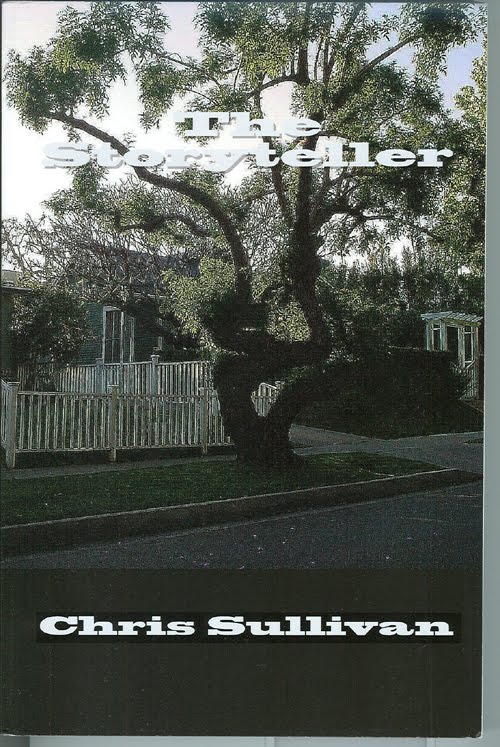
Here's a little tale – it came to me; some of it's true but it's laced with a bit of imagination: it's a character I have been playing with – see if you like it; I must have written it about ten years ago and never progressed.

Horace Melia had one fifth of his sight in his right eye and his left eye had no sight at all; he needed a hearing aid as his hearing was bad too. If he watched television he would have to sit next fo the set and watch from a distance of two or three inches, just to the side so as not to block his wife’s view; the sound on the television had to be on maximum volume and his neighbours learned to know his favourite programmes. They didn’t like to complain as they knew he had no choice. He also listened to the radio at full blast and had been an avid fan of ‘The Archers’ since they started in the nineteen fifties.
His neighbours bought a walkman radio for him so that he could listen on head phones but his wife complained that she wanted to listen to it with 'her Lol,' as she called him; in any case he couldn’t hear properly on the head phones as he said when he put them on he couldn’t get them close enough to his ears; one of the neighbours tried to get a walkman radio with an attachment that would plug straight into his hearing aid but Horace couldn’t work it out.
The hearing aid Horace used was the old fashioned kind which had a device with wires which went to his ears.
The young children loved Mister Melia, as they called him, because he was a very good conjurer; once in a while, if any one visited him with children, Ada Melia, his wife of fifty three years, would ask her Lol to do a few tricks.
He had one trick which involved a handkerchief and a match: he would take a match, wrap his dirty handkerchief around it, break the match and when he opened the handkerchief again, lo and behold the match was still in one piece. His handkerchief was usually dirty because he would shine the brass door knocker every time he went in and came out of his front door even though he could hardly see it.
Another thing he used to do was throw a coin into the air and find it behind a child’s ear. It was easier when pennies were in circulation but with decimalization in nineteen seventy one Horace had to practice his tricks with smaller coins and eventually the pound piece; Horace would always give the coin to the child at the end of the trick so decimalization made his tricks more expensive.
He would rise very early and clean out the fire place; then he would put the ashes in a special metal bin and go back in to the house and light the fire. He did this the old fashioned way with loads of newspaper, a few fire lighters, bits of wood and coal. Sometimes when the fire was burning in the grate he would throw on a few chopped logs.
Ada had the habit of sitting too close to the fire and, consequently, her legs were permanently red.
As the pipes, which came from the water boiler at the back of the fireplace, spread their heat through the walls to the bathroom upstairs and the kitchen downstairs the house got hotter; so from about eight thirty onwards the fire would blaze in the fireplace and warm the whole home.
This is when Ada would wake up.
Every one in the village knew when Ada woke up: they would hear her call to Horace:
Lol!”
No answer – don’t forget Horace was deaf.
A little louder:
Lol!”
That one had two syllables – Lo – ol.
Still no answer – he’s still deaf.
Now again but a little louder:
Horace!”
Then almost at once:
”Horace.”
Horace would be sitting at the table with a magnifying glass trying to read the newspaper.
Horace! Horace!”
Then she would lean out of bed, pick up Horace’s spare white stick and bang the floor – bang bang bang bang!
Horace would hear this; it happened every day so he would be expecting it; then he would go to the foot of the stairs and call up:
Yes, my love.”
I’ll have a nice cup of tea,” she would say “two slices of toast and marmalade . .”
And then she would roar:
And don’t burn the bloody toast!”
Everybody in the cul-de-sac heard this; they heard it every day. The cul-de-sac consisted of ten houses and apart from the ends of the blocks they were joined together.
Horace and Ada had lived in the house since it was built in nineteen fifty and they had lived alone for twenty five years since their only son, Ralph, had moved to San Francisco upon his marriage to Jill, an American girl he had met on his first holiday abroad. Not only was the trip to Spain Ralph’s first holiday abroad, it was the first time any one in the cul-de-sac had ever travelled out of the country; but he never came back.

Wednesday, December 4, 2013

Ronald Hunter; RIP

Ronald Hunter: 1943 - 2013
I took that photograph of my friend, Ronald Hunter, a few years ago; I called it Ronnie Christ and when he came to our apartment to celebrate his birthday one year, with a few friends, after dinner I presented him with the framed photo. I don't know if he ever put it on his wall but it brought a tear to his eye.

He died yesterday, in Los Angeles, after being ill for some time; he fell asleep, as I was told, the way he wanted go. The main thing is he wasn't in pain and didn't suffer.

I met Ronnie Boy, as I called him, in 1997 when we were both in a play at Santa Monica Playhouse, California, and we both won an award – so we were 'award winning actors' – we kind of clicked and swapped stories in a sports bar on Wilshire Boulevard after each show.

Since then he has always been a true friend and if we didn't see him for a few days he would call each day just to see how we were. He would take me out to dinner on my birthday; I had stopped celebrating it years ago and he would take my wife out on hers too; since we moved back to London we would always speak on those days.

Ron was a really good actor; he came to Los Angeles to do a series with Louis Gosset Jr called The Lazarus Syndrome, he liked the weather so he stayed. He also worked with Al Pacino on a few occasions on Broadway, notably in Richard III.

A few years ago he was very ill, and we thought we had lost him then, but he recovered and gave a brilliant nuanced performance in a play called The Unexpected Man in Los Angeles barely six months after being at death's door.

But it was as a human being he will be most missed. He was a friend who wouldn't let you down and I will miss him – may he rest in peace.


Wednesday, November 27, 2013

TV Directing: a Cautionary Tale.

Can't think of a photo so . . .
An advertisment for my song.

Here's a cautionary tale – or even a tail – about knocking people on the way up – you may meet them on the way down and you may need them

I remember seeing the film 'Carrie' – the original one – and loved it; especially the end when the whole cinema erupted; then we went to the pub and talked about it, trembled and rushed to get that last pint as this was in the day when pubs closed at 10.30 pm – and I was working at a theatre in Cheltenham where 10:30 closing time meant 10:30 closing time and as the film finished at about 10:24 it was quite a rush.

The director of that film was Brian De Palma and even though he has made good movies since he has never quite fulfilled the promise he showed earlier on and do you ever wonder why? No! I didn't think you did because you're not like that, are you?

I saw Michael Douglas on a talk show once; he was chatting away about this and that and he was asked a question about Brian De Palma and, even though I can't remember the exact words he used, it seems he had stood in the way of Michael getting a role and Michael said 'he didn't know who he was dealing with' or words to that affect.

De Palma had obviously upset him not knowing that Michael Douglas was to become one of the most powerful producers in Hollywood -so maybe that's why he didn't fulfil the promise he showed earlier - or maybe his films weren't that good after all.

I'm not sure if I could be that vindictive; I had the chance once to get my own back on someone once who had treated me badly and I didn't take the opportunity. One thing you need to know is that in the 40 years I have been an actor I have never been involved in any big arguments or been treated nasty by a director, producer or big star but I remember one day I had a call from a producer at the BBC. He was Gerard Glaister who produced a lot of quality television series from the late 1950s up to 1991; in fact it was in 1990-91 that I had the call from him.

It was completely out of the blue; I may have written to him at some point, I don't know, but when I met him he told me he was doing a television series about horse racing. He actually gave me a cup of tea – or he sent for one – and we chatted about the series and what he was going to do with it. He had some pictures on the wall of some of the actors that were due to be in it and he showed me plans and shooting dates.

Then he said that as some of the money was coming from Ireland he would like an Irish actor in the series to play a trainer and he said he thought I would be right for the part. Wonderful, I thought, but I had been acting for 20 years so I never put any reliance on anything anybody said to me unless it was the time of the first rehearsal.

Let me check on something, he said, and he got on the phone and asked to speak to the director, who was called Jeremy Summers; I'd like you to meet him, he said, and when he (Summers) answered the phone they arranged it between them.

I was told he was on the floor below and down I trotted to see him.

When I walked in the first thing he said to me was - What's this about?

What's this about????

I explained that Gerard Glaister had said they would be looking for an Irishman to play the trainer and he interrupted me and said - who said he was Irish?

I told him that I was told by Gerard Glaister.

- We haven't decided yet what he should be, he said, and what were you doing with Gerard Glaister?

I explained that he had called me in and he said – why would he call you in? Did you write to him.

He said that as if Gerard Glaister was an idiot and called everybody in who wrote to him; maybe he did, who knows.

We were not getting on!

I can't even remember leaving the office; I had been swimming along, minding my own business when a hand came in to the water and picked me out. Oh what a nice little fish you are, the hand said, I'll feed you and show you to my friend. Then the hand showed it to his friend and said – do you like this little fish and the friend said no; throw him back in.

I just looked on the IMDb and noticed Jeremy Summers only directed the one episode of Trainer, which is what the series was called and it was just my luck to meet the shit bag on that day.

But that's it I'm sure the person he cast in the role did it splendidly and had loads of charisma and star quality but then . . . .

Some time later I was with a company in Percy Street and I was involved in a TV series. If you saw my little movie The Scroll, it was based on the two characters in that and was set in some of the most exciting countries in Europe.

I devised it, as I had created the characters, and it was called Hard On Their Heels; the two main characters from The Scroll would follow two girls who had conned them out of money and a private detective was following the boys (us).

I took the pilot to Cannes and we talked to a lot of people and on a few occasions we nearly got it off the ground – but it didn't happen.

One day, before we went to Cannes, my partner was sitting in the office after partaking of a very heavy liquid lunch and the phone rang. It was a casting service, rather like The Breakdown Services in Los Angeles. They were after information to publish so agents could submit their clients for roles etc.

One of the characters I wanted in my series, was a French Count – a smooth kind of playboy and my partner told the casting service about this character. He told them that I was directing the series but my first priority was to cast this particular part.

From the following day the mail box was full of suggestions from agents and actors after this role. I didn't do anything about it and if anybody ever called I would explain that it was a mistake.

The submissions were from all kinds and not necessarily for the 'count' – I had letters from composers, who wanted to do the music for the series, actors and actresses for other roles and agents with lists of clients; one agent wrote and said their client would be a great director and would I consider him – his name? Yes – Jeremy Summers.

I was so tempted to call him in and mess him about but, as I aforementioned, I don't think I could be vindictive.

Monday, November 11, 2013

In Flanders Field II

I will always know when memorial day is coming up because I get a lot of hits on the post I wrote about the poem In Flanders Field. I think I wrote that piece about 3 years ago and it still gets read.

I think it's good to remember (lest we forget) the fallen from all wars. In a week where so many people have lost their lives because of a natural disaster it seems so futile that man treats man so abominably. As I write this I know that women can't walk home alone in Sri Lanka without the risk of getting raped by the authorities; that men in the same country are continually being tortured and murdered unless they pay bribes to the police. Can you imagine that? I don't think we need to pat our own police on the back because they don't do it.

There was a man in Sri Lanka who was being tortured and it continued awaiting a bribe from his family. They inserted a tube up his anus so they could insert barbed wire which gave him internal injuries. So he was sent to hospital where surgery repaired some of the damage so they could send him back for more torture – till his family paid a bribe; doesn't bear thinking about does it? He will never recover.

I remember the journelist Clive James saying that he was part of the first generation that would not expect to go to war. In fact up to The Faulklands War the only place the British soldier went to was the so called Northern Ireland.

There is a lot of money to be made from war; the depression of the thirties was eventually ended by the second world war.

Anyway here is my piece from two years ago and as I write this the time is 11:11 am on 11/11 – peace!


This is for today; November 11th; it would be great if it was published at eleven minutes passed eleven but that comes at different times in different countries; it was the time and date of the armistice in 1918; the end of the first world war which started in 1914; so I will get this as close to 11:00 am as I can.

The poem, which titles this post, was written by a Canadian John McCrae – so it's not only the English who wrote great World War One poetry; some of the great poems of the first world war were pro-war for example Rupert Brooke as opposed to the anti-war poems by others including Wilfred Owen.

There are two photos above as you can see – one clearly has the first line as 'In Flanders Field the poppies grow' which was hand written by the author and in the other one, taken from the publication In Flanders Field and Other Poems clearly says as poppies blow. I believe the hand written one was written from memory and is a mistake; but I always thought it was grow.

At this time of year in Britain most people wear red poppies in their lapels; this is to remember Armistice Day lest anybody forget and the people buy the poppies from poppy sellers in the streets; they're also usually available at your school and place of work and the money collected goes to a charity.

I leave you with a great poem and ask – is it pro or anti-war? Throwing the torch?? Discuss????

In Flanders fields the poppies blow
Between the crosses, row on row,
That mark our place; and in the sky
The larks, still bravely singing, fly
Scarce heard amid the guns below.

We are the Dead. Short days ago
We lived, felt dawn, saw sunset glow,
Loved and were loved, and now we lie,
In Flanders fields.

Take up our quarrel with the foe:
To you from failing hands we throw
The torch; be yours to hold it high.
If ye break faith with us who die
We shall not sleep, though poppies grow
In Flanders fields.


Friday, November 8, 2013

Morrissey.

Morrissey.

I'm a bit late this week with my post because I've been getting my Christmas song ready for release on iTunes and other sites on the Internet and that's a bit complicated. I-Tunes use MP3 which is quite a poor quality and that is quite simple. I just send the song electronically to my distributor and they take if from there. They have all the art work etc and, as a matter of interest here it is and it's called Every Day is Christmas Day - http://tinyurl.com/old9xu3

The complication happens with the hard copy which cannot be sent over the Internet and I have to send it as a hard copy to another company on the west coast (USA) by snail mail. The reason for this is that it is 266 MB which is huge. The MP3 is only 5.54 MB so you can see the reduction in quality. The hard copy version also has another track which is a love song called, appropriately enough, I Love You.

Oh here's the love song - http://tinyurl.com/nss6l3n

You may have to copy and paste.

They are only on Amazon.com and not Amazon.co.uk as yet; that's a pisser isn't it?

Now what has this got to do with Morrissey, I hear you ask – well absolutely nothing; I'm just chatting. By the way John Lennon said that the word 'just' is a complete waste of time and I tend to agree with him; I just used it – oh there I go again!

But there he is up there; Morrissey – I don't know a lot about him but what I have heard is not too positive, in fact most of what I have heard has been fairly negative. But I have heard him sing, I have heard some of his records and songs and I really like what I hear; he was in a group called The Smiths and what I've heard from The Smiths I quite like too.

They seem to record songs which have a different rhythm from the musical backing, a technique which I have always liked.

I can't quite figure out how The Smiths, in their hay day, passed me by; I was a great fan of rock and pop music right up till the late nineties so what happened? I even liked some hip hop and rap but then suddenly . . . I went off it. Looking back the songs, CDs, records (whatever the current vernacular is) that I liked weren't hits; they fell by the wayside.

What I plan to do now is get some Morrissey and The Smiths tracks and maybe enjoy them but recently Morrissey has written an autobiography and it is published by Penguin Classics.

I am not a great fan of pop autobiographies or sports ones; in fact I think sportsmen and women are the most boring self obsessed people there are. One only has to look at Andy Murray smashing yet another racquet to realise this; I think I blame the sporting commentators for the way they describe the actions of some of the sporting super stars.

There used to be a shot-putter in Britain called Geoff Capes – who was a copper would you believe – and a commentator called David Coleman would build him up to be some kind of funny tough guy 'Geoff Capes has knocked over one of the East Germans in the tunnel; good old Geoff!'

But let me get back to Morrissey before I go completely off the subject; his autobiography has been published by Penguin Classics!! Yes they're my italics! Penguin Classics are usually reserved for Classic books, such as Shakespeare, Jane Austin and the like so how can a new book – a new title or whatever – be deemed to be a classic when it had yet to be published?

The reason, apparently, is that Morrissey wanted it that way. Isn't that some kind of blackmail from the reclusive, cult of a pop star?

I saw him one day in Los Angeles. Where? At the Farmers' Market, of course; a place I have written about on more than one occasion: there is a tiny street that separates the two parking lots that serve the Farmers' Market and the bloody 'eye sore' called The Grove (I don't even have to describe it do I, for you to picture what it might be like – yes Abercrombie & Fitch, The Gap, The Apple Store), and the parking lot the furthest away from The Farmers' is the one I used to use.

On the side, next to a bank, is the post office and out of there, one day, emerged Morrissey. He was with a small woman who might be described as on the plump side – that's nothing against her as I like plump women (well sometimes – it depends on what they want me to do). Because she was so small he looked very tall.

He looked very serious as if he had been over charged for a stamp at the post office but now I know he must have been thinking what to put into his classic. They got in to a mini and drove away and I went about my business not realising I had been in close contact with a cult!!

Now when I say I don't particularly like pop autobiographies or sporting ones I did like the Bob Dylan book Chronicles; I loved the way it was written and I am looking forward to volumes two and three. In it he tells of his friendship with the pop singer of the sixties, Bobby Vee, who was always one of my favourites – anybody who sounds a bit like Buddy Holly was in my record collection which is why I liked The Beatles.

Come to think of it when Bob Dylan picked up his GRAMMY he mentioned Buddy Holly. He said he saw Buddy Holly in Duluth when he was about 16 years old and he was three feet away from Buddy and he said 'he looked at me.' And he said that look inspired him when he was making his GRAMMY winning album.

So you never know; Morrissey's book might be good; who knows? I haven't read it yet but I know it has received 'mixed' reviews. One of the critics on a radio review show last week said he wasn't going to give it a 'mixed' review – he said it was the worst book he had ever read!!! He obviously hasn't read any of mine!!!!


Sunday, October 27, 2013

Peaky Blinders.

A Television series called Peaky Blinders has just finished in Britain; just six episodes so I suppose in American terms – or indeed international ones – it would be deemed a 'mini series.'

When we were children in Birmingham, my dad would tell me about the Peaky Blinders; they were part of the mythical past of the city and I was reminded about them when I worked with older people. I don't know how my dad had heard of them, as he was a newcomer to Birmingham and nobody in our immediate or historical past had ever even 'been' there – as far as I know.

So it was no small wonder that a series about the gang would eventually be made for television; what was surprising, to me, was that it took so long. The Peaky Blinders were so called because they would wear caps with razor blades sewn in to the peak, and if you got in to a fight with them, or they had a violent dispute with you, they would doff their caps and slash you with the armed peaks, consequently blinding you if they caught you in the eyes. Yes, I hear you say, nice people.

I was never sure when they ruled the streets; I had heard before the series started that they were from the late 19th Century but the series was set just after the ending of the first world war and the Peaky Blinders were made up of men returning from the front; some of them shell shocked and others not too pleased at the way things were going in a country they had fought hard to preserve. In one of their escapades they stole guns from the BSA (yes folks, the same people who make the bikes; Birmingham Small Arms) and Winston Churchill was worried that the Irish revolutionaries had stolen them and sent a Belfast cop to investigate.

So what did I think of it?

Well I liked it; there was the usual complaining about some of the accents not being authentic but as I have said before 'put two British actors together and soon they'll be talking about accents.' A good friend of mine said this to me in America which got me to thinking that it's true.

But I did like it with certain reservations; look at the photo above; looks great, doesn't it? There is Cillian Murphy – him of the high cheek bones and blue eyes – and his character was the Mister Big of the family that dominated the gang. He played it with a great deal of authority and there was no mistaking that he was head and shoulders above the rest of the cast with a few exceptions.

Now I know Birmingham very well; some parts I know like the back of my hand, as I delivered telegrams there for two and a half years and for nearly a year after that I delivered mail to some of the locations mentioned; namely Deritend, which is old English for Dirty end, by the way.

I had no problem with either of the two accents used in the series – Irish and Birmingham – but I have to say that there is a similarity in some of the vowel sounds of both of them – oh dear, I've lost you, but stick with it for a while – for example the 'U' sound in words like 'Dublin' – there is also in a Dublin accent the sound to rhyme with cow as in round and about which are similar and the Dubliners say the letter 'R' – as in RTE – as awe; just like in Birmingham. Both accents are very contagious and you will be slipping in to them if you spend any time in either place.

To finish off my point about the accents it will not mean diddly squat to the world wide audience, outside the immediate area, and Brummies have been portrayed, for a change, as strong, romantic and interesting in this series so they should not be moaning about it on the Internet Movie Data Base, as they have been doing. I would like to have seen more humour in it as stories need it -  in fact I would liked to have seen some humour.

If you compare this series with some of the American series, for example Mad Men – which is also a period peace – or Homeland, it looks as if the British one is not so slick. I know there are many here who think that British acting and production facilities are superior to the Americans – and indeed they are, at least, equal in movies technically. Look at one of the top movies in America at the moment, Gravity with George Clooney and Sandra Bullock, and others of the past such as Superman, Star Wars and so on; all made in Britain.

I know the budgets in America are bigger as they seem to have lots of money to throw around but why do the British make things like Law and Order UK, and Hustle, look good and not things with better scripts and acting? Also they take things like Peaky Blinders and other things quite seriously and the aforementioned two series like a light hearted walk in the park as if it is beneath them.

Maybe the BBC could put more money in to drama instead of the many millions they spend on cookery programmes, antique programmes and programmes about buying and selling houses?

I'm only asking, I don't know.

In Peaky Blinders it didn't seem as if anybody else existed in Birmingham apart from the people involved in the story. No people in the background. I heard neighbourhoods like Sparkbrook, Small Heath and the aforementioned Deritend being mentioned but it could have been anywhere outside the pub – could have been Istanbul outside for all we knew.

Too late now to complain, really. Especially as I wore one of those caps in a small film earlier this year – here I am:

(actually it was from Bates of Jermyn Street, as you connoisseurs will have noticed) ) so maybe they should have thought of me – but it's too late now, unless there's another series.


Monday, October 21, 2013

The Cops, the plebs and the Bike Riding Toffs.


10 Downing Street is where the Prime Minister lives; it is a little street off Whitehall and I have been there many times – when it was a street. It's still a street but since Margaret Thatcher, the street has been blocked off with heavy gates and now you can't even drive a tank down there – can't get down Downing Street; sorry.

They put the gates there for security reasons which didn't stop the IRA bombing the back garden a few years ago when John Major was the Prime Minister.

Because the street is now blocked off, and full of police, the big gates have to open to let vehicles in – like a cabinet minister, or the Prime Minister, or maybe some visiting head of state or the head of state of Britain; the Queen.

A lot of people actually walk the fifty yards or so to number 10 but others don't.

One of the things you are not supposed to do is ride a bike down Downing Street – or even up Downing Street - as there is a tiny gateway for pedestrians to get in and out of the street which makes it a bit difficult, and in any case they just don't want people riding bikes down that street; it's their street!!

A few months ago, an MP (Member of Parliament) in fact the Chief Whip, rode his bike along Downing Street.

The whole place is stinking with cops so he, Um Big Chief Whip, must have thought he was above the law but one of the cops told him to get off the bike and push it.

Now what he said and what he didn't say at this point has been up for debate ever since. We know he used the F... word many times, and other colourful language, which is against the law if you say it to a police man in anger or as an assault, and we know that he has used the word pleb on many occasions in the past. In fact on TV the other night one of his ex colleagues, Michael Portillo, said so.

Mitchell has admitted using the offensive four letter words, which seems to have been forgiven by the police, but the police said that he also called them plebs – which he has denied.

And this is what all the fuss is about whilst people starve, wars are killing people and there are despots and piss pots to take care of.

Let me ask a question – how did the police know that this man (a pleb himself) had the word pleb in his regular vocabulary?

Here he is and to me it looks like he is actually saying the disputed word:


He was sacked from his job as Chief Whip and there is to be a police enquiry as it is thought that he was fitted up; this man that has used that word on many occasions wanted to ride his bloody bike.

He could have walked down the street like the Chancellor of the Exchequer, George Osborne – there he is walking, doesn't he look dashing:

 and there he is pretending he is a performing seal:


Many years ago I was in a play called Spokesong; I think it was the best role I ever played and this was at The Haymarket Theatre, Leicester – here I am all those years ago (with a bike around my neck).

The director asked me to grow a moustache to make me look older – oh for those days eh!!

It was a huge, varied role and the character was a guy called Frank who ran a bicycle shop in Belfast during the 'troubles' – there is a wonderful line in the play (I didn't have to say it) where the para militaries bomb a pet shop and the line is 'For one wonderful moment it was raining cats and dogs.'

Because, at the time, the centre of Belfast was under threat from terrorism from both sides, car bombs were used and Frank had the idea of banning cars from the centre of the city putting bicycles in certain places so people could just take one and leave it at another designated place.

It was his idea to stop the car bombs – people laughed, then thought about it, then went about their way.

Well today, in the city of London, there are bikes all over the place – look:

Just as Frank Stock said in Spokesong.

Here is an idiot riding one:


He is the Mayor of London, one Boris Johnson, an old Etonian and friend of David Cameron and George Osborne – all members of the Bullingdon Club. Remember this picture, Osborne, Cameron and Boris:

Wonderful aren't they. The men who run the country.

But let me get back to the bikes – they were Boris's idea; he did a deal with his banking friends at Barclay's. It seems a good idea, and is, till you get close to them and look at the cost and conditions.

First of all you put your credit card in to the machine near by; this charges you about £4 per hour and on up £50 for the day. If the bike is damaged at all £300 gets taken off your credit card.

This is what you can also rent for £50 per day and it is insured:
Hope you enjoyed the pictures.


SPOKESONG by Stewart Parker. 1941 – 1988.

Pleb = Plebeian:
belonging or pertaining to the common people.
of, pertaining to, or belonging to the ancient Roman plebs.
common, commonplace, or vulgar: a plebeian joke.
        noun
    a member of the common people.
    a member of the ancient Roman plebs.

Monday, October 14, 2013

Acupuncture and dancing on my balls!

The drama school I attended (the back of).
I was in Los Angeles in April and whilst there I took advantage of an acupuncturist I know; he is one of the doctors/professors who works at an acupuncture college and, as it's a college, you get really good treatment; and it's cheap.

If you've never been you should try it; it doesn't suit everybody but I can honestly say you don't really feel the needles going in, if that's all that's preventing you from going.

The first thing they do when you get there is take your pulse with three fingers; they believe there are 3 pulses in the wrist. Next they ask you to stick your tongue out – right out; then they examine it very closely and usually, because they are students, they ask another student to look at it.

Most of the students and staff are Chinese and Korean; they have a very friendly manner and make you feel very comfortable; when they have asked you about your symptoms they ask the doctor to come in and he takes a look at your tongue too.

The doctor I like cracks jokes in Chinese to the students and they always laugh; I often wondered if he was referring to me when laughing and joking but I'm assured he wasn't – because I once asked. 

He did tell the students in April that he'd been treating me for 8 years.

He is the one who puts the needles into your body and sometimes he recommends 'cupping' but not before laying you on to a bed (with the needles sticking out of you), covering you up with a tiny sheet, putting a tiny light/heater on and going away.

When he comes back he will massage the parts of the body that are in pain and sometimes stick more needles in.

Cupping, by the way, is one of the most ancient and successful techniques to cure many problems.
Cupping.

Chinese medicine principles state that stagnation of blood is the cause of many pains and diseases. Cupping therapy clears up the stagnation and stimulates the blood flow in the affected areas. Due to its very nature, it also clears congestion in the chest caused by colds and ‘flu. It leaves marks on you body rather like love bites – hickeys!

When they go away and leave you with the light/heater you go to sleep and it's the most wonderful sleep in the world and I got to thinking, as I lay there, that there was another time I would just 'go to sleep.'

When I was at drama school we studied (did) dance with a teacher called Henrietta Fairhead; I have just looked her up and she is mentioned on Amazon as the author of some books on dancing. We studied ballet, tap (in our ballet shoes – I kid you not), mediaeval dance and movement and at most of the classes we were taught how you relax.

This involved lying on the wooden floor whilst Hettie's assistant, on the piano would play Air on a G String which was so relaxing I would sleep; I think everybody else did too even though we were supposed to be doing something else meaningful – I don't know – transcendental meditation?

The classes consisted of students all shapes and sizes and we would do the most strange movements and poses you could imagine. 
 
I remember stretching out, pointing my two arms into the air and at the command 'let go!!' would collapse it all with my hands on the floor. Once in a while I would catch the eye of a window cleaner and I could see the funny side of things and I think the rest of the class did too even though they would pretend it was very meaningful and serious.

In ballet we learned the first position, second, third and fourth and we would gracefully jump in to those positions; then we would straighten up and dance on the balls of our feet.

The teacher would say 'come on class; bounce up and down on your balls!'

She knew what she was saying, I'm sure she did; I know she was a very fit old spinster but we couldn't laugh out loud (lol) so we smiled and she saw us smiling and realised we were having the time of our lives; the window cleaner would have amusement from it and I'm sure he took it up one of the days – Unfortunately I'm sure one or two in the class took up window cleaning!!
This is a view from the front - notice the bars!!!!


Monday, October 7, 2013

Debt.

When I was a little boy we lived in England and people with children attracted a universal benefit called Family Allowance; if you had one child you didn't get any but after that you received a certain amount of money for each child.

People with fifteen children, who were few and far between, would be featured on television and tabloid newspapers, as interesting individuals who had all the babies just to attract the Family Allowance. This infuriated some people, mainly those with no children, who thought, in their tiny minds, that they, the people without children, were subsidising the people lucky enough to be blessed with them.

Nothing could be further from the truth, of course, as people with lots of children were, actually, rearing future tax payers so the man with, say, fifteen children would be donating quite a few tax payers to the economy. We'll say 10 as the other five might be housewives (what's that word, home-maker?) or people who can't work for whatever cause. So they are giving, shall we say, a few million to the future of this country.

Let me get it straight – people with 15 children were so rare that they were actually noticed and written about!

When I studied sociology, 30 years ago, it was estimated that with loss of earnings and the general bread and buttering of children the average parent would spend £80,000 per child, up to the age of 18, bringing them up – school uniforms, holidays, food and whatever – and that's without the expense of college - so let's hear it for the parents.

Family Allowance changed its name over the years to Child Benefit; changed its name like everything else; this gave some people the idea that the money was for the children – WRONG again!! It was to be shared by the family and administered by the parents.

This year it has been decided by the mighty and the powerful to means test this benefit. Will the Labour Government reverse this – I doubt it!!

The weekend just gone was the last day to register for self assessment for Child Benefit. This is for the people who have one wage earner earning £50,000 per year – if both parents are working and earning £45,000 each they don't have to register – stupider and stupider aye??

If they are late registering they are fined – all the child benefit they have received this year; what a friendly old government aye??

How much do they get? For the first child you get about £20 per week and the second £13 and so on; that means if someone doesn't register they will be paying £820 in fines, if they have just one child.

Why are they doing this? Why are they means testing a universal benefit in any case? Oh yes!! Austerity! Cuts!

We are in debt! There is a deficit.

I was talking to a doctor in the hospital recently and I asked him about the threatened closure of Lewisham Hospital and their big debt and I asked him who they owed the money to; I said - to whom do they owe the money?

He lifted his eyebrows at my use of the word 'whom' and said – I don't know!

I remember I worked in the car industry for a year before going to drama school and they would talk about one department owing another department money; it never really existed and no money ever changed hands and instead of caring about the quality of their vehicles they were ruled by the money men and eventually went out of business with the rest of the British Car Industry.

I also remember the BBC when they made great programmes: ground breaking drama, documentaries and series like Man Alive, Horizon and the rest of them Then they sent in a trouble shooter to sort things out and we now have a record amount of cookery shows, antique shows, property development shows and loads of reality shows like The Apprentice. I'm sure there are others besides The Apprentice but I can't think of any off hand.

So I wondered about our debt, our national debt and the so call deficit – here's what I came up with: I know that the Chancellor of the Exchequer lent money to the IMF last year but I don't know how much. I know he made one loan of £10 billion. Now that got me thinking that we (Britain: hey!! I'm back!!!!) have a share in the IMF; possibly the world bank too. So don't we owe some of this national debt to . . . . . ourselves?

Last year the accumulated external world debt was $72.8 trillion – now that is the accumulated debt which means it's not that much at all. If I owed my son £1, my son owed his sister £1, she owed my wife £1 and my wife owed me £1 we would have an accumulated debt of £4 when there is only £1 involved; so Gawd knows how many trillions it really is.

The other thing is, if you added all the countries together, all of them on earth, add all their GDP together, it comes to, or should I say, came to (last year don't forget) $71.8 trillion; bit short of the old $72.8 aye?

The difference between the two figures is the debt to GDP ratio.

Now I got these figures from an article I read, and I have to trust that as I can't remember who wrote it.

In that article, I took down the following note: since all this money is owed to entities within this global community, it could just as credibly be said that "the world owes this money to itself", and so owes nothing.

So there!!

Of course it's more complicated than this as some countries have huge huge debts – Japan for instance. Here's another note I took from the article: Japan has the largest national debt-to-GDP ratio in the world – over 230%. It is heavily in debt, compared to its product, and yet in a position to lend to the world's largest economy. In fact, Japan's position is much more stable than countries with lower ratios. One of the key factors contributing to this stability is the fact that the vast majority of this debt is owed internally – it is Japanese citizens and companies who have been funding Japanese debt. Of what it owes externally, its largest creditor is – can you guess? – the USA.

Why then, if we owe this money to ourselves, do we even bother the enormous amount of money it will cost to administer the two tier system of child allowance? Why do we bother to fear the so called influx of Romanians and all the other new members of the EU next year as put about by UKIP – by the way, for my friends in America, for UKIP read Tea Party!!