Thursday, January 5, 2012

Meryl Streep, Margaret Thatcher - the last word.

The Young Margaret Thatcher.

I know I have been unfair to Meryl Streep and she doesn't like it; she wrote and told me so; she said I have 'rained on her parade' – I jest of course. She will go from success to success and win loads of plaudits no matter what I say; or not.

Not many people have disagreed with me - in fact nobody has; there may be some of you who do disagree but have better things to do than to write to me about it; and I don't blame you.

My big problem with the fact that Meryl Streep is playing Margaret Thatcher is a class thing; there is something rotten in the state of Denmark and in this case 'Denmark' being Britain. The rottenness being that very same class system that we all know and love. It makes drama, comedy, literature and lots of other type of plots and stories (if there are any), interesting.

The late Janet Brown as Margaret Thatcher.

The biggest thing that stood in the way of Margaret Thatcher, being the first British woman Prime Minister in Britain, wasn't the fact that she was a women, but that she was from the lower middle classes; that strange accent she spoke, with the strange vowels and Churchillian cadences was the first false thing about her and that's what the upper classes would hate.

This accent and voice, to Meryl Streep, probably sounds posh. Probably sounds as posh as the Queen when it really is below 'RP' (Received Pronunciation); RP is how the newscasters used to sound on the BBC – in other words posh. The way Laurence Olivier sounded, Rex Harrison, David Niven and all the other posh actors – not quite upper class but posh.

I say 'used to sound' as most of the newscasters these days are Celts; it's less offensive and grating to the general ear than the old style. So now they sound like Richard Burton or Sean Connery – without the lisp.

Also when you call the BBC these days, in London, the phone is answered by a phone bank in the north of England with an accent from up there and they say 'BBC Switchbard' instead of 'BBC Switchboard.'

There's nothing wrong with the accent, in fact I love the Geordie accent, but not to answer the phone for the BBC!!! Pulleeaase!!!

Lindsay Duncan as Margaret Thatcher

Now I don't think the subtlety in the accents and the difference between one and the other would mean anything to Meryl Streep, and whilst the majority of the people who view the film wouldn't know either, it is still a relevant plot trigger to the Thatcher ascendency.

The men in grey suits, who run Britain, must have been appalled when Thatcher suddenly came on the scene, but they saw in her someone that could do the things they wanted;: get rid of the unions, bring the Chicago school of economics to Britain via Keith Joseph, who also worshipped Milton Friedman, who lead it with his cronies, work wonders for the stock market – just as they said about Hitler - and invent the poll tax.


Meryl Streep as Margaret Thatcher.

So from what I have heard about the film it isn't about class at all; it's a typical rags to riches, against all odds, Hollywood type of movie and Thatcher wasn't really that kind of hero - if a hero at all.

And I think there is a film to be made about her and how she was used, abused and dropped.

Believe me I am not a fan of hers and I never voted for her but I will have to see the film one of the days as I have said enough about it – and her.

And that's my last word on the subject and here's my favourite interpretation:

Spitting Image's Margaret Thatcher.

Monday, January 2, 2012

My week with Marilyn and my opinions!!


I'm going to talk about acting again so switch off if this is not your bag. However, I am on line as a Hollywood actor and novice novelist; the two things that everybody thinks they are experts at because they watch films and read books.
I don't live in Hollywood any more but I can still write as a Hollywood actor can't I; can't I?
There are a lot of actors who choose a voice and then go for it and some people think that's good. At the risk of being told I am going on about her too much, Meryl Streep is such and so are Michael Sheen and Daniel Day Lewis.
The difference between the latter two is that DDL uses a voice he has heard somewhere, like the John Huston voice he used in There Will be Blood whereas when Michael Sheen plays someone he uses what he thinks is their voice – like David Frost and Brian Clough.
He also played Kenneth Williams where the voice, even though I only saw clips of it, wasn't as good as all the impressions people of my age had become used to over the years – and being bored by it I have to say. Bit like hearing another impression of Frank Spencer!!!!
Some of the great recent performances of real people, in my humble opinion, have been by Trevor Eve as Hughie Green in Hughie Green, Most Sincerely, Ken Stott who played Tony Hancock in Hancock and Joan and Jason Isaacs who played Harry H Corbet in the Steptoe & Son bio film The Curse of Steptoe all on BBC TV.
You see the difference between the first three and the second three is that the first three are impressions and the latter are from the soul.
When Geoffrey Rush played Peter Sellers in The Life and Death of Peter Sellers, he looked nothing like him, sounded nothing like him but he played Peter Sellers brilliantly.
When Michael Sheen played Brian Clough he did the Mike Yarwood version and made Clough in to a clown – which he wasn't – but it worked for me and was very funny; but it wasn't acting. He is playing Hamlet at The Young Vic at the moment and is getting great reviews so what do I know?
Anyway I need to get back to the point whatever that is – and by the way Mike Yarwood was a famous impressionist in the 1970s – a bit like the Canadian, Rich Little.
All of the above, apart from Daniel Day Lewis, played real people in those roles and it has been argued that their performances were little more than impressions
I saw the movie My Week with Marilyn recently and I thought it was wonderful; I thought the girl, Michelle Williams, played a really good Marilyn without doing any kind of impression at all; there was a moment when she was out with the protagonist at Windsor Castle, and she was being herself when they suddenly bumped in to the workers of the castle and she 'turned' Marilyn on; the character Marilyn off stage became the public figure.
The protagonist in the film is supposed to be the son of the famous historian Sir Kenneth Clarke who was famous for his massive TV series Civilisation in the 1960s – 1970s.
Also in the movie is Kenneth Branagh playing Laurence Olivier.
Now Laurence Olivier is one of the two actors who influenced more actors in the twentieth century than anybody; the other actor being Marlon Brando. Brando influenced the Americans and Olivier the English.
Sometimes the English actors who hated Olivier would worship Brando and vice versa with the Americans.
They had opposite styles: Olivier would go from the outside in and Brando from the inside out. In other words Olivier would think how the character would walk, move, maybe give him a false nose and voice and think of what accent he may have whereas Brando would look for the soul of the character and let the other things come along naturally. Olivier probably used more false noses than anybody during his career but there were one or two characters that Brando played .on film where you couldn't recognise him at all – Tea House of the August Moon being one of them; and for the record I understood every word he said on film unlike a lot of the English who said he 'mumbled' too much.
I wasn't sure what to expect from Kenneth Branagh but I was presently surprised. He has, kind of, modelled his career on Olivier; they both directed and played on film Henry V and Hamlet.
Henry V, by Olivier, has the greatest action sequences in any film which influenced Branagh's Henry V and lots of 'horse' films including a very famous non-horse film Zulu.
So how did he play Olivier?
Very well I have to say; very funny in a subtle way with the right amount of pastiche. Laurence Oliver is reputedly to have said to Marilyn Monroe when giving her direction in The Prince and the Showgirl 'be sexy' – Kenneth Branagh played it exactly right.
Olivier looked for comedy in everything that he did; very few British actors can play Richard III without hearing his voice at the back of their minds.
When he made public speeches he would pepper his speech with Shakespeare – when he received his honorary Oscar in Hollywood he started it by saying 'Most potent grave and reverend signors . . ' the beginning of a speech by Othello and in the film Kenneth Branagh starts the 'read through' with those lines. He uses lines and speech intonations Olivier would use in Shakespeare and some words like 'dead' (when describing the look in his own eyes in movies compared to Marilyn's) is delivered exactly the same as Olivier said them in Archie Rice.
There are scenes where Olivier is putting make up onto his eyebrows whilst expressing his frustrations about Marilyn always being late, which are hilarious as he looks ridiculous half made up.
The fact is Olivier was ridiculous at this time trying to give a 'method' actress the kind of traditional direction used in the UK at the time – I think he even uses the expression 'can't you just act' which is apocryphally credited to him whilst making a movie with Dustin Hoffman.
Sybil Thorndyke, played by Judi Dench in the movie, said that Marilyn was tiny in personality and mannerisms which people hardly noticed but when you saw the results of the filming everybody could see it.
Olivier seemed to learn from her; his next role, after the movie with Marilyn Monroe, was Archie in Archie Rice; some say his greatest performance. Her next role was in Some Like it Hot – arguably the best comedy movie ever.

Wednesday, December 21, 2011

An Irish Family Living in Birmingham.

Marlon Brando as Napoleon.

It was strange, as a child, to be living in an Irish community in Birmingham; all our parents' friends were Irish and apart from our little nuclear family (a phrase not invented then) we had no relations; they were in Ireland.

We knew people with strange accents but they were the next door neighbours.

Our Irish community was in Balsall Heath, a kind of inner city neighbourhood, and even though there were a lot of Irish there, I saw post cards in shop windows offering digs, rooms to let and flats with the addendum 'no Irish' – but that was when I could read.

And I learned to read at Clifton Road Primary & Junior School and Dennis Road Secondary Modern Boys School.

We lived in a little cottage in a place called South View Terrace; it probably had a lovely 'south view' of Moseley Road, at one time, but looking south out of the front door we had a view of a factory/offices called Locomotors or Locomotives – they owned the property and it was to them we paid the rent. 8/11 per week which is about 45 pence.

When I started school I found that the other kids spoke differently from me – they spoke with English accents; so I kind of copied the way they spoke. I was quite good at it but a few words remained such as walk which I would pronounce as wark and work which I would say as wurk. And all the equally rhyming words – or wurds!!!

So it was strange – we would go to Dublin three times a year with our English accents and by the time we came back to England we were Irish again.

I would play football in Ireland and they would shout 'pass the ball here, English!' and I would say 'I'm not English, I'm Irish!'

Then when we returned to England I would play football there and they would shout 'pass the ball here, Irish!' and I would say 'I'm not Irish I'm English!'

The school I went to was a Church of England School (Protestant) so I didn't let anybody know that we were Catholics. My mother was always telling me that I shouldn't be ashamed of being a Catholic and even made me take a Saint Christopher Medal which I would hide in my pocket; this was all at the first school, Clifton Road, by the time I got to Dennis Road we didn't care.

In those days there was an examination working class and middle class children took at the age of 10 called the eleven plus; this was for entry into grammar school. At grammar school kids were expected to stay on at school till they were 16; at my school we would leave at the age of 15; factory fodder.

Grammar school kids would take 'O' level GCE, General Certificate of Education, exams and if they stayed on they'd take 'A' levels and 3 of those would probably get them in to University.

At our school we didn't have to take any exams at all which was fine by me as I didn't like school or exams.

When I took the eleven plus I didn't put anything on the exam papers at all; my mother's friend, Mrs Williams, was the supervising teacher and attested to this and my mother was disgusted.

Apparently I just looked through the window.

Now if there was one thing I remember about Clifton Road School it was that the windows were high and you could only see the sky; so maybe I was looking towards the stars even then.

What I discovered was that if I looked out of the window, during regular lessons, I would get a clip around the ear and told to get on with it, but in exams the teachers walked around and supervised.

So when I went Dennis Road School I entered all the external exams for other schools: grammar schools, art schools, technical schools, commercial schools – you name it. The art schools I liked best because I had to paint all day and I loved painting even though I was no good.

I didn't pass any of those exams, of course, and when I left Dennis Road I didn't have any GCEs whatsoever; but I took them much later when they were easier for me. Just the ones I fancied: English Literature, Sociology and an A/O level in film studies which was the hardest.

One day at school I was picked for the Road Safety Knowledge Team; we were put on the stage and pitted against another team and asked questions about the Highway Code; which is a road safety booklet with all the rules about road safety, which drivers in the UK still have to answer questions from to pass their driving test.

The school hall was full – maybe about 500 kids and teachers – and when they asked me a question I got it right but the question master couldn't quite get the meaning of what I was saying so I explained it in a conversational tone, something like 'you know when you cross the street . . . . .?' and as soon as I said this, the whole school erupted in peels of laughter; I saw our teacher, Mr Jones, with his head in his hands laughing.

What I said wasn't particularly funny but something struck a chord with the audience which made them laugh; it was a wonderful feeling to get such a big laugh and it really is the greatest sensation when working in comedy. I was always getting laughs in the classroom so maybe that had something to do with the big laugh I got on that day and maybe it had something to do with me taking up acting; I don't know.

One of the teachers was called Mr Forster and he was the PE teacher and dressed very fashionably; he wore drain pipe trousers, suede shoes and had a very fashionable hair cut – a bit like Marlon Brando when he played Napoleon, and the mothers would wait outside the school, just to get a glimpse of him, as he walked his class across the street for the morning assembly.

'Isn't he lovely?' they would say and he would ignore them. He had a friend in Dennis Road Junior School and I think they were both, really, actors. I have heard his name about the profession and often wondered if he was the same person. The one thing he never did, though, was to cast me in any of the school plays.

In one play I remember one of the boys played two roles and all I did was watch; I knew all the lines of all the characters but was never asked. The boy who played the 2 roles was called Robert Mapp and at one point he was supposed to go off, get changed, then come back on as his other character.

On the night the play went out in front of the audience, he came back wearing the same costume; he said later he hadn't had time to change; and there I was sitting there!!!

That was in the junior school and Forster did a cowboy play, one time, at Dennis Road that I dearly wanted to be in but I'd been chosen to sing at the Town Hall in the choir!!

Saturday, December 17, 2011

Mark Rylance in Jerusalem.

For those who don't know or didn't read my post lately The Greatest Actor In the World I discussed who was the best actor in the world, if there ever could be such a person, as it was suggested by some pundits that the best actor in the world was one Mark Rylance who was, and is, starring in the west end in the play Jerusalem by Jez Butterworth.

Well I went to see for myself on Friday evening. The play is sold out till the end of its run in January and the only way to get a really terrible ticket is to turn up at six-o-clock each morning at the theatre and queue till ten-o-clock when the box office opens.

These are the worst seats – I believe the front row, because you can't see further back on the stage than a few feet - some seats where you cannot see all of the stage and my seat; on the upper circle above the action where you have to creak your neck.

If I sat back in my seat all I would see was the ceiling so I had to lean forward and look down. This meant I couldn't sit on my seat without tipping it up and sitting on the edge, or kneeling on the floor and then when I looked down my view was blocked by some lamps that were lighting the stage – but I saw it and enjoyed it and it will be one of those shows and performances that I won't forget; even if only for the stiff neck I have today.

But did I get up at six-o-clock to get to the theatre to queue? Not on your life.

I knew about the queuing and had mulled it over in my mind a few times and I planned to pay good money and book a seat sometime – but I never did.

It so happened I had an appointment in the west end at ten-o-clock and I passed the theatre and saw a small queue. At that moment, a few minutes to ten, the box office wasn't open so I carried on to my appointment. I had to pass the theatre again at ten forty five and thought I might go in to box office, which I did, to ask if there were any of the £10 tickets left and I was told yes – one.

When I saw where it was, I declined and said I'll take my chances for another day and that's when the box office clerk told me that the rest of the run was sold out.

I went out walked about ten yards down the street, turned around, and went back and bought the ticket.

So what was like what was it about and is he the greatest actor in the world?

First of all the title Jerusalem; it is based on the poem by William Blake which was eventually made in to a song or even a hymn. The poem is set out below and most people in England know it as as a song as it's about England – old England and . .. well judge for yourself.

England is surrounded by three Celtic countries and one of its counties, Cornwall, is populated with Celts. Who are Celts? Well we (yes we - I am one and so is my brother and my kiddlewinkles no matter where they were born) are wild, colourful people who believe and like myths and legends. We believe in fairies, giants, Leprechauns, folk lore and love to tell and listen to stories.

The English don't believe in any of this rubbish – but they did at one time. There are just as many myths and legends from England but nobody talks about them any more; the only thing that has survived is Morris Dancing; and there is a Morris Dancer in the play.

The play, Jerusalem, is about a Gypsy who lives in a caravan, which looks a bit like a railway carriage, near a new estate in Wiltshire. The cast have Wiltshire accents and apart from Mark Rylance and possible three others, are teenagers.

The teenagers gather at his caravan where they can score with drugs, booze and party all night.

The local council have been serving him, Billy 'Rooster' Byron, for many years, notices to quit; but he ignores them. He is the kind of man that would pull a steam roller with his teeth or bend an iron bar in his mouth; the kind of thing that was always on TV in Britain at one time.

The play opens with two police constables serving a final notice on him and throughout the action, both comic and serious, there us a growing threat and a feeling of impending doom.

The kids come to him also to listen to his stories as he is the old style Englander with many a tale to tell. One of the tales he tells it that he has very rare Romany blood which he sells to the local hospital for £800 every so many months.

In his youth he was a kind of Evel Knievel jumping buses on his motor bike and one day hit one of the buses which gave him a terrible limp. This is played with such authenticity that I thought it was a real injury.

Also a young girl, aged fifteen, is missing and her father comes to the caravan looking for her.

The set is incredible – there appears to be grass growing, there's dirt where he can bury an ax and behind the caravan is a forest; which looks real.

So is he the best actor in the world? Hard to say but I don't know any better. As I mentioned before it depends on taste, suitability to the role you are playing and lots of other things.

The play lasts three hours and ten minutes which includes two intervals amounting to twenty minutes. There may be ten minutes throughout the whole evening where Mark Rylance is off the stage.

It is a terrific heroic performance and he deserves the plaudits he has received – a Tony on Broadway and the Laurence Olivier Award in London.

I saw him a few years ago in Los Angeles in the Globe Theatre's all male production of William Shakespeare's Measure for Measure where he played the Duke. I think that was one of the best Shakespearean performances I have ever seen but he used some of the tricks he used in that in his performance in Jerusalem – a kind of pause at the end of a line and then dropping a whole sentence – which might become or is already his shtick. It will be interesting to see what he does with Richard III which he is due to do next at Shakespeare's Globe in London.

It will be a new production of Shakespeare's Richard III and he will recreate one of his more startling performances as Olivia in an all-male Twelfth Night. The production had sumptuous period costumes by Jenny Tiramani, handstitched down to the last corset stiffener, which took him half an hour to struggle into every night.

After the performance in Los Angeles, I couldn't find my car in the UCLA car park and wandered around for about fifteen minutes and who should I meet getting into their SUV but Mark Rylance and some of his cast. He had a very gentle hand shake and seemed a very nice fella.

Here is Jerusalem by William Blake:

JERUSALEM (from 'Milton')
by: William Blake (1757-1827)
      And did those feet in ancient time
      Walk upon England's mountains green?
      And was the holy Lamb of God
      On England's pleasant pastures seen?
      And did the Countenance Divine
      Shine forth upon our clouded hills?
      And was Jerusalem builded here
      Among these dark Satanic Mills?
      Bring me my bow of burning gold!
      Bring me my arrows of desire!
      Bring me my spear! O clouds, unfold!
      Bring me my chariot of fire!
      I will not cease from mental fight,
      Nor shall my sword sleep in my hand,
      Till we have built Jerusalem
      In England's green and pleasant land.


Thursday, December 15, 2011

Dave (the rave) Cameron and the Common Market!

Dave (the rave) Cameron.

Now I have very little time for David Cameron; I think I've intimated this in previous posts. In fact I am way to the left of the Conservative Party and have always believed in the Labour movement and unions and all that – so that about sums me up.

However, I am not sure you can call people like Tony Blair, Gordon Brown or the new Labour Party leader, Ed Miliband, part of the Labour Movement – or The Ed Miller Band as I have started to call him.

The Labour Party is the party of Kier Hardy, Harold Wilson, Aneurin Bevan and the like not a bunch of middle class middle of the road men in suits. But let's face it they wouldn't have been elected if they hadn't have drifted towards the middle to New Labour!

Can you see any difference between Cameron, Blair, Clegg or Miliband (either of them)?

Well it appears there is a slight difference.

In the 1970s Great Britain joined the Common Market which was forced through parliament by the Conservatives led by Thatcher's predecessor, Edward Heath. If I recall correctly the Labour Party were against it but don't bet on it as I may be wrong.

There was a referendum and the UK voted to stay in the Common Market – they have referendums on everything in America, as propositions, so this might sound strange to them and, by the way, it is referendums and not referenda!!

It was the Common Market the people voted for and not the United States of Europe.

Since then little things have crept in; Britain were obliged to convert to a metric system. They had already converted the currency to decimalization in 1971 which was understandable; the old system had 4 farthings to a penny, 12 pennies to a shilling and 20 shillings to the pound. Now we have 100 pennies to the pound as opposed to 240 which is what it used to be. They had ten shilling notes, sixpences, half pennies (pronounced hay'pennies) and half a crowns; that was two shillings and sixpence (2/6d) which is worth 12 and a half pee (pence) these days.

The metric system is something different; miles were supposed to have been converted to kilometres, feet and yards to metres, pounds to kilos and so on. But ask anybody how far they are driving and they will tell you in miles! Ask them how far away their car is parked and they will tell you metres!

On the M25 they tell you the length of the tunnels in yards and give distances in miles. In supermarkets goods are priced in kilos. The temperature is given in Celsius! If it reaches 100 degrees Fahrenheit they use Fahrenheit; go figure!.

Confused?? Of course you must be – this is all to appease The European Community – or The Common Market as the majority of people here call it.

MEPs were elected – Members of European Parliament – Butter Mountains appeared, Sugar Mountains and the rest of it. British Beef was encouraged and the best beef in the world discouraged. People here can only dream of Argentinian beef let alone American.

With the MEPs, Britain now has a mini government in parish councils, borough council or local councils, members of parliament and the aforementioned MEPs – all representing the same neighbourhood.

A few years ago they introduced the Euro to replace all the currencies of Common Market member countries and the Chancellor of the Exchequer at the time, Gordon Brown, decided that Britain didn't need to change its currency and that kind of saved Britain; Tony Blair wanted it to change but he bowed to Brown.

I thought it was a good idea at the time but I was wrong.

If Greece, Ireland or Italy still had their own currencies they could have devalued when things got tough recently which would have made their exports more attractive and boosted their economies.

But they can't do that, can they, because they all have the same currency. They can't devalue the Euro can they – can they????

The countries that use the Euro are called – the Euro-zone or even the Eurozone; a new word!!!!

On the news these days in Britain in every bulletin, which on some stations is every half hour, is the fact that David Cameron vetoed a . . .. what did he veto? Not many people know. They know he vetoed something but I have asked one or two intellectual members of the vagrant train and they don't seem to know. The fact is he vetoed nothing. A veto is when your vote stops the thing going through and as far as I know Dave's vote (they call him Dave here and they also have a TV network called Dave which is rather like the TV Network Spike in America) didn't stop anything. The new treaty in the common market that he thought he was stopping is still going through – as far as I know.

He 'vetoed' because he wanted to protect the interests of Britain; the interests of London more like as it is the financial centre and Germany wants Berlin to have a share, France want Paris.

He also did it to appease the 'back benchers' and Euro-skeptics in his party but if what he did changes things for Britain’s membership maybe he did something right for the wrong reasons.

The populations of the countries in the Common Market have different traditions, different personalities and to have them all living in a uniform way would be wrong to me; and what do I know? Nothing!!

It seems strange that Britain fought a war against Germany – for a few years by themselves – and at one time the Greeks suffered under the Italians and the Germans – even the Bulgarians too, I think. They went through a civil war and junta and now they are under the thumb again. They are broke and in need of help and they are now going begging, cap in hand, to the Common Market dominated by the Germans. It must really stick in their craw.

Greece, a country which had to fight the Germans with their resistance, gave many thousands of words to the English language as opposed to Germany who contributed very few one being schadenfreude!


Monday, December 5, 2011

The Greatest Actor in the World!

Mark Rylance.

Who is the greatest actor in the world? Is that him above?

What would qualify anybody to be the greatest actor in the world? Nothing!

A lot of it would be a matter of taste; there are some actors that other actors think are fooling the public – they can cry on demand, they shout or laugh; they put on funny voices can do accents.

These are extremes of acting - anger and happiness; it's the bits in between that are hard.

What about those actors who are good at accents? That's not good acting. I heard someone say in Los Angeles 'put 2 British actors together and within minutes they are talking about accents.'

It's a misconception but I know what they mean.

To my mind there are 2 kinds of acting – the American way and the British way; when an American actor hears the word 'action' he will speak in the same voice and naturalism that he/she speaks in when off stage/screen.

In Britain the actor seems to choose an accent and do a 'voice.' We've been to drama school where we learn speech, diction, clarity and all the rest of it; and you can see it a mile off; I have been appalled by some of the acting I have seen on television since I've been back.

In Los Angeles, when I watched British Television, I watched the best: Foil's War, Spooks (MI5 in the USA), Downton Abbey and the rest of it then when I got back here I saw the rest!!!

Now who am I to be pontificating about such a thing? I am nobody but I have opinions.

On television in the USA the actor Ed Harris was being interviewed by, I think, Bill Maher and Bill Maher said he, Ed Harris, was the 'best actor on the planet!'

That's okay in itself, but Ed Harris didn't argue with him giving the impression that he believed it.

When that man above, Mark Rylance, was on television here he was asked what he thought about being called the best actor in the world. He said he didn't believe it. Maybe he does and maybe he doesn't.

There are two actors who, over the past 50 or 60 years, have been considered the best: Marlon Brando and Laurence Olivier.

Now there are a lot of people who never liked either of them. The British said they couldn't understand Brando and that he mumbled. Others said that Olivier was all technique but at least you could understand everything he said.

The problem with the pair of them is that they influenced a lot of their countrymen.

I saw lots of plays in Los Angeles and sometimes there were evenings of one act plays; these were obviously showcases where the performers tried to get influential directors and castings directors in to see their work. A lot of the men, you could tell, had been to the gym and wore tee shirts to show their muscles just like Brando in Streetcar.

From about the late forties up to fairly recently English actors couldn't do Richard III without thinking of Laurence Olivier – it's interesting that Mark Rylance is going to play him at The Globe in the new year!!

But more of him later.

So who is the best actor in the world? Is it Al Pacino or Robert de Niro – what about Dustin Hoffman or some of the British? Daniel Day Lewis, Michael Sheene? Bit hard for Dustin Hoffman to play a Clint Eastwood role? And vice versa. And what about the women? The so called actresses?

How can one person be considered the best?

Mark Rylance, it has been said, is the best living performer of Shakespeare; and yet he doesn't believe Shakespeare wrote any of it. He has jumped on the skeptic band wagon and because he truly is a great Shakespeare performer people will believe him. I have seen him and he is great.

He is in a play in the west end called Jerusalem; the title is taken from the English song Jerusalem and the song is sung in the play.

Very respected senior critics who have been reviewing plays for many many years have said that Rylance's performance is the greatest performance that they have ever seen.

That's saying something isn't it?

He has won a Tony on Broadway for it and in the west end the Laurence Olivier Award. He can't win more than that. Maybe the critics are right.

The trouble is it's very hard to get a ticket to see it – I'm trying I really am but it costs a fortune for a bad seat - a seat behind a pole; I'll let you know what I think; if I ever get in.


Wednesday, November 30, 2011

Is the film director Alan Smithee dead at last?

I remember, years ago, when we had quite a few cats – I've always loved cats – I would put a newspaper at the bottom of the kitty litter tray; I tried to use newspapers with a photo of Margaret Thatcher on so I knew the cats would put it to good use and now – Meryl Streep is playing her and I still can't get over it. . . .

But this post isn't about that – it's about Alan Smithee the film director/DP/actor/writer; he's supposed to be dead!!!

He is actually a fiction.

In the 1950s there was a movie star called Richard Widmark; he was in a film called Death of a Gunfighter and he fired the director – he fired the director!! How could he do that? – because the star is always the boss; well most of the time.

As they were left without a director they got Don Siegal to come and finish the film off which he did and if you know Don Siegal's work you will know he probably made a great job of it.

The DGA, the Directors' Guild of America, had fought for many years to get the director's name on every film but Don thought it wouldn't be fair as they had left a lot of the original director's work in it so he refused the credit.

This meant the DGA had to step in and they had to compromise. So they came up with a fictitious name and the name they settled upon was – Alan Smithee. They tried Al Smith first but figured there might have been a real Al Smith.

There are a few rules you have to obey if you want to get your name taken off a film and they include never talking about it or owning up that you are the real director and things like that.

There was an off the wall very talented director called Tony Kaye who directed some really great commercials; commercials that were better than the ones Ridley Scott directed before he became a film director; and they were good.

When I first went to Hollywood he went there too; I met a girl at a party who gave me her business card as she was his assistant – I thought maybe I'd look him up as he was capable of spectacular work but I never did.

He directed American Citizen X and ran into trouble editing it; if you look at the completed film you will see it has a great look. (He was also the cinematographer). It starred Edward Norton and when Tony Kaye took a lot of time editing the film the geniuses – the producers – the money men – gave Edward Norton the responsibility; can you believe that? I don't know if Norton complained about Tony Kaye or what the full story was but the point is he (Kaye) had the film taken away from him and it was given to a boring actor!

Tony Kaye went to the Directors' Guild and they agreed it would have the Alan Smithee credit; but Tony Kaye didn't want the anonymous Alan Smithee credit he wanted them to say it was directed by Humpty Dumpty.

His point was he wanted to talk about it he wanted people to know that the person who directed the movie wanted his name taken off it and if people saw Humpty Dumpty they would figure this out for themselves.

It is said that Edward Norton, when he took over the editing, lengthened his screen time and when Tony Kaye went to meet the head of the production company's senior president he arranged for a Rabbi, a Catholic priest and a Buddhist monk to be present at the meeting to support his argument and "make the meeting a more spiritual one".

Of course he would wouldn't he? There's his photo above!!

But it all went pair shaped for Alan Smithee when some bright spark made a movie called An Alan Smithee Film – Burn Hollywood Burn! It let the cat out of the bag and when the producers fell out it was taken to the Directors' Guild and it did, indeed become, an Alan Smithee film.

If you look at all of these films on the IMDb it has the real names of the directors – and their ages!!!!

As a post script: around 1972 I was offered a great Guinness commercial - here it is

http://tiny.cc/6vcq2

- and I was offered a role in a movie called Savage Messiah directed by Ken Russell at the same time and I know I should have done the movie because I would have loved to work with the man who directed Women in Love but - I chose the commercial; lot of money in commercials - paid the mortgage. Ken Russell RIP.

Sunday, November 27, 2011

Hot Dog Stand and Leafblowers.

Carneys on Sunset Blvd
Pinks on La Brea.
I was walking around Ealing the other day and I fancied a hot dog. Do you think I could find one? Of course not; there was a Maccy D's a load of Polish cafes and the usual terrible coffee shops like Costa selling their insipid dreaded Americano for about $3 – maybe more. £2.50 in UK money I paid the other day in one of those places.

So nowhere can you find street food – it has to come here; but when? In New York and Los Angeles street food is the best food you can buy. I wrote a post about the wonderful street food in Venice when all or most of the street food vendors go to Venice on a certain Friday each month and sell their food.

Here have a look at it - http://storytelleronamazon.blogspot.com/2011/05/roach-coach-night-in-venice-california.html

When I used to ride around on a motor bike, more years ago than I care to remember, there were hot dog stands all over the place. We could buy fleur de lis pies, hot dogs, roast chestnuts and the like at the side of the street; now they have been replaced by chains of coffee places so come on lets get with it.

London was here before Los Angeles and New York and the food is as good here as anywhere no matter what an American might say who hasn't even been here.

There is a big financial opportunity in Los Angeles when it comes to street food; prospective owners can get bank loans to buy a vehicle then they choose what kind of food they want to sell and sell it; as simple as that. The food trucks go to a certain place in LA, each day, fill up and go out.

If you want to know where the best street food is you go on Twitter and all is revealed. Of course there are permanent hot dog stand too in Los Angeles as above; they don't like the movable ones.

We have just moved to Eastcote; it's in Middlesex but capably served by the tube; I can be in Baker Street within half an hour so it's ideal.

One thing about Los Angeles which I was reminded of this morning was the infernal, noisy, dangerous bloody leaf blower. There were various movements to try to get them banned and propositions put to the vote. I think at one time they were banned but it didn't work.

We kind of didn't push things with them as they were largely used by Latino gardeners who would use them the whole year around – not just for leaves but dust and debris.

So what do I see this morning – a leaf blower opposite and a leaf blower next door.

It looks hilarious after seeing the poor Mexican wearing a mask whilst operating them and then see a couple of middle class middle aged men with their trendy leaf blowers blowing leaves all over the place; blowing them into next door or the middle of the road or anywhere where the man with the giant leaf blower – the 'man' upstairs – blows them back.

Wednesday, November 23, 2011

Thanksgiving.

Being back in Britain I often think back to the time I first went to America – that was in August 1994 and I settled there in January 1995; I think of how it was here, in the UK, at that time, and wonder how it has changed.

The first thing I notice is the number of reality shows there are on TV; one of the most popular shows here is Strictly Come Dancing or just Strictly as they call it, the people in the know. It is the same show and produced by the same people, the BBC, as Dancing With the Stars in the USA. On both continents it is a huge hit and plenty of money for the BBC.

Another show which goes out at the same peak time slot on a Saturday evening is The X Factor; both of these shows are called reality shows but to my mind they are both entertainment shows; the dancing one is a programme of stars the X Factor is a talent show for singers; I haven't seen Strictly (obviously I'm in the know) but I've seen some of X Factor.

The rest of the reality shows are cooking programmes; some are competitions to see who is the best cook and some are instructional shows. I saw one where a rather large county woman was advocating the use of English garlic. She said garlic started here and that English garlic is the best with the best taste.

I haven't tried it but she did some blind tests with quite a few people of various nationalities and they all liked the English garlic; must get some.

The first thing I found when going to America was their opinion of English food; it was a bit like the French, when they talk of America, when they say 'what about that food?' and not in a kindly way.

The fact is there must be dozens of cooking shows on here, as there are in America, and the standard of cooking is very high. There seem to be more foodies here than in America and more per ca pita really good restaurants.

In America everything has to be covered in a sauce – ketchup or mustard – and they call the liquid you have with your Thanksgiving Turkey gravy; and not sauce. Calling the sauce, a chef makes, gravy is an insult.

Sometimes if you go into a chain restaurant with a carvery they use the same liquid for all the meats – that's gravy!

So happy thanksgiving to all my American friends; this will be the first one I have missed in all those years. It was my favourite holiday there (turkey day) and what I liked about it was it was none religious and all sorts got together – Jews, Muslims, Christians and even Heathens; of course heathen is a Christian term I mean atheists but also agnostics – the people who won't commit to anything; just in case!

By the way (or btw to show I'm really in the know) Saturday night TV in Britain is peak time but the worst night in America; Dancing With the Stars goes out on a Monday and Tuesday as opposed to Saturday and Sunday here.

Thursday, November 17, 2011

Cleaning Lady!!!!!!!!!!!! and a competition.


There we have 2 images above and left; bearing in mind what follows, what is the connection between the 2 of them. Answers in the 'comments' section please.

no prizes but be a sport.

Right:

I could not get on to the Internet today - the cleaner, accidentally pulled the plug.

I will not make fun or pass any derogatory remarks about cleaners again. I will not make fun or pass any derogatory remarks about cleaners again. I will not make fun or pass any derogatory remarks about cleaners again. I will not make fun or pass any derogatory remarks about cleaners again. I will not make fun or pass any derogatory remarks about cleaners again. I will not make fun or pass any derogatory remarks about cleaners again. I will not make fun or pass any derogatory remarks about cleaners again. I will not make fun or pass any derogatory remarks about cleaners again. I will not make fun or pass any derogatory remarks about cleaners again. I will not make fun or pass any derogatory remarks about cleaners again.

All work and no play makes Jack a dull boy. All work and no play makes Jack a dull boy. All work and no play makes Jack a dull boy. All work and no play makes Jack a dull boy. All work and no play makes Jack a dull boy. All work and no play makes Jack a dull boy. All work and no play makes Jack a dull boy. All work and no play makes Jack a dull boy. All work and no play makes Jack a dull boy. All work and no play makes Jack a dull boy. All work and no play makes Jack a dull boy. All work and no play makes Jack a dull boy. All work and no play makes Jack a dull boy. All work and no play makes Jack a dull boy. All work and no play makes Jack a dull boy. All work and no play makes Jack a dull boy. All work and no play makes Jack a dull boy. All work and no play makes Jack a dull boy. All work and no play makes Jack a dull boy. All work and no play makes Jack a dull boy.

Wednesday, November 16, 2011

Movember - moustaches galore!!

The Movember Campaign.

This is the time of year when you see an extraordinary amount of men sporting moustaches – that's if their wives allow them. Some wives don't like that rough chin around their bodies and order shaves as if they were the Greek women of Lysistrata.

But it's all in a good cause – I think even Stephen Fry is sporting one.

I have sponsored my brother who has promised to send me a photo – even if it is only a 'ronnie' – of the result and the money goes towards prostate cancer research.

This campaign has lasted for quite a few Novembers making it Movember. I had noticed the sudden growing of maustaches before but just found out the other day what it was all about – when my brother asked for sponsorship.

It got me thinking about moustaches in general.

Believe it or not, people in the straight world, moustaches a very popular and even fashionable amongst gay men.

I remember when Butch Cassidy and the Sundance Kid was released in the late 60s moustaches becoming popular.

Paul Newman (left) and Robert Redford.


Then Wimbledon champion of 1969/70, John Newcombe had a Sundance moustache,

John Newcombe


as the commentators called it, but then it went gay.

Tom Selleck

I'm not saying Tom Selleck is gay but look at that growth!!

I don't know why the gay popularity and I did ask once – I once lived in West Hollywood remember? - and was told that it made them look manly; well I have to beg to differ. It made a lot of straight men look gay – not all moustaches just the dodgy ones. Remember The Village People with their beards AND moustaches? (above).

But I remember the moustaches on the old movie stars; a word I mentioned before, a ronnie, came from the movie star Ronald Coleman.

Ronald Coleman

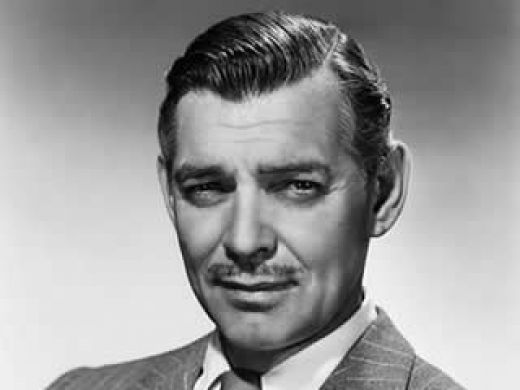
Nothing gay about that one and nothing gay about the ones worn by Errol Flynn or Clarke Gable.

Errol Flynn


Clark Gable

I'm just musing away here not wishing to be offensive about anybody and trying to keep calm as Meryl Streep, in all her ignorance, has taken on the role of Margaret Thatcher in a movie called The Iron Lady, which is due for release at the end of the year, in the USA, to qualify for an Oscar – oh woe is me; why don't they make a movie about that nice Mr Hitler?

Streep, as I say in her ignorance, has probably ignored advice not to play Thatcher and has an idiotic Dennis Thatcher in it too; he was a clown and is played by a clown. The only person on this page who should wear a moustache is Meryl Streep – nuff said.

Best of luck, Movember, and if you know anybody growing one for prostate cancer research do your best for them or click on to the site in your country - here are links for the UK one and the USA one too.

http://uk.movember.com/ & http://us.movember.com/


Sunday, November 13, 2011

The dedication of cleaners.

A typical Craftsman's House in the USA.

It's a funny time for us at the moment as we are about to embark on another adventure by moving in to a cottage at the end of the week – if everything goes through that is; if all the I's are dotted and the T's are crossed.

So this is about this and that – I have always had problems with cleaners; not vacuum cleaners but the ones that come in and clean. I suppose they have trouble with me too.

Many years ago, when I stopped working for the post office on the motor bikes, and before I went to drama school, I took a job in the British Car Industry at Morris Commercial Cars, as a matter of fact. They gave me a job in which I was out of my depth but if they had told me what I was supposed to do I might have been able to do it. I was a Material Controller. On the first day they showed me to my desk at the back of a big office – something like in the movie Metropolis!

The first thing I saw on the desk were the 2 phones; I asked myself, why will I need 2 phones?

One was for internal calls and the other for outside ones. I had to ask the girl on the switchboard to put me through for each outside call and dial the internal ones myself. If someone was away from their desk someone else had to answer it and take a message. There was no 'I'm either away from my desk or on the other line' business because if you didn't answer the phone the office manager would tell you to answer the bugger!!

My job, now I think back on it, was to make sure that all the materials, that I was responsible for, were on the premises and ready to be taken to the assembly line for when it started.

That's quite easy if you think about it; if they were to manufacture the following week 200 Morris Minor vans I had to make sure that the tyres that fit that model would be delivered from Fort Dunlop and if they were late I would have to get on that phone – the external one – after talking to the very nice girl on the switchboard. If they were late I would have to call Fort Dunlop again and chase them up.

That's where the other phone came in; it would ring from the assembly line and ask me where the tyres were. Sometimes the man on the other end would just say “where are those f-----g tyres?”

That sounds simple but it wasn't. I was also responsible for other things – maybe door handles or something to do with the dash board.

I would have to look in a book and see how many particular parts were needed for each vehicle – each van needed 5 tyres so if you forgot the spare and only ordered 4 you were in trouble - or at least I was.

I think it was the first week that I was there that I forgot something and they had to send the whole assembly line home!!

I'm not sure whether I was just no good or just not trained; my desk would get full of papers and one morning I was called in to the office manager's office; the cleaners could not clean my desk because of the papers.

I had nowhere to put them when I left each night; I needed to leave them where they were so I could find everything the next morning. One morning I came in and there were all the papers in a pile on my chair – and they had cleaned my desk!!!! It wasn't dirty – I had kept it free from contamination by piling papers on to it. It took me a long time to put them back in to some kind of understandable order again.

Was it really so important to wipe that tiny bit of surface?

Even though I am sure they are wonderful people, and I have always got on well with them, their duties drive me up the wall.

When I was in Edinburgh recently I had to share a dressing room with quite a few people of all ages and sexes. But there wasn't a mirror in there to apply make up etc so I would go into the disabled person's lavatory next door. I'm afraid that coincided with the cleaners who wouldn't let me in one day – they had complained to me before that by walking passed them and just getting on with it disturbed them; so I was shown to a better place from that time on by the management.

As I have said they are wonderful people but . . .

I did a film once in Bournemouth at a film school and one of the students told me that they were making an animation film in one of the offices; the idea of the film was that all the papers on the desks and the rubbish bin came to life and moved about the office. This would be achieved by a stop motion technique when they film one frame then move things and film another frame and so on. I'm sure you know what I mean. When they do this they have to shoot 24 frames per second for it to be played back in real time.

One day they left the door to the office open and the cleaner came in and put all the rubbish into the bin and took it away – ignoring the 'do not touch' notice.

Oh no! People are going to think I am having a real go at cleaners but let me ask you this: what is the matter with a bit of dust??

When I moved to Los Angeles I lived in Silverlake – the Paris of Los Angeles, so they say. I was sharing a house with a few others; we had the run of the house and our own rooms. It was a 'craftsman’s' house built maybe in the 1920s and was very attractive. In fact the picture above is very similar to the house where I stayed.

We had a wonderful garden and the weather was glorious but none of the other people knew how to tune the television so that was left to me.

The landlady had been paying for cable TV and never watching it so as soon as I tuned it in for them they were delighted and thought I was a genius. Every TV in Los Angeles, I don't know about the rest of America, had to be tuned in to Channel 3 and then you could use the zapper – it was a simple as that.

One night per week I would come home and they would be sitting in the sitting room with no TV on; the reason? The cleaner had unplugged the TV during the day to use the vacuum cleaner – it didn't matter how many times I asked her not to and to use another socket she didn't and vacuumed away with its infernal noise as if there was nothing as important in the world – or on the planet as people annoyingly say these days.

Sunday, November 6, 2011

Bonfire Night.


Remember, remember the fifth of November; gunpowder, treason and plot. Those are the words that we would hear when we were children and the other words you would hear would be 'penny for the guy.'

In the early 17th Century around 1606 or so, just at the time Shakespeare died, Guy Fawkes was caught under the Houses of Parliament with a disgusting amount of gunpowder; and guess what he was planning to do? Why blow the place up, of course.

But he didn't because he was caught; he was tried, with his co-conspirators, found guilty then hung, drawn and quartered; he was a Catholic.

A year or two later, the King, King James I, I suppose, started a tradition that lasts till this day; he commissioned a sermon to commemorate the plot and Bonfire Night, as it is now called, is celebrated with bonfires and fireworks.

At the end of the evening an effigy of Guy Fawkes, the guy, is thrown on to the top of the bonfire and as he burns the crowd cheers the burning of the Catholic, for he was a Catholic, and the leader of the Gunpowder Plot – that is the plot in the opening line of the old poem or children's rhyme.

At about the same time The King James Bible, or the KJB, was getting published which owed a lot to another man who was also executed William Tyndale.

'Penny for the Guy' was shouted by children, when I was a child here, but I didn't hear it recently on my travels; didn't hear it at all. Children used to make their 'guy' by stuffing old clothes with newspaper, making a mask for the face and placing a hat on top. Then they would put their guy into an old pram or a cart and stand on the corner asking people for money – hence 'penny for the guy.'

A lot of money was collected which went towards buying fireworks; it was collected under the guise that it would go to charity – but it didn't. The same as with the carol singers at Christmas time – their collections are supposed to go to the church but they rarely do unless carried out by an organisation.

My parents had never heard of bonfire night, when they came to this country, but joined in all the same; the next door neighbours would collect firewood and the like for the annual bonfire and as we both had huge gardens we would share the festivities.

Fireworks were purchased, a guy was made and plenty of eats like chestnuts, baked potatoes, sausages and drinks were made and we had a wonderful time.

I remember pointing out to my parents that we were celebrating the burning and torture of a Catholic and they dismissed me as a wet blanket.

I think the fireworks in those days were dangerous as they were freely available to anyone over the age of 13 and when we were at school we would frequently have bangers (firecrackers) thrown at us as we walked home. Firecracker is such a tame word – they were bloody bangers and it's a wonder more of us weren't injured.

As it was there were always warnings on the news and items about children who were maimed by firework accidents; but what did they expect when they were available for children so young? The truth was we could see the bangers being thrown at us and we'd run out of the way – but some girls didn't.

These days people are more aware; fireworks are still legal here but the qualifying age has risen and the bangers are not so . . . . well I don't know. It was Diwali a couple of weeks ago where I heard very loud bangs which segued into Bonfire Night and as I type this I can still hear bangs. A lot of the bangers actually sound like loud gunshots.

Some of the fireworks can be held by hand such as sparklers but when they finish sparkling they should be thrown into cold water as children can pick them up when they 'go out' as they take a long time to cool off.

I remember as a child I was given a firework to hold; I was told it was quite safe and that it wouldn't go off in my hand and I remember standing there as the pattern lit up the sky not believing it was safe to hold so I let it go.

Before the firework hit the floor, when it was maybe 6 inches from my hand it went off - BANG!!

I don't know what kind of premonition or warning made me let it go but even 6 inches or so was not far enough as it burned my right wrist severely; no blisters do I remember just the pain up to my elbow but I thank my lucky stars I let it go.

I've never particularly liked fireworks in any case without any influence from that incident. I have seen firework displays at The Hollywood Bowl and the Edinburgh Tattoo and actually enjoyed the one at Edinburgh.

I hated the ones at The Hollywood Bowl as they interrupted the music; one time I was getting quite excited as the 1812 Overture neared its climax but as soon as it did the firework display started which brought the gasps, oos and ahs from the 18,000 crowd which drowned the music.

Bang!! I hear in the distance! And still it goes on.


Tuesday, November 1, 2011

Vigorish, Sausage Week and all those ones.

Plump and juicy Cumberland Sausages.
Here in Britain the date today is 1-11-11; in America, of course it's 11-1-11 but in either case it is a uniquedate. Another unique date would have been 1-11-1111 but that was almost a millennium ago.

It is also my darling wife's birthday who never reads this; her date was always getting mixed up in America where they would write it the other way around; even on her green card they got the date wrong – not by putting it the wrong way around but because they put the 4th instead of the 1st .

It is also, this week, British Sausage Week 2011.

Launched yesterday, Monday 31st October 2011 and organised by the British Sausage Appreciation Society, British Sausage Week is the most recognised food week in the retailer calendar.

A pop singer, Noddy Holder, is, apparently, the face of the British sausage and will, I am told, travel about the country promoting the British banger.

If there's one thing they can't do in America it is make sausages. Sometimes if you ask for sausage in a restaurant, with your breakfast, they bring you a sausage patty; now they are about as good as a one legged man at an arse kicking party.

Why do they call them bangers? Well the best way to cook sausages is to fry them. Sorry to use that F word but it's a fact, and whilst you are frying them you stick your fork in to them to let some air and juice out and this makes them bang – ever so slightly.

So I was out and about, yesterday, and I heard, on the radio, that it was sausage week and went to the nearest place, to where I was, to find a sausage which happened to be Uxbridge. I walked along the High Street and there, in a kind of mini-mall, was an old type of greasy spoon cafe and it said outside 'Bacon or Sausage Rolls, tea or coffee £2'. So I went in.

I didn't expect them to have the tea I like which is Earl Grey decaffeinated – descaffinado in Spanish – so I asked for hot water to put my tea bag in and they charged me £1.75 for the roll.

As I sat waiting for my sausage roll I saw on the chalk menu, behind the counter, some of the prices which made me laugh. Don't expect to laugh yourself as I have a strange sense of humour.

There was a play many years ago – a really good play by Arnold Wesker - called Chips with Everything and that menu reminded me of it. It didn't have chips with everything on it but years ago it would have; just goes to show how times and tastes have changed. There were plenty of salads and mashed potatoes on the bill of fare.

For instance Pie, Chips and Peas was £3.50 – but this is the bit that made me laugh – it was 20p extra for gravy!!!! 20p extra for gravy.

Toast was 55p but with jam it was 65p; also add peanut butter or Marmite would cost 65p too.

Who went around charging the 10 and 20p extra for things?

They also had a very interesting thing; they had fresh sugar on the tables which I haven't seen for years. It was in a glass canister with a chrome looking top; when tipped up it lets exactly one teaspoon of sugar through and into your drink; if you take sugar. I don't. I sat watching people shaking the glass as they thought it was blocked.

By the way the sausage roll wasn't great; it was a round roll – what they call here a cob – and they had put butter on to it; yuk.

So my first day of sausage week wasn't very successful.

But I got to thinking about this date so I have decided to have a bet. I used to bet some time ago but I haven't had a bet for years. I have decided to have a Yankee on the horses. I don't know why it's called a Yankee but maybe it's because it's 11 bets – as with the stars on the American flag.

You choose 4 horses and you bet – you'll have to believe this mathematical equation – 6 doubles, 4 trebles and 1 accumulator; that's 11 bets.

For anybody who has never done it a double is when 2 horses win and you put, automatically, the money you made on the first horse, plus your stake back on to the next horse. A treble is the same but with one more horse and 4 horses actually make 6 doubles and 4 trebles.

In this country there is no betting or gambling tax and the bookies do not take vigorish; people I know in the UK probably don't even know what vigorish is well (Wiki coming up) Vigorish, or simply the vig, also known as juice or the take, is the amount charged by a bookmaker, or bookie, for his services. In the United States it also means the interest on a shark's loan. The term is Yiddish slang originating from the Russian word for winnings, выигрыш vyigrysh.

I know people in America who just don't believe that the bookies here take no vigorish and people who win the lottery take it all and it is not taxed. £101 million a couple won a few weeks ago and they didn't pay any tax - £101,000,000 – which has to be about $150,000,000 – and I know people in America are reading this and not believing it.

How do the bookies make their money? They don't always make money on every race. But they work the odds out by the amount of money that is being gambled on to each horse. If everybody put their money on to one horse they would be mad to even offer odds. Then they would probably offer odds of 1/8 which means you are putting £8 on to make £1; not worth it – it might just lose.

Here's how a double works; if the first horse is 2/1 – that is 2 to 1 – you put £1 on, win £2 and add the original stake you wagered which makes £3 going on to the next horse. If that horse wins @ 2/1 that's another £6 you have won plus the £3 stake giving a total for that double of £9. And that's just for 1 double; you have 6 doubles and if all the horses are 2/1 that's £54 for the 6 doubles than you have 4 trebles which is £27 for each treble (if all the horses are 2/1 don't forget) which is £108 plus £83 for the accumulator making a total for your 11 bets @ £1 each (outlay £11) £191. Hang on – add £54 to that for the doubles. Pretty good aye? Yes but all the horses have to win and they all have to have odds of at least 2 to 1 – they may be better than that or worse but it's a mug's bet to be truthful. You would be better off putting the £11 on to a really good horse or better still keeping it in your pocket.

So here we go – I haven't even bought a newspaper yet to have a look at the form but you will see how I get on before the end of this post.

Incidentally – the date at the beginning is put down differently in America and I dare say the betting will be like that too. They would probably call the betting I mentioned in the example 1/2 but they will know what I mean and in a country where the tax man waits by the machine in Las Vagus they probably won't believe about the betting tax and the lack of vigorish here either.

So to choose some horses: I have now chosen the 4 horses and they are – The Big Easy in the 2:20 at Exeter; Griffin Point in the 2:30 at Kempton Park; Kassiodor in the 3:00 at Kempton Park; Rainsborough in the 3:30 at Kempton Park.

I have been around to the bookies – there is a bookie's shop on most corners – and placed my bet which cost me £11. So now I will wait to see the results and if successful go back around there and collect my winnings.

In America – and I never had a bet in America – they don't give the time of the races they just say the 1st or the 4th race but over here the race is identified by the time.

If I had chosen 6 horses that would have been 57 bets and is called a Heinz – for obvious reasons and would have cost me £57 today but if they all win you win a lot but it's a bigger mug's bet than The Yankee.

The first horse The Big Easy didn't come in the first 3.

The second horse, Griffin Point, came 6th.

That means the next 2 have to win – I have lost the accumulator, the 4 trebles and 5 of the 6 doubles – didn't I say it was a mug's bet?

And I've just heard that the 3rd horse, Kassiodor, didn't come in the first 3 either. Maybe I'll have another bet on November 11th – memorial day – which will be 11-11-11 on both sides of the Atlantic and I'll bet they will all come 11th!!