Sunday, June 27, 2010

The First Day of Spring; chapter one.


Yesterday I finished my novel and pretty soon I'm going to read another; I jest, of course but I have finished the first draft. Now I'll give it a few days and start all over again.

At the moment I have written 73,116 words and I suppose when I do the next draft it will be more.

It's called The First Day of Spring; my last novel had three or four changes of title but I think I like The First Day of Spring already.
The story is about two Irish women - mother and daughter – and is set in Ireland. The daughter, Nuala, never knew her mother, Gertie, and knows very little about her and when her father, Eddie, dies she sets out to find out about her.

It's set in the 1940s and 1966; the year England won the world cup and there is not mention of it in the novel.

Anyway, here is the first chapter and I hope you like it.


On March 8th 1966 Nelson's Pillar, in O'Connell Street, Dublin was bombed. The statue, itself, came falling down together with Nelson's head which, for one hundred and forty eight years, had nestled on top of the pillar one hundred and thirty four feet from the ground.
The explosion, which was carried out by a rogue element of the Irish Republican Army, the IRA, led by Joe Christle, a qualified barrister and socialist revolutionary, didn't cause any damage to O'Connell Street and there was nobody injured but a taxi, parked nearby, was destroyed. Two days after the timed explosion the Irish Army Engineers blew up the plinth and broke many of the windows in O'Connell Street and the rubble from the monument, including the head of Horatio Nelson himself, was taken to a dump near the North Wall.
For a student prank, Frank Dolan and six other students stole the head and leased it to an antique dealer in London to grace his shop window; it was also used in a television commercial shot at Kilkenny Beach and made its stage début with the Irish traditional music band The Dubliners at the Olympia Theatre, Dublin.
The students eventually gave it to the Lady Nelson of the day and it is now in the Gilbert Library in Pearse Street Dublin.
Thirteen days after the explosion, on March 21st, the first day of spring, Eddie went for his annual visit to the pillar.
Eddie was the widower of Gertie and the father of the seventeen year old Nuala and he would visit the pillar every year to commemorate the day he first walked out with his late wife.
Nuala was born and lived in Ballybough Dublin in a little street called Poplar Row. Some people might say that poplar Row was actually in North Strand or even Fairview, but the people that lived there called it Ballybough. At one end of the street there was a block of flats called Ballybough House; now why would they call it Ballybough House if it was anywhere else apart from Ballybough?
Ballybough has a history of being a place where prostitutes hung out and had the nick name of Mud Island at one time; when Sean O'Casey's play 'The Plough and the Stars' was presented at the Abbey theatre the audience booed and rioted when he introduced an Irish Catholic prostitute to the proceedings; the audience, who said there was no such thing as a Roman Catholic prostitute, had obviously never been to Ballybough!
For most of her life Nuala lived with her granny and granda in a house in Poplar Row only visiting her father who lived in Ballybough House.
All of his working life Eddie had worked as a barman; once upon a time he had aspirations about owning his own bar but when Gertie died he just carried on working to put food on the table and pay the rent.
His work mates said the life went out of him as soon as he lost Gertie and he lived a solitary life in his flat just going through the motions of life.
He would sit in his chair and think of the days he had spent with his blue-eyed beauty walking through Fairview Park, going out to Dollymount or once in a while taking the bus to Portmarnock.
He worshipped Nuala but didn't like to have her near him as she reminded him so much of Gertie.
He was a good barman, having served his time, and he could mix any kind of drink from any part of the world you would wish to name.
If you want a Guinness in Dublin you ask for one and you will be given a pint; the barman will put about one third into a pint glass and let it 'settle' for a few minutes; for a good pint of Guinness needs to settle and Eddie could pour a really good pint; however, he hadn't taken an alcoholic drink of any kind since losing Gertie.
Dubliners have travelled to other countries and seen how they treat Guinness and sometimes have drunk something else rather than see their beloved black stuff being treated like any other beer.
An Irishman walked into a pub in Birmingham, England, and asked for a pint of Guinness, one day, only to see the excuse for a barman put a pint glass under the 'Guinness' tap and press a button; this opened the pipe and dropped a pint of Guinness into a glass; dropped being the operative word as this had as much to do with pouring and caring for a pint of Guinness as throwing a pint of paint at a canvas and calling it art; people have called this art, of course, just as the people from Birmingham used to call that drink a pint of Guinness; they were both wrong.
Of course if you only wanted a half of Guinness in a half pint glass you would ask for a glass but if tourists would ask for a half pint he would know what they meant and give them a glass with as much care as he would give to a full pint; a half in Dublin usually meant whiskey.
After Gertie died he changed jobs – or changed bars more like – and took a job in a bar closer to home where as well as going to work he could go to mass most days.
He was thirty seven years of age when he went on his annual pilgrimage to the pillar and on that day he died; people thought he was drunk but you will know from reading the above that he wasn't. He was standing near where Nelson's Pillar used to be and looking up to where he figured Nelson used to stand.
As he looked he thought he could figure out the exact spot where they stood on their first date and he was sure, as he looked, that he could see a bird hovering at the spot in the sky where he had stood with Gertie, and as he tried to follow the flight of what he thought was the bird he wandered out backwards still looking up and thinking of Gertie, as the bus travelling to the airport went over him on that first day of spring.

Wednesday, June 23, 2010

The World Cup.


Well there we are; England move slovenly into the last 16 of the World Cup (pun intended) and the USA streak to it and should be proud. I didn't watch the England match but watched USA v Algeria and it was very exciting; lots of goalmouth incidents all end to end stuff and after watching England's two boring games can you blame me?

The big problem with the football generally is the standard of play all around; where are players like Pele, Maradona even Nobby Styles you may ask – well they are all there. There are loads of players with the skills of the past greats – not Georgie Best, I'm afraid – but they have developed further skills; acting skills, diving skills, shirt pulling skills all the skills that the game of Association Football, soccer for short and known to the world as just plain football, just doesn't need.

It's almost impossible for a player to dribble the ball for any length of time without either getting tripped up or making a dive when a defender comes close; there they are rolling on the grass with agony and pain on their faces only to jump up two minutes later as soon as the free kick has been awarded or the defender has been given a yellow or even a red card.
And where do they get the referees from?

Every world cup as long as I can remember have used piss poor referees; we can see it as soon as the first game starts with bad off-side decisions, goals being disallowed, fouls being called that are not fouls and the general momentum and flow of the game being interrupted by referees and linesmen with no nous or experience.

The referees in the English football league are excellent with good reputations and in depth training. I know a lot of fans of the Premier League there might not agree with me but even they would have to agree that the difference between the refs in England and at the World Cup is vast.

I don't advocate bringing in replays on television cameras for disputed fouls and you can never reverse decisions after the game is over but something has to be done about it.

My opinion is not worth a plum nickel, I know, and most of the time I am like everybody else who has an opinion about football – I don't what I'm talking about. I accept this just as I accept that everybody from a child in the street to the drama critic of The Guardian is free to criticise me and my profession as an actor so let's have some free flowing football shall we.

Another thing I don't like about the TV coverage – and this seems to be general these days – is that I have a regular sized TV; I somehow don't want a wide screen TV dominating my life and I am satisfied with what I have so when it comes to watching football on TV I like to see close ups of the play. Not close ups of the players faces or even faces in the crowd, which they are also overdoing, but close ups of the players skills.

I know they have to take the wide shot so we can see the moves, and players running off the ball, but it seems they spend too much time on the wide shots so we can see the banner advertising surrounding the field of play. They are not seen at the ground, like they are seen on TV, as they are computer generated into different languages, but how can you see the intricate skills when the camera is so far away?

Have a look next time you watch a match and see the steadicam operators running up and down the touch lines – why doesn't the director use their shots more?
And who's going to win the World Cup? Who knows - and he's on first base!!


Tuesday, June 15, 2010

Happy Bloomsday


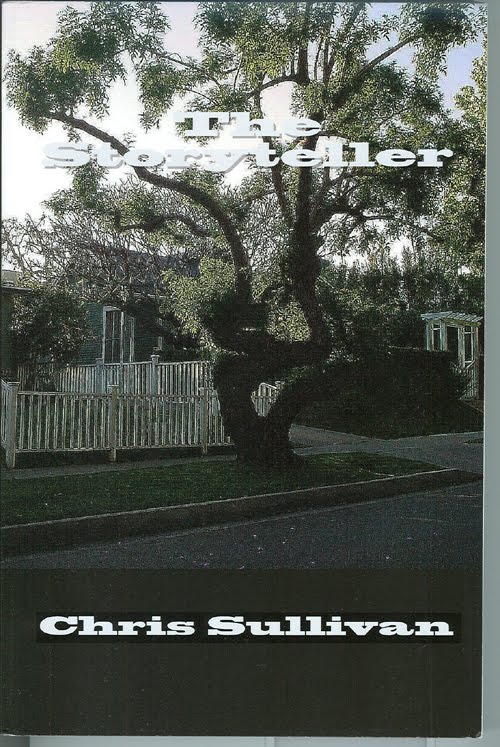
As I mentioned the other day here is the Bloomsday episode from my novel; the novel has a new title and cover as above; yes I am the model for the picture which is a self portrait.


Alfredo has been on a sun deck at night looking at the stars; as he is searching for inspiration he hears six gun shots in the distance and tells his friend when he arrives; they chat:

Excerpt from Alfredo Hunter; the Man with the Pen. By Chris Sullivan.


. . .. . . . . . . he said: “Bloomsday is next week. You got anything planned for next Friday?”
“No.”
“I want to go to an Irish theatre group at Fountain and Fairfax. They’re doing some of Ulysses. Do you want to come?”
“Yes” I said.
I knew that people walked around Dublin on each June sixteenth to celebrate Bloomsday and visit all the bars that were mentioned in Ulysses, which took part on that famous day but as with Saint Patrick, it didn’t seem important to me when I lived there but in Los Angeles it was different.
“There’ll be helicopters here soon” but he was wrong.

Chapter 5

Alfredo didn’t like the production at the Bloomsday celebration: I could see that. I liked it as they performed pieces of Ulysses that I knew: one was an excerpt from the Nighttown episode, which made me laugh. I looked towards Alfredo, as I laughed, and his face seemed to be in pain. When one of the girls was doing a monologue a newspaper critic shouted out:
“Speak up Gertie, I can’t hear you!”
I could tell he was a critic as he was sitting with a clipboard on his lap and when he spoke Alfredo gave me strange look. He thought it interesting that we could see up the girl’s frock as she sat doing her monologue and he whispered to me:
“Are we supposed to be seeing next week’s laundry?”
I laughed!
The street lights were out when we left the theatre. Some kind of major electrical outage as it also affected the traffic lights at the junction of Fairfax and Fountain Avenues so we couldn’t even see the hands in front of our faces. Not that we had our hands in front of our faces but if we did we wouldn’t be able to see them. We had to risk life and limb to cross the street.
Alfredo took it as a kind of omen.
“What do you see?”
“What?” I replied.
“The stars! Look up.”
We both looked up and it was a clear night. There were a few cars around and they were too busy trying to cross the Fairfax-Fountain junction to worry about two pedestrians, but Alfredo didn’t take his eyes away from the stars as he crossed Fountain to the north side.
“Look, at that” he said, and he stopped walking. He had spotted something in the sky. Something that affected him emotionally which was in his voice as he almost recited:
“The lights in Los Angeles went out on Bloomsday!”
We looked up the hill towards Sunset and everything was black. Usually, when traffic lights fail in Los Angeles, the red light flashes and the rules of the road change to that of a four-way-stop. I mentioned this to Alfredo:
“That is one of the most telling things about the Americans” he said “or maybe just the Angelinos. In an emergency they click into ‘emergency mode’ – plan ‘B’ - but then, on the other hand, it shows me that they are fucking brainwashed.”
They didn’t do that this night though. Everything was in darkness. I couldn’t really see him, as we walked, so his deep Dublin accented voice seemed to come to me through the darkness.
I had only been in Los Angeles, indeed America, for six months so everything was still new to me but with the eyes of a novice I could see things that the natives probably didn’t see and which I would cease to notice eventually.
“They only use one word for everything “he said. “Did you not notice that gobshite on the door at the theatre?”
I had asked the fella on the door, at the theatre, if there was an interval and the fella didn’t understand me. He was supposed to be an Irish-American but was probably standing as close to Ireland as he had ever been so his word for interval was intermission.
“Oh! Do you mean intermission?” he had said.
This would happen on many occasions as I got to know the language of America realising, eventually, that it was a language made up of words and phrases from the rest of the world and the American Indian languages. Because the majority of the people who used English were American their use of it would influence the rest of the English speaking world and in time would wipe out many languages leaving just one. The one left will be the American English Language with its one word for everything lowest common denominator limited vocabulary language. These thoughts went through my head more often than I wanted them to after Alfredo had pointed them out to me but not on this night; the night of the Bloomsday blackout. My vocabulary was limited enough without having it limited even more.
Alfredo mentioned the Indians as we traced our way along Fountain Avenue in search for his old car.
“This is what it was like for the Indians,” he said “This is how dark it was for them. You never see an Indian here and this is their country. The white man came along and fucked them off to oblivion but you know” and he stopped walking again, “can you blame them for not wanting to fight at night? The poor bastards! The poor fuckers kicked out of their land to make way for the settlers. You should read about the trail of tears or, to translate it from the Cherokee, ‘the trail where they cried.”
“Do you speak Cherokee?”
“Don’t be a gobshite.”
“I’ll try and read something about it” I said.
He laughed at this: “You’ll need to read a lot of books by the time I’m finished with you.”
There seemed to be a complete lack of traffic along Fountain Avenue, so our way wasn’t even lit by the headlights of cars. The neighbourhood was not the safest of places to be at that time of night and the thought of being stuck up by somebody with a gun crossed my mind a few times. The lack of cars also made it very quiet, which wasn’t natural for that part of town.
Alfredo’s car seemed to be parked further away than I had imagined and I didn’t know where we were.
“Do you know where we are?” I asked “Do you know where we’re going?”
“Follow me” he said striding forward like the wagon train scout he thought he was.
As he walked ahead we could see in the near distance the glow of a cigarette butt. He started to walk real fast when he saw it, leaving me behind, and when he got closer we could see it was a girl. He slowed down and waited for me and she said “Good night for a party, boys?”
Alfredo gave her a strange look then turned to me and said “Nighttown!”
He giggled as we walked on and said “Did you see the instinct of the survivor? I put space between us. I surrounded the enemy.”
Him and his imagination!
I couldn’t understand why there was so little traffic and when we turned into Ogden Avenue it got even creepier; all the houses with their lights out and a few people standing in the front gardens. There were more trees in Ogden, which made it a lot darker, and some of the people were leaning on the trees or sitting on the tree stumps. They were mumbling to each other, which was strange: normally when Angelinos want to talk they talk out loud and don’t care what time of day or night it is. They laugh out loud, shout and scream, if they feel like it, no matter who is trying to sleep or get some peace. This time it was weird. It was as if some bomb had exploded and we were walking through the aftermath of a holocaust. We walked passed people smoking dope, we could smell it, looking at us as if they were in a dream and we were reality stopping by. But we didn’t stop by we looked and made our way to the car which Alfredo seemed to know the whereabouts of all the time. When we had almost reached Sunset Boulevard we got to the car; clipped to the screen was a parking ticket.
“Fucking place,” Alfredo said as he ripped it from under the wiper, “getting a parking ticket at ten-o-clock at night!”
I looked around at the darkened street “Look over there” he said.
“What?”
“Over there – look at that tree.”
There was a very strange shaped tree on the other side of the street.
“I think it’s a jacaranda tree” he said “but look at the shape. It’s two jays; James Joyce!”
I thought it looked like two esses but he saw two jays.
Three people from the street were standing around it. They had put a couple of candles on the horizontal bits which they frequently used to light whatever it was they were smoking. It seemed to light the tree up.
“If that’s not an omen I don’t know what is. We are in a street named after a poet . . ”
“Who?” I said.
“Ogden Nash.”
“How do you know this wasn’t here before Ogden Nash?” I said.
“I don’t!” he said “but what you don’t know doesn’t mean shite. We are in a street named after a poet, on the night of the Bloomsday blackout and the tree we are looking at is shaped like James Joyce’s initials.”
“Or Sarah Siddons” I said.
“Who?”
“Sarah Siddons: the English actress.”
“What a load of shite – I’m inspired and you talk of an English actress.”
He didn’t say anything he just looked at the tree as if it was the second coming; the people around it looked over at us. One was a woman of around fifty five who was sitting on the kerb; she had black heavily made up eyes, with the mascara running down her face and long black hair and when Alfredo opened his window she looked over at him and said “Farinelli!” When she said this she clenched her open fist as if she was castrating Alfredo.
He laughed as he started the motor.
“What was that about?”
“There’s a movie playing in West LA called Farinelli about a castrato.”
“The trail of tears?”
“Yes” he laughed “it would certainly make your eyes water.”
He got the parking ticket and kissed it then he flung it into the back of the car.
“But I’m inspired” he said “I’m inspired.”
“How come you know so much about Indians?” I asked.
‘You should know. The Indians are like the Irish. Like the Irish before Christianity hit Ireland; in any case I’m a John Ford fan.”

Sunday, June 13, 2010

James Joyce, Bloomsday and Shakespeare.


It's going to be Bloomsday this week – June 16th – and on Bloomsday I think I'll put up here on the blog the 'Bloomsday' episode from my novel Alfredo Hunter; the Man With the Pen.

Of course I have changed the title of my novel from The Storyteller and on Amazon.com you can see excerpts from it under the former title. In fact on Google they have the whole novel somewhere in their library of all books ever written – or whatever it's called.

Bloomsday is taken from the novel Ulysses which takes part in the day of June 16th 1904 and the leading character therein Leopold Bloom – not Leo Bloom from The Producers by the way.

James Joyce set Ulysses on June 16th 1904 because that was the day he met the love of his life Nora Barnacle; well he did not actually meet her on that day but it was the day they first walked out; it was the day she did a small sexual favour for him which might have affected his mind; he thought if she can do that for me on the first day she would do it for anybody. It wasn't necessarily true, of course – what do I know? - but it led to bouts of jealousy and anxiety from the genius Jim which would upset Nora.

They left Dublin soon after and never returned to live there again – everything he wrote about Ireland he wrote from abroad. At one time they lived in London where they married – some time during the 1930s.

There is a lot of James Joyce in my novel; number one the leading character writes a play about him, there are various references to Ulysses and the prologue is actually a pastiche of his first novel A Portrait of the Artist as a Young Man. That novel starts off with 'Once upon a time and a very good time it was there was a moocaw coming down along the road and this moocow that was coming down along the road met a nicens little boy called baby tuckoo . . .' and my novel starts off with 'Once upon a time and a long time ago it was in the city of Dublin in the land of Ireland there was a man with a pen' – and then there are other phrases I use in the prologue; Joyce talks of the world being 'a great ball surrounded by clouds' and I use that phrase adding 'as the great man once said' and he also uses the phrase a 'greasy leather ball' which I also use to denote, as he did in the novel, the way some boys from the past were forced at school into sport and I remember at school trying to head that greasy leather ball they call a football.

But even though James Joyce is a subject of my novel I don't think I am influenced by him at all. I know every writer, especially the Irish ones, feels James Joyce looking over their shoulder as they write but I am more influenced by Charles Dickens, if anybody, or even William Shakespeare. Now that might sound as if I am comparing myself to Shakespeare and Dickens but nothing could be further from the truth.

I can't remember ever learning anything at school; I never did any work at school I didn't have to and the only subjects I liked had to have a story to it – like stories from the bible; the English Literature was non existent unless you want to count Seven Pillars of Wisdom by T.E. Lawrence (Lawrence of Arabia) being passed from pupil to pupil to read out loud in schoolboy monotones and turning into Seven Pillows of Sleep for me!

So I didn't do English Literature till years later after I'd read lots of books and even been to drama school – I was a mature student studying D.H. Lawrence (surprising what one letter makes), William Golding and First World War Poetry by a teacher who loved the subject.

At drama school I was reading and trying to perform Shakespeare when I hardly knew English!! Of course I was in a lot of trouble as I hadn't heard of any of the plays or even the characters and the only way I could even understand it was by sorting out his use of parenthesis and semi colons; without sorting those out I would have been up the creak without a paddle.

I eventually did Shakespeare professionally although not as much as I would have liked to; I earned a lot of money once doing a Shakespeare play for the BBC, even though it was a small part, and when I first came over here I 'workshopped' Richard III playing Richard which went very well – I guess some of the training must have gone in.

When I write I bear in mind Shakespeare's use of the English language – again I am not comparing myself to the greatest genius that has ever lived or the two greatest novelists in the English language but I would recommend anybody who wants to write to follow them as opposed to Dan Brown.

So remember on Wednesday that it is Bloomsday; there will, more than likely, be something on near you, if you look for it, and if you are in Dublin go on the walking tour if you can; go to Mulligan's Pub in Poolbeg Street and drink a pint of the best Guinness in the world and then come back and read my blog about my two leading characters celebrating Bloomsday in Los Angeles which was based on a true incident in 1995.

Thursday, June 10, 2010

you say tomato and I'll say . . .


This is for all the people in the USA and the UK who have never been to the 'other' place – you know if you've never crossed the Atlantic.

I wrote the other day about working in 'rep' in the theatre and somebody pointed out to me something that was pointed out to me years ago. In the UK when you do one play after another in the theatre it is called in repertory. If you do one play a week, a fortnight or a month it's still the same in repertory.

If you do – shall we say – three plays in the one week every week those are said to be in repertoire; just like a musician or a singer has so many songs or pieces of music in repertoire.

In the USA that is not so; they call doing plays consecutively, one after the other, in repertoire and the three plays that gets done each week all the way through the season in repertory. Now I don't argue with the other things they say and their phrases but this time they have got it wrong.

There are lots of other things you will notice – well you might not – and the first thing I noticed was the traffic lights; they're great. When you come to the traffic lights and the lights are on red and there's no other traffic there you are allowed to nip around the corner; you can't go straight ahead or turn across the road but you can nip around the corner. Now don't you think that is absolutely fantastic? You have to stop first or you'll get a ticket but it's saves fuel and time.

I find it amazing that nobody has been over here from Europe and taken that idea back as it seems the most sensible of things.

The other thing that has always fascinated me is why things here are opposite from the things over there.

I have always known, from the movies, that when the Americans put the light on they click the switch up; in Britain to turn on the light you click the switch down. It doesn't matter does it really so why do they do it? Or we do it? Why do the two things have to be opposite?

You will know about the driving on a different side of the road and the driving position in the car being opposite but did you know that in America the back brake on a bicycle is on the right handlebar. That's something I didn't know till relatively recently.

I did worry that the controls inside a car might have been the other way around but I needn't have worried – they're the same although most of the cars are automatic.

When I first came here fifteen years ago they didn't use or even know what the word queue meant; they would use line. Not may people knew or even know now what a fortnight is.

My pal bet me that nobody in a crowded bar would even know what a spanner is – I took the bet and went around the bar asking – and lost.

So maybe George Bernard Shaw was right when he said Britain and America were two countries separated by a common language.

Monday, June 7, 2010

my blog and the theatre.


I looked back at how many words I had written for my novel last week and came to about 5,200; so that, to me, is great; I put the increase of output down to this blog.

When you do things on a regular basis you get better at it; even though I might be writing a load of shit in both places – the blog and the novel – I am getting better at it.

It was the same starting a season in the theatre; the more you worked the easier it became to learn the lines.

As you will probably know when working in the repertory system in the UK you do a new play every two weeks, or every three weeks or however amount of weeks the particular theatre advocates.

One of the theatres I worked at, in rep, was the Royal Theatre in Northampton and that theatre would put a new play on every two weeks.

What would happen is you would start the job on Monday morning and rehearse for the two weeks before putting the first play on; in the evenings we learned our lines and by the end of the second week of rehearsals we would, more or less, know the them and then after a technical rehearsal and a dress rehearsal we would perform the play to the press and public on the Tuesday evening.

Then the next morning we would start the next play.

We would rehearse during the day and do the other play at night; so when did we learn our lines?

The rehearsal day would start at around 10.00 am or at least 12 hours after the previous night's performance closed; so if the play came down at 10:30 the night before we were not allowed to start the following day till 10:30 am.

We would break for lunch at around 1:00, finish rehearsals at around 4:30 – 5:00 then have to be back at the theatre at 6:55 for the 7:30 show – we learned our lines during the tea breaks, lunch time, the time between the end of rehearsals and the evening show and maybe after the evening show and my point is he more we had to learn the easier it became. That job lasted for eleven months – I had a month off to do 5 episodes of the British TV soap 'General Hospital' – and by the end of it you felt you'd been through something.

I did that to a lesser extent at other theatres and, even though we were adequately paid, it was good training; and it's the same with writing: the more you do it the better you become.

With regards to the blog people read it all over the world and I get the benefit and the pleasure of writing it; I don't have many followers and only a few comments but I can see by the stat counter where the readers live. Some of the hits come from posts I have written months ago and many hundreds of people have read the post about Bill Sparkman who killed himself some time ago in Kentucky and a few weeks ago I had many many hits when I wrote about proportional representation and the British General Election.

Someone asked me if I know what I'm going to write about beforehand and the answer is no; I sit down to write and it kind of comes to me once I start.

So thank you everybody out there in the world – people are reading from Russia to the USA – I tried to copy the map of visitors but it won't copy properly so I leave you with a picture up there of John Wooden who was a very famous basketball coach who died over the weekend aged 99; he had a great saying 'if you fail to prepare you are preparing to fail' - or words to that effect.

Sunday, May 30, 2010

Memorial Day and my hero.

Burcot Grange (above) built in 1890 and my home for a while as a young child.

It's Memorial Day here; Memorial Day Weekend with the actual 'day' being on Monday and who do I remember? I remember lots of people as I am fortunate to have a good memory. On a site in the UK called Friends Reunited I looked at the people in my class at school and there were just a few; one or two of them got in touch with me, the memory man, and one or two wrote to me that I had forgotten; so not too much of memory man after all. All the things I write on here are from memory and sometimes I look on the Internet for some details like the road where such and such happened; one guy I wrote to, wrote back and said he couldn't remember anything about school at all. If you mention his name to anyone from my class they certainly would remember him as he would sit back on his chair in full view of the rest of the class and . . . well maybe if I put that in it will be picked up as a metatag and draw porn readers to the site – so he forgot all about school did he? The teacher (male) of the class must have seen him but what could he do? What could he say? **** put that thing away? That boy is probably a grandad now and what would his grandchildren think? A year or two before that, a boy at school suddenly stopped coming to school; nobody said anything and we didn't notice that his name had been taken off the register; his name was Michael Holmes. He came to our house to play a couple of times and I got to know his sisters later on; after a few weeks we found out that he had fallen into the canal and drowned. It was a shock but the school didn't let us know; I don't know what age we were but I would guess around eight or nine; I was in the Junior School in any case – Clifton Road Junior School. Now I don't need memorial day to remember Michael as he springs into my mind quite often. What happens here this weekend is the same in Britain only in Britain this weekend it will bank holiday weekend – I think it was called Whitsun at one time and on this American Heathen word processor on this computer it comes out as a spelling mistake – there now I've added the word to the dictionary so it's officially in. In Britain remembrance day is in November and people wear poppies to signify the ending of the first world war at 11/11. That's when Britain remember their heroes. The heroes they remember, of course, are the dead from wars. I think they go back to World War One which started in 1914 and ended in 1918 and there is hardly anybody left who actually fought in that war – the great war the war to end wars. I heard recently that the last one died either here or in the UK. The other world war started in 1939 and ended in 1945; I have to put those dates as some people here have different dates when the Americans joined in; here they might say 1941-1945 and 1917-1918 – I have heard both and, indeed, people just might not know. I hate the idea of war as it has always been young men fighting old men's battles and even though I had a small amount of military service war heroes have never been my heroes; they are everybody's heroes and should be; they paid the ultimate sacrifice and they should never ever be forgotten - but my heroes have always been pioneers and not necessarily people who fight. I am more impressed by ideas and most of the long conversations I have are about ideas; once a week I meet a pal for breakfast who majored in philosophy and we have many an interesting tête-à-tête and I have read books by Nietzsche for example as a result of our meetings; I have another friend I meet once a week for lunch to talk about politics; I talk British politics and he responds with the American version. I feel quite privileged that I have experienced both worlds and can't think what I would have done without that knowledge; I would never have written my novel, for one, and I don't think I would have started my one man Irish show in the theatre – A Bit of Irish. But I have always been curious; I watched a film once called The Land That Time Forgot and I remember one line from it - Plato was right and I wondered who Plato was and researched it; I put this curiosity down to my lack of formal education so when I look back I don't regret anything about my education or experience. But the four men I admire the most (no not the Father, Son and Holy Ghost) are Muhammad Ali, John Lennon, Bob Dylan and Roger Bannister. I really admired the way Ali stood up to authority, forfeited his world championship for his beliefs and finally, in the end, won. A lot of people disagreed with him including Jackie Robinson who was also a black pioneer in baseball – his own business, of course, but I know very little about him. John Lennon was just a hero because he was a singer; I stood within three feet of him once in a bar after seeing the Beatles at the Ritz Ballroom, King's Heath, Birmingham. Looking at him then, and you could see the Beatles were destined for something, I wasn't sure if he knew what was going on; The Beatles came from a middle class background; John wanted to be a 'working class hero' but he was middle class; they were art students and up to that time art students – students in general in Britain – liked jazz. When I say students I mean mature ones as the Americans tend to call everybody at school students as opposed to pupils in the UK. When I was a student – a mature one – we liked The Beatles. Later on John might have been misguided by Yoko Ono but I think he was a man that did more for peace than is generally realised; I know Beatles fans dislike Yoko and he loved her but I love my wife; I wouldn't take her to work. Bob Dylan I just find the most talented poet I have ever heard or read; I like lyrics by Chuck Berry and John Lennon but Dylan has so much imagery in his work - just look at any of his lyrics – look at these I ran into the fortune-teller, who said beware of lightning that might strike I haven't known peace and quiet for so long I can't remember what it's like. There's a lone soldier on the cross, smoke pourin' out of a boxcar door, You didn't know it, you didn't think it could be done, in the final end he won the wars After losin' every battle. I woke up on the roadside, daydreamin' 'bout the way things sometimes are Visions of your chestnut mare shoot through my head and are makin' me see stars. You hurt the ones that I love best and cover up the truth with lies. One day you'll be in the ditch, flies buzzin' around your eyes, Blood on your saddle. I have been more influenced by Buddy Holly and Eddie Cochran when I know, as an actor, it should be Marlon Brando and Laurence Olivier. So who have I left out? Ah!! Roger Bannister.


Roger Bannister broke the 4 minute mile barrier in May 1954; I was a little boy watching my friend nearly drown at Moseley Road Swimming Baths and finding out that another friend had died. I lost a lot of time at school as I suffered from conjunctivitis (in the eyes) which developed into ulcers; I remember seeing the horrible white things on the blue of my eyes and I was told that this was because I rubbed them; I couldn't face the light and water would consistently run from my eyes.

So that was the end of my education as I failed the secondary exams - but that's only an excuse as I can clearly remember sitting to do a paper for the 11+ and not putting anything at all on to the sheet of paper.

Then one day on the TV, the news came on and it said that the 4 minute mile had been achieved; the race came on and there were only 3 runners in the race; the other 3 were invisible. Christopher Brasher was ahead with Bannister behind up to about half a mile and then Chris Chataway took the lead with Bannister second to him up to half way around the final lap and then on the final lap Bannister took the lead and made history; to a ten year old boy this was like an orgasm. Later in the year the Bannister/Landy Miracle mile and that was the best mile race I have ever seen – do yourself a favour and look for both races on YouTube. I won't give you the result of the latter race but John Landy of New Zealand broke the world record after Bannister and then they had to meet in the Empire Games. Have a look - it will bring a tear to your eye and a lump to your throat.

So I had to go a place called Burcot Grange - above; this is a very large house in Bromsgrove, Worcestershire. It is a very large Victorian House and had been donated to the Birmingham Eye Hospital by its owners giving prolonged treatment of children suffering from inflammatory conditions of the eye associated with harsh city life. It was also a place where squint operations were performed and a lot of the other children had lost an eye. It was at Burcot Grange that I was introduced to elevenses which was a snack at eleven-o-clock; maybe a biscuit (cookie) and some orange squash. It was like being let loose as there were 5 acres of grounds; so we played cowboys with real hills, valley and bushes to hide behind. The other thing I did was run; I was going to be a Roger Bannister and I ran around those acres every day. My mother came to see me with a tear in her eye, and encouraging one in my infected ones, every week and I cried when she left and then forgot her for a while. Of course one of the nurses was my girl friend; she was nurse Hollingshead and maybe 15 years older than me. She wrote to me for quite some time after I left and when I did they presented me with a book by Enid Blyton called, something like, Around the Year. It was a nature book and they wrote in the inside cover to Christopher with lots of love from Burcot Grange. I still have the book which is at my daughter's in Suffolk. As we sat there in the sun the nurses would 'time' me as I ran around the grounds. I remember I could get around in about three minutes; one day one of the nurses, who had timed me, called another nurse and said 'Hey! Is it the four minute mile or the four mile minute.'

I can just imagine the four mile minute. When I got home I would run around the block – where we lived – and I managed to get a sucker to beat. He was Roger and looked more like Roger Bannister than I did and I would let him run ahead of me so I could run along the back straight which ended just by the lane where we lived in South View Terrace on Moseley Road. So Roger Bannister is my hero; he ran for many years after that to keep fit although he retired from competitive racing early after the 'Golden Mile' to continue his studies to be a doctor where he worked at Northwick Park Hospital as a neurologist and later as Director of the National Hospital for Nervous Diseases in London and a trustee-delegate of St. Mary's Hospital Medical School in Paddington. A few years ago I bought his book called The Four Minute Mile, of course, and just as I was coming up to the Golden mile on page 224 about the Empire Games, where he met Landy, I found the page was blank. The next page was there and from there till the end of the book many pages were missing and there was only an intermittent report from that section. I called Amazon, where I had bought it, and they referred me to the publishers, The Lyons Press, and when I called them they hung up on me. So there we are – there are my memories on this memorial day; I wonder what yours are?


Landy and Bannister Statue in Vancouver; the scene of the Miracle Mile.

Friday, May 28, 2010

Facebook and Privacy.

I think I wrote on here about rock'n'roll Ralphs; rock'n'roll Ralphs is on Sunset Boulevard and Ralphs is one of the main supermarket chains here in Southern California.

When I go in there I usually go to the automatic checkout and use my 'Ralphs' card – by the way Ralphs is spelled without an apostrophe as a man called Ralphs started it; that's what they say or they might have invented him when they found that the sign writer at the first store had spelled it that way.

But I digress; when I use my Ralphs card – shouldn't it be Ralphs's card?? - a load of coupons come out of the machine. The machine knows it's me and knows what things I buy on a regular basis.

It give me coupons for other brands so most of the time so I throw them away.

But this got me thinking; Ralphs know what I buy there every week as it's on their system. What would happen of Ralphs was to sell this information to my healthcare insurance company and what if I bought a couple of bottles of whiskey there a week – or even whisky?? Wouldn't I be in danger of losing my benefit?

And not just whiskey – we are what we eat and we buy what we eat and I feel uncomfortable about broadcasting that to everybody; I'm a bit uncomfortable about letting the world see my DNA via this blog but I've got used to it. We have let Big Brother take over and with things like Facebook, MySpace and the like we are exposing ourselves to things we probably wouldn't want to if we actually knew the full details.

I have a Facebook page and my children periodically put photos on there of their activities with their children and it's great to see them but people actually put their ages on there, let their friends know when they are going away – helloooo the house is empty!! – and put all sorts of personal things on there.

The other day I received an e-mail from a friend of mine, Dave, in Wales with a link to a web page.

I went there and it was a link to a site selling Viagra!!

Dave sent an e-mail later and told me that Facebook went into his address book and sent e-mails to the people there – so who did I talk to about erectile dysfunction?

I don't have my correct date of birth on there as I was always suspicious about that and I have my year of birth on there as 1913!!! So what were they trying to do with the Viagra? Kill me?

I say be careful my friends in what you say on Facebook.

Just a short post today as it crossed my mind and in the true sense of Facebook - I am going to Porto's in Glendale for lunch; I love than Cuban sandwich.

Saturday, May 22, 2010

Acting, writing, searching for characters . .

The other day I went into my agent's office to make a recording; I do this quite often and my agent sends the recordings off to some people who are looking for a voice for their commercial; sometimes they want my voice and sometimes they don't so after I make the recording, which I usually do in one take, I go away and forget about it and if the commercial happens it's nice.

As I walked into the office, which is actually a house in Hollywood, I saw a friend of mine talking to another actor – there to put their voices on tape – and as they noticed me I did rather a big 'double take' which got a huge laugh from the other actors there.

The actor that was talking to my friend said “do you do comedy?”

Now the thing is 'yes' I do comedy – but doesn't every other actor; the question if we do it well?

But the laugh I got in the office is nothing to do with the laugh I might get on stage – or even on film; although on the stage you 'time' your laugh and know when and how to pause after the gag line in case you 'step on' the next line and in film you are left to the sense of humour of the editor which is why some editors are good at comedy and others good at action and drama; by the way most of the really great actors look for comedy in everything and the others usually have their heads stuck up their own arses; nothing is that serious!

Going back to that actor in the office, he went on to suggest that I put the big double take into my repertoire for future reference; well it was already there, if I have such a thing as a repertoire, but I try to approach everything with a fresh perspective – or at least I think so or try to.

The guy went on to say that he sits and people watches to find characters; I people watch a lot but not to find characters; I do it for fun especially when I'm with my wife; we even give the people dialogue and we were doing it before we saw Woody Allen doing it in Annie Hall.

I've also heard the phrase 'I go into actor's mode' or 'writer's mode' – well I don't.

I think if I did that I wouldn't be taking part in life. I'm one of those people who like people and spying on them would spoil the fun – it's a bit like being analytical about sex; how can you enjoy sex if you are doing it for research?

So when I write stories of my experiences and other things from the past they are there in my memory and when I write them I am sure some of the experiences are how I remember them and not a hundred percentage accurate.

When I was in Scotland, many years ago, on the SAS course I wrote about here while back, I was going through a forest with my pal 'Gary;' we were carrying SLR rifles and a small pack and we were trying to find our way back to the rendezvous where we were told to join the other troops.

As we walked through the forest we heard gun shots and they were being aimed in our direction. First of all we thought they were blanks and then it became clear that it was live ammunition so we dropped and took cover.

We looked at each other not quite believing what was going on; the shots continued for a few seconds, which felt like hours, and then one of us spotted a target on the ground not too far from us.

We shouted 'stop firing' or whatever and the shooting stopped.

Then we heard some kind of reply and went walking towards the voice.

It was coming from a middle aged gentleman, I seem to remember him being dressed in tweeds and hat, with a rifle. I don't know what he must have thought when he saw us walking towards him carrying our weapons as he probably didn't know they were unloaded but we had a chat and went on our way.

I spoke to my pal 'Gary' via Skype on his desert island (as my friend David Delderfield called it) last year and he mentioned it and I said 'there he was firing at us with his SLR and 'Gary' said 'it had a bolt action.'

For all of those years I thought we had compared our rifles and that they were the same but he was actually using a bolt action .303 – the same as I used in the army cadets.

So it shows how wrong you can be.

Another post I wrote was about my friend almost drowning and is true but another friend of mine, from those days, thought it was him that almost drowned. Well it might have been but not the day I was there; the day I was there it was Freddie Bishop.

When I was about 20 I went to the doctors and as I sat in the waiting room who should walk in but Freddie Bishop. Still the same kind of shy kid and we were within 200 yards of the swimming pool where he nearly drowned.

He sat next to me and was as quiet as he had been before; his big problem, looking back, is that he had no confidence.

At school people would make fun of him as he didn't know anything about sex and didn't know how women had babies. He might have been too shy to admit to knowing anything about the facts of life and sometimes other kids were cruel to him.

He was a good footballer and a pretty good bowler at cricket. One thing you have to do, as a bowler, is appeal for LBW; if you don't appeal the umpire will not give the batsman as being out.

So Freddie would have done better as a bowler if he's learned to shout an appeal - 'HowZat?” you shout and the umpire will either shake his head or stick his forefinger in the air which says to the batsman 'On your way!”

I hadn't seen Freddie, on that day in the doctor's waiting room, for 5 years as we had both left school at the age of 15, and I wondered what he had been doing, what he had been up to.

The shy boy who didn't know anything about sex at the age of 20 was married with 4 children; so that's what he'd been doing so somebody must have told him!

Friday, May 14, 2010

Coalition Government and the Cannes Film Festival.


Well this is my last word on the election – for now!!!

This isn't really a coalition government in Britain; a coalition would be made up of the three parties as it was in World War II; this is a pact between two of the parties – the most popular of the three main parties and the least popular.
If it was truly representative of what the British population wanted it would be made up of Conservative and Labour and then truly truly representative it would be a coalition of the three.
Then you would have in the cabinet the best people for each job and maybe the chancellor of the exchequer would be Gordon Brown – who knows?

Labour in the last thirteen years had quite a few faults but it did redistribute tax credits, double the spending on the National Health Service and introduce a minimum wage; so it wasn't all bad, you know.

The Liberal Democrats in their manifesto said they would keep everybody earning under £10,000 per year out of the tax bracket and the Conservatives in theirs said they would abolish inheritance tax under £1,000,000 – I think I heard they were going to abolish it altogether but I'm not going to do any research as I've read enough about them – but isn't it easy to see where each parties priorities are?

What I don't like is that within days they are advocating a referendum to change the voting system and hidden in there is to have fixed terms; like in America. The one strong thing about the British voting system is that you can get the buggers out if they lose a vote of confidence in the commons.

Will they still have the vote of confidence option?

So that's my last word for the moment.

Where I really should be at the moment is at the Cannes Films Festival; I have been four times to Cannes and look – there I am at the top of the page with black hair - well blackish with some streaks - in those days; the guy on the right facing the camera is the famous guitarist Vic Flick who played the guitar on the original recording of the James Bond theme; we were on our way from Cannes to a picnic on Ile Sainte-Marguerite a half a mile boat ride to the island in the sun;
the island (just above) is famous for its fortress prison (the Fort Royal), in which the so-called Man in the Iron Mask was held in the 17th century.

What you can't see, between me and Vick, are many cans of beer and food; when we got there we had a great picnic and even left some beer buried in the sea to keep cool as one of the party was returning the next day; hard life for some.

So it's back on with the novel writing – I'm also going to start to adapt my first novel into a screenplay and then make a film of it; it will probably be my life's work and might involve more trips to Cannes and I leave you today with a few up to date photos of what's happening in Cannes now; will my wife let me go? Comments welcomed.


Tuesday, May 11, 2010

The Mojave Cross and the prospect of Proportional Representation

Well here we are and still no sign of an agreement in British politics and I bet people are loving it – maybe not David Cameron who must be getting very impatient as I'm sure he can't wait to be Prime Minister; he has that kind of look and body language but Tory Boy Clegg must be loving his moment in the sun.

It's the same over here when one congressman holds the most important vote and you can see them loving their moment.

I see the phrase 'Tory Boy' for Mister Clegg is nothing new as they were calling him that in 2007 but he is the same as the congressman who is the deciding vote; someone of insignificance suddenly being thrust into the limelight.

To draw very broad strokes about British politics there are people who know nothing about politics at all, as there are in every country, who vote, if they vote, for the status quo; in other words Conservative and when they come to America they vote Republican; they say it's the party of big business and big business must know what its talking about; some immigrants will also vote for the status quo because they think that it's the right thing to do.

The Labour Party is traditionally the party of the working classes or the working class movement and sponsored by the trades unions and, there again, some people will vote for Labour just because they are working class.

And then you have the Liberals.

I have honestly thought that the people who voted Liberal, except for the wooly hat eccentrics, are the people who can't bring themselves to vote for either of the two main parties.

I know of people who have gone from Labour to Liberal and from Conservative to Liberal because they just can't go all the way; they are called the Liberal Democtrats now, of course, but I still don't know what they stand for.

I hear, at 10.43am Pacific time as I write this on Tuesday May 11th that Tory Boy Clegg is back talking to the Tories – living up to his name.

Of course there are people who know and follow politics who vote for the two main parties because they believe in them and the policies of their party.

The newspapers in Britain are very partisan and influence the population and they are mainly Conservative.

There was an advertising copy writer who assessed the British Press as follows:

The Times is read by the people who run the country
The Daily Mirror is read by people who think they run the country
The Guardian is read by people who think they ought to run the country
The Morning Star is read by the people who think the country ought to be run by another country
The Independent is read by people who don't know who runs the country but are sure they're doing it wrong
The Daily Mail is read by the wives of the people who run the country. The Financial Times is read by the people who own the country.
The Daily Express is read by the people who think the country ought to be run as it used to be run
The Daily Telegraph is read by the people who still think it is their country.

There was an extra one was put in, I think by Jonathan Lynn in Yes Prime Minister which is that the Sun's readers don't care who runs the country providing she has big tits.

That's a broad caricature of British Politics and the newspapers which is not without a grain of truth.

The phrase I never heard in British Politics was 'the separation of church and state' which we hear over here all the time.

In Britain religion is taught in schools by law – at least it was when I lived there – and here it is against the law to teach it and yet the majority of the people in the USA are religious and the majority of the people in Britain are not; what does that tell you?

I am not religious at all – I am heathen and an agnostic at best. As an Irish Catholic religion was rammed down my throat as a child; I couldn't go to a Catholic school where we lived in Birmingham (UK) so my brother and I had to go to the convent on Saturday mornings for our religious education; by the time I grew up I had had enough of it and I started thinking for myself.

I think that's the case with the majority in Britain and it's the opposite here; maybe more than 85% of the population here attend church on a regular basis and in Britain, where religious education is a must, maybe 85% of the population don't go at all.

In the 1930s a cross was erected in the Mojave Desert to commemorate the dead of the first world war. The Mojave Desert is between here, Los Angeles, and Las Vegas and I've driven through it a few times. I don't think I have ever seen the cross though.

The land where the cross stands is government owned and there was a movement to get the cross taken down as the cross violated the Establishment Clause of the First Amendment; I believe someone wanted to put a Buddhist shrine erected near it.

It was decided to transfer the land to private ownership to satisfy the law.

The case went to the Supreme Court, recently, and in a 5-4 decision the court sent the case back to the district court, saying the lower court used the wrong legal standard in deciding to invalidate a transfer of the land on which the cross sits to private ownership.

As I have mentioned I am not religious but what harm is it doing? Are they (the protesters and a certain Frank Buono who brought the case in the first place) so anal that they can't just let it go?

This is cut and pasted from something I found on the Internet today:
MOJAVE NATIONAL PRESERVE, Calif. — Authorities say a 7-foot-tall cross in the Mojave Desert that sparked a U.S. Supreme Court dispute has been stolen.
The National Park Service says someone cut the bolts holding down the metal-pipe cross and made off with it late Sunday or early Monday.
Veterans groups say they're outraged at what they consider the desecration of a symbol that was erected in 1934 by the Veterans of Foreign Wars to honor World War I dead.
The cross was challenged by critics who say a religious symbol shouldn't be allowed on public land but the U.S. Supreme Court last month refused to order it removed.

This has nothing to do with Nick (Tory Boy) Clegg who has stated he doesn't believe in God (he wouldn't get voted in here) and who, at 11.19 Pacific Time, has lived up to his name and backed the Tories as Brown has just quit as Prime Minister and at 7.19 pm BST from The Guardian will advise the Queen to invite the leader of the opposition (Cameron) to become Prime Minister – he wished the new PM well.

So it looks like a Proportional Representation referendum.

I wish Gordon Brown well.

Sunday, May 9, 2010

Proportional Representation and Nick (Tory Boy) Clegg.


Well that's what my daughter calls him with a few expletives; Nick (Tory Boy) Clegg; and I can see what she means on this very sunny Los Angeles afternoon.

It's not too hot and rather pleasant but my daughter is getting very hot under the collar. She didn't want the Conservatives to get in at all and as she votes in Bury St Edmunds she felt her vote would be a waste of time so she tactically voted for the Liberal Democrats; with Clegg talking to Cameron, the Conservative leader, she feels she has been betrayed.

A lot of voters voted tactically and they feel betrayed too.

I was having lunch the other day at Porto's, a great Cuban place in Glendale, and as I munched on my Cubana I told me friend Ron about the tactical voting; he had never heard of it.

It's simply this: if there are 3 people on the ballot one Labour, one Conservative and one Liberal Democrat, and you know from previous elections, opinion polls or just by tradition that the Conservative is going to win it by a bunch of votes and your party stands no chance at all, you vote for the party that can or may stop the Conservative candidate getting in.

So my daughter voted for the Liberal Democrat; she said her hand trembled, her stomach churned and she could hardly bring herself to make the cross – but she did.

Now as I write this Clegg is or has been talking to Cameron so Nick (Tory Boy) Clegg, she feels, is stabbing her in the back.

Of course by the time you read this it might be all over so you are laughing at me because I got it wrong or he might have called Gordon.

What Tory Boy Clegg really wants is Proportional Representation and I have no qualifications to give anybody advice on what to vote on this, should it come to the vote, but as I have asked before where are all the new MPs voted under the new system going to sit? There are only 650 seats!

Let's just take the constituency where my daughter lives: the Conservative won with 47.5% of the vote; straight away you see that the winner has less than a majority as more people voted against him than voted for him. That's nothing new but I point it out in any case.

This means that in the House of Commons, for the constituency of Bury St Edmunds, more people will be representing the minor parties than the person who won the election if they had already adopted PR.

That's the way I see it.

The other kind of PR is that out of the 5 people that stand for parliament you will put them in the order of preference giving 5 points for your favourite and so on down to 1 point; this means that the person with the most votes as favourite won't automatically win if nearly everybody likes one of the people as a second choice to their own particular favourite – now who would that be? Yes you are right! The Liberal Democrat – Nick (Tory Boy) Clegg; no wonder he wants Proportional Representation.

Would he want PR if he was a member of the Labour or Conservative Party? Ask yourself that one.

For anybody reading this from America the liberals in the UK are not the same as the liberals in the USA where liberal is a dirty word.

The liberals in Britain – or the Liberal Party – were formally the Whigs and they ran the country; this is going back to the 19th Century.

When the Labour Party was formed (and this is off the top of my head so don't write and tell me I'm wrong – ok write if you want) when it was formed it eventually won one seat in the commons and the MP was Keir Hardie.

So the Labour Party only had one seat. And the over the years they won more seats till by the 1930s they actually won an election; the Prime Minister, the first Labour PM was Ramsay MacDonald but it didn't last very long. I believe he was an ancestor of Angela Lansbury the actress famous for Murder She Wrote or, in my book, The Manchurian Candidate – and Elvis's mother in Blue Hawaii.

The Labour Party took a lot of votes from the Liberal Party, over the years, to rise to such a position and a lot from the Conservatives and in 1945 with a huge majority they oversaw the nationalisation of basic industries such as coal mining and the steel industry, the creation of the state-owned British Railways and the establishment of the National Health Service; can you believe that America a free health service paid out of taxes.

So whilst the Labour Party grew the Liberals shrank.

In the 1980s the so called Gang of Four – a bunch of opportunists, Michael Foot called them – split from the Labour Party and together with David Steele formed the Social Democratic Party which became the Liberal Democrats in 1988 – 22 years ago.

It took the Labour Party about 60 years from formation to Government so the Lib/Dems have 38 years to go unless Nick (Tory Boy) Clegg has his way.

So whilst the world looks towards the oil leak and the incoming oil slicks off the south coasts of the United States and my son's team Chelsea takes the premiership the Tories are filing in to see Tory Boy Clegg, who has only been an MP for 5 years, for a different kind of premiership – the job of Prime Minister.

Below are the 3 wise men; the contenders for a job which will be the finish of whichever one of them takes it.

Friday, May 7, 2010

Proportional Representation.

So what is all this new system the Liberal Democrats want for British Politics – Proportional Representation – and how would it work?

Well I'm sorry if it looks as if I have a clue on this and that I might write something here that is enlightening but I can't because I don't have one - a clue that is; but when did that stop me from having an opinion?

One thing I do know is that there were so many people turned away from polling stations yesterday who stood in queues for hours and still couldn't get to vote with the simple system that they have now; so how would it be with complicated papers containing Proportional Representation?

At 9:30 pm yesterday, half an hour before the 10:00pm deadline, council workers at a Hackney polling station, were telling people in the queue that they would not get to vote; this was met with cries of 'Over my dead body' and similar comments but it wasn't to be; they were sent away voteless.

What's going to happen about this is anybody's guess but it seems to me that if you see queues all day you would bring in extra staff – one polling station actually ran out of voting papers.

But getting back to Proportional Representation (PR) and how it might work: proportional means relative so it would mean the percentage of votes you get in the country, or in the constituencies, would correspond with the amount of seats you get in the house of commons.

So how many MPs would each constituency have representing them and when they get to Westminster where would you put them?

Would each MP still have an office? Would there be secondary MPs? Senior MPs?

What about The Monster Raving Looney Party? They had candidates in many constituencies; this year they were actually backed by Britain's second biggest bookie; William Hill so they were called The Monster Raving Looney Party; William Hill.

For those not familiar The Monster Raving Looney Party was taken from a Monty Python sketch and just above is the late Screaming Lord Such who founded the party.

How many seats in the house percentage wise would go to them? One percent? That would be 6 MPs. 6 and a half MPs to be more precise wasting everybody's time with their antics.

At the moment I don't know how many votes, percentage wise, the parties in Britain have received. I could be wrong but I think it was something like 36% to the Conservatives, 28% to Labour and 22% to The Liberal Democrats; translating that to the House of Commons who have 649 seats to fill – the other one going to the Speaker of the House – not to be confused with Nancy Pelosi's job, by the way, as the Speaker is just that – he or she controls the house and calls upon members to speak amongst other things.

36% of the seats to the Conservatives = 234
28% of the seats to Labour = 182
22% to the Liberal Democrats = 143

That comes to 559 leaving 91 seats to share amongst the rest; there will be the Ulster Unionists, the Green Party, the Scottish Nationalists and the British National Party sharing the remaining percentage of the 16%.

Would we really like to give a voice to the fascists or the Nazis – or whatever they want to call themselves this year? Would we really want to throw the commons into a state of chassis?

Isn't it bad enough that they are represented in Europe?

As Captain Boyle said in Sean O'Casey's Juno and the Paycock – 'The whole world is in a terrible state of chassis.'

Let's leave it alone and it will get better.

Wednesday, April 28, 2010

Just another day in Hollywood.

There are a few things amazing about living here – too many to write about; sometimes it's like being in a movie. All the things we have seen over the years we kind of see: yellow cabs, short muscular Irish cops and men with guns.

Today I met my wife for lunch and we went to the Sunset Grill on Sunset Boulevard – yes that Sunset Grill in the famous song; before they re-modelled the building they had the disc on the wall by Joe Walsh.

So today after my chicken quasadilles (not as good as the ones in the late lamented Last America Hamburger) I leave Margaret and head north on Gardner; Gardner, as locals will know, crosses Hollywood Boulevard and when I reached the traffic lights there the traffic along Hollywood Boulevard was being controlled by a man with a rifle.

His car was parked in the middle of the Boulevard and he was not exactly dressed as a cop – or even a gangster.

He was wearing a greenish colour baseball type of cap and was not looking for a game of baseball.

After a few minutes he called the Boulevard traffic on and left me stuck at the lights with a few cars behind me. As far as I knew the third world war could have been happening down there as there was a fat tree blocking my view; the traffic going east was non existent but as he was calling west bound traffic on I figured that whatever had happened there had happened!

After what seemed like an eternity the lights changed to green and we could cross; looking left, as I crossed Hollywood Boulevard, I could see many other men with guns, loads of cars with their lights on and . . . nothing else!

I came home and put the news on, checked Twitter and nothing.

So I sent a tweet on Twitter and as one of the people I follow is West Hollywood Daily I sent it to him. He has just replied saying Man Armed with a Rifle at Hollywood and Gardner wearing camouflage was an ATF agent serving a warrant – wow some warrant!

I don't know anywhere in Britain where you would see such an incident – it looked like a SWAT incident!!

Going on I have decided to change the title of my novel; there are just too many novels called The Storyteller. Alan Sillitoe died the other day and even he wrote one with that title – together with Saturday Night and Sunday Morning and The Loneliness of the Long Distance Runner; a great writer and I am proud to say I was in one of the films adapted from one of his novels The Ragman's Daughter.

I'll leave this blog as the same title though.

My novel is for sale in quite a few places including Smashwords and Kindle in electronic books; Smashwords was easy to change, I am working on Kindle but I think it will take a bit of arranging with Amazon.com.

The new title My Friend Alfredo Hunter. I was thinking of My Friend Alfredo Hunter; genius but I have opted for the former; however nothing is final so if you have a preference let me know.

The paper back hasn't been selling too much but it sells on Kindle and Smashwords – mainly to American troops in Afghanistan and Iraq.

Monday, April 26, 2010

Mrs Gandhi and Totectors follow up.

I had a couple of e-mails asking me if I still had the picture taken with Mrs Gandhi – well there it is above; me with the white shoes - and I still had black hair in those days.

There is Mrs Gandhi with the two girls either side of her and my daughter Rebecca is the one with the dark hair; she was only fourteen going on fifteen and because of her dark looks she was 'eyed' by a few of the locals and that's what I meant when my wife said she would need her father with her in India - and she was right.

The fella beside me is Louis from Air India who came to see me in my show, A Bit of Irish, in London last year; behind him is the bodyguard who was trying to get into the picture (the shadow os him more like) and the young fella to the right of the picture is the son of the white haired weather man; the rose between the two thorns there is the teacher of the other girl who was a wonderful woman, Kate.

The last time I heard from Kate was a Christmas card which said 'I dreamt that once, long ago, I met you in India' – and nothing else! Nothing happened between us, of course, and after the trip I took my daughter to visit her and her husband in Bristol.

Her husband was from Glasgow and was very much like me; I think he had something to do with MI5 or one of the other security services and in the couple of days I spent there we must have drunk the place dry and played guitars way into the night.

After a very late night, in which Kate came down from bed to quieten us down, we went to bed and as we parted he shook my hand and said “it's a draw” - he had been trying to drink me under the table! Not that I knew this at the time.

She was obviously attracted by drinkers and revellers which is why we got on so well. The husband kind of eyed me suspiciously, when I first arrived, but by the time we left he was sure there was nothing between me and his wife; he told me this as he saw us off on the coach after another lunch time drinking session at the pub.

I don't drink to that extent any more - let's say I saw the folly of getting drunk. Don't get me wrong I still drink but not so much and just whiskey and beer these days.

I went through my stat counter the other day for this blog and I still get hits from posts I wrote 6 months ago and one in particular was about the company I worked for – Totectors – and I noticed a comment in the comments section from Robert Green who must think me very ignorant for not replying. Well I'm sorry Robert I just didn't see it.

Robert told me that Totectors went broke but 12 months or so ago a new owner brought it back to life and now Robert works for a company that retails Totectors.

After Totectors, Robert, I struggled for a bit and then I got a role in a movie called Lifeforce which helped me buy another house closer to civilisation and a few TV shows and series put me on my feet.

Now I'm in Los Angeles and, as they used to say, I'm still ducking and diving and as soon as I get everything up and running I'll be writing on here again.

Monday, April 19, 2010

Mrs Gandhi and an Englishman Abroad.

I once met Mrs Gandhi; now if you knew me you would wonder how some bum of an actor with only one TV credit in the year of 1983 could get to meet the leader of the world’s largest democracy

It had, indeed, started off as a bad year which I had inherited from the year before; in February I was offered one episode of The Angels – a BBC hospital soap – playing the role of a cop in one scene; I jumped at it; we had three kids to feed.

On the first day of rehearsals I bumped into a BBC producer, Innes Lloyd, in the lift at the BBC rehearsal rooms in North Acton – fondly known as the North Acton Hilton because of its size - and he told me that he had tried to get me for his John Schlessinger film An Englishman Abroad, with Alan Bates, but that my agent had told him I was unavailable.

As I was a big fan of John Schlessinger’s films I wasn’t very pleased; surely we could have come to some arrangement after all I was only in one scene in ‘The Angels’ and we could have…..oh it doesn’t bear thinking about.

I did my one scene – filmed at some hospital in Coventry and started to look for another agent.

When I got home one day my wife was buzzing with excitement; I couldn’t calm her down.

She had received a telephone call from The Guardian newspaper: our fourteen year old daughter, Rebecca, had won an essay writing competition and the prize was a couple of weeks in India for two.

The trip would include staying in New Delhi, Jaipur, Agra, Bombay and Lonavala staying in the best hotels and included £250 spending money - each.

The essay compared life in The Himalayas to life in England; of course Rebecca had never been to The Himalayas and her observations were taken from her geography lessons and her reading of Victor Zorza’s Indian columns in The Guardian under the title The Village Voice – which was about a village north of New Delhi and not The Himalayas at all.

I have to take the credit for pointing out the columns to her and telling her about the competition.

My wife was adamant that I should accompany Rebecca to India; it was a world away in those days – it’s a world away these days but we have seen live cricket from there – and she felt Rebecca needed her father; as it happened she was right but that’s another story.

So we set off for India: the trip was sponsored by Air India and The Guardian and judged by the editor of The Guardian, Peter Preston and my favourite Guardian columnist James Cameron – no not the Titanic/Avatar creator.

There were two other winners: a fourteen year old girl from Bristol and a nineteen year old boy from somewhere in the home counties; his father accompanied him and the girl from Bristol was accompanied by her female English teacher.

We had to have injections for cholera, typhoid and polio and took pills for malaria.

The evening before we were due to fly out to New Delhi we met and were entertained by the Indian High Commissioner and his family at his London residence; they gave us tea with warm milk and samosas; the High Commissioner and his family were charming – as it turned out it was a taste of what was to come – and when they spoke to us they shook their heads, Peter Sellers style, which was something else we saw a lot of in India.

Later that day we were installed in a really nice hotel near Gloucester Road tube station and went out to eat at a posh Indian Restaurant close by; ‘Princess Margaret comes here often’ we were told and we felt really important.

The following morning we emerged for breakfast and it seemed the father and son, from the Home Counties, had never eaten Indian food before and were feeling a bit green around the gills; they hadn’t even tried it as an experiment when they heard they were going to spend a little time in the sub-continent; this was also a sign of things to come: on our second day in India they didn’t even make it out of their room and had to postpone their trip to the Taj Mahal so we went ahead without them; I had wondered about the title of the John Schlessinger film An Englishman Abroad but in India it was slowly starting to make sense.

Their Delhi Belly, or whatever it was, deprived them of one of the greatest train journeys I have ever taken also the wonderful experience at Delhi Railway Station; it was such a huge exciting culture shock that I can still smell and taste it now: everything out of the story and picture books came to life; porters with four or five suit cases on their heads, a blind beggar and a beggar with no hands; crowds of people asleep on the platforms; bikes, rickshaws and more bikes.

There was a certain smell about the place; a smell not unpleasant although it might have been to some; a smell I got to like even though it was probably a mixture of faeces, urine and spices; the father and son missed the first class travel on that train, and from New Delhi to Agra, we were extremely comfortable in individual reclining seats – I remember thinking ‘you don’t get this in Britain!’

The food was freshly cooked and the staff on the train was at our beck and call.

The lavatories on the train gave an introduction to the Indian way of life; there were two lavatories in each cubicle: one for the western way and one for the Asian way; the Asian way was just a hole in the floor as the Asians squat whilst we, the westerners, sit on the loo.

As we looked through the windows on the train we saw plenty of evidence of this as it was early in the morning and people were going about their daily ablutions – in public; they were standing under stand pipes washing their bodies and if we saw one man squatting for a crap we saw a hundred.

I still have the image now of men in the distance squatting with a tail going from their bottoms to the ground.

We learned that they wiped their arses with the paper in their left hands and ate with their right.

Rebecca had never flown before and the journey from Heathrow to New Delhi was a good way of getting used to it. I don’t know how long the flight was but I remember eating, drinking, sleeping, eating again and still being in the air; the flight wasn’t very full and I appeared in the ‘in flight’ movie on that flight and also on the way back; an embarrassingly small role, I have to add, and nobody noticed me in the movie but they all saw my name in the end credits.

Stepping off the plane the heat and humidity hit our ankles even though it was April and dark. It was something like five in the morning UK time but we were raring to go.

We lived in Northampton at the time – maybe that was why my acting career was going south – and whenever we told anybody in India where we lived in England, their eyebrows would lift in confusion and then they would give that charming shake of the head we had seen at the High Commissioner’s Residence; they had never heard of Northampton so we would quickly add ‘sixty miles north of London.’

Even though it was late we needed to rise very early the following morning as an extra trip had been arranged; so at five fifteen I had my first Indian breakfast: masala omelette, toast and tea with hot milk.

Two Ambassador type cars picked us up at the front of our hotel and we were whisked off to Mrs Gandhi’s residence.

Yes we were going to meet the formidable Mrs ‘G’; her official residence seemed to be in a residential area, and we were led into a huge garden; there must have been two or three hundred other people there as there was some rule in India that anyone could show up to meet the Prime Minister; whether she actually met any of them I don’t know.

After the cold and dark of Britain, we were suddenly in a heat wave and hit by extreme brightness from the early morning sun; I had my white jacket on and even wore a tie; the local inhabitants wore very loose clothes, huge bell-bottom trousers or flairs and nearly all wore hats.

Parakeets and monkeys roamed freely as we followed a smiling official towards the main building; there didn’t seem to be a lot of noise but a kind of hum about the place accompanied by the whirls of cameras, the odd call from a human in the distance and then lots of squawking from the parakeets.

Over one side of the garden was a party of people huddled together; I got the impression that this was a whole organisation that had shown up to see the premier and not just their duly elected representatives.

We were shown into a kind of outer room and the others waiting in there seemed very nervous.

I suppose as an actor I had worked, and have worked since, with well known people; well known people in show business world, that is, not world leaders who go down in history; well known people so full of themselves, sometimes, that they are very unpleasant and sometimes when these well known people suddenly become unknown people it’s a bit of a relief.

After about five minutes or so we were called and led into another room; the room didn’t seem to have any aesthetic qualities at all, the furniture was functional: a sofa, an occasional table and a few chairs; behind the table was an open French window, which led to a quiet part of the garden, and another doorway was covered by a curtain.

When Mrs Gandhi entered she did the full theatrical bit through that curtain; she walked in as if she was the leader of the biggest democracy in the world, she walked in like a world leader, an important member of the Gandhi-Nehru dynasty and a figure of history.

She was accompanied by a few bodyguards; I have often thought about those body guards as it was her private bodyguard that turned and killed her eighteen months later in the grounds of that very building.

Everybody stood up when she entered and she sat down between the two girls on the sofa; Rebecca and the other fourteen year old girl.

Straight away it was obvious she was very comfortable with them; she started to chat informally but I noticed she didn’t have any small talk at all; she asked them about their essays, how they liked India – even though we had only been there eight hours - and would they ever consider coming back again; then she asked them where they lived; when it was Rebecca’s turn she said she lived in Northampton sixty miles north of London: “I know where Northampton is” Mrs Gandhi snapped “I was at Oxford.”

At one point I noticed Mrs Gandhi ring a bell she had secreted in her hand; through the curtain came somebody and before we could see them she asked them to get a photographer; this was the cue for us to stand behind her but it was also the cue for the bodyguards to push and shove each other to try and get into the shot.

I was standing at the end so didn’t think I had a chance of being included because when the photographer got ready to take the photo he seemed to aim it over to the other side of the room; but one of the body guards tried to get his face in to the shot and gave me a little push; I shoved gently back and in the subsequent photo he disappeared totally behind the person standing next to me; serves him right.

After the photo Mrs Gandhi shook hands with a couple of us and swept out as sweepingly as she had swept in.

I often think about those body guards.