Friday, June 16, 2023

jAMES JOYCE: BLOOMSDAY.

Today is Bloomsday – June 16th. It's celebrated, as it was the day James Joyce met the woman of his life in Dublin and he wrote Ulysses and set it on that particualr day in Dublin.

I wrote this in 2010 and I will read it first and edit for the date:

It's Bloomsday today – June 16th – and on Bloomsday I think I'll put up here on the blog the 'Bloomsday' episode from my novel Alfredo Hunter; the Man With the Pen.
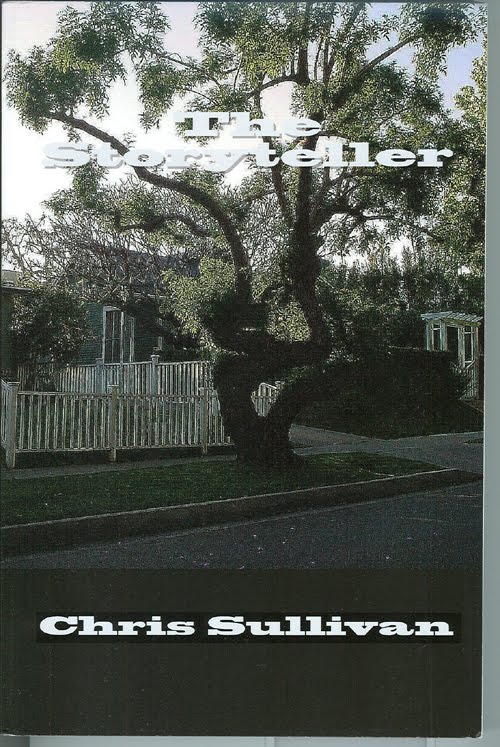
Of course I have changed the title of my novel from The Storyteller and on Amazon.com you can see excerpts from it under the former title. In fact on Google they have the whole novel somewhere in their library of all books ever written – or whatever it's called.
Bloomsday is taken from the novel 
Ulysses which takes part in the day of June 16th 1904 and the leading character therein Leopold Bloom – not Leo Bloom from The Producers by the way.

James Joyce set 
Ulysses on June 16th 1904 because that was the day he met the love of his life Nora Barnacle; well he did not actually meet her on that day but it was the day they first walked out; it was the day she did a small sexual favour for him which might have affected his mind; he thought if she can do that for me on the first day she would do it for anybody. It wasn't necessarily true, of course – what do I know? - but it led to bouts of jealousy and anxiety from the genius Jim which would upset Nora.
They left Dublin soon after and never returned to live there again – everything he wrote about Ireland he wrote from abroad. At one time they lived in London where they married – some time during the 1930s.
There is a lot of James Joyce in my novel; number one the leading character writes a play about him, there are various references to 
Ulysses and the prologue is actually a pastiche of his first novel A Portrait of the Artist as a Young Man. That novel starts off with 'Once upon a time and a very good time it was there was a moocaw coming down along the road and this moocow that was coming down along the road met a nicens little boy called baby tuckoo . . .' and my novel starts off with 'Once upon a time and a long time ago it was in the city of Dublin in the land of Ireland there was a man with a pen' – and then there are other phrases I use in the prologue; Joyce talks of the world being 'a great ball surrounded by clouds' and I use that phrase adding 'as the great man once said' and he also uses the phrase a 'greasy leather ball' which I also use to denote, as he did in the novel, the way some boys from the past were forced at school into sport and I remember at school trying to head that greasy leather ball they call a football.
But even though James Joyce is a subject of my novel I don't think I am influenced by him at all. I know every writer, especially the Irish ones, feels James Joyce looking over their shoulder as they write but I am more influenced by Charles Dickens, if anybody, or even William Shakespeare. Now that might sound as if I am comparing myself to Shakespeare and Dickens but nothing could be further from the truth.
I can't remember ever learning anything at school; I never did any work at school I didn't have to and the only subjects I liked had to have a story to it – like stories from the bible; the English Literature was non existent unless you want to count Seven Pillars of Wisdom by T.E. Lawrence (Lawrence of Arabia) being passed from pupil to pupil to read out loud in schoolboy monotones and turning into Seven Pillows of Sleep for me!
So I didn't do English Literature till years later after I'd read lots of books and even been to drama school – I was a mature student studying D.H. Lawrence (surprising what one letter makes), William Golding and First World War Poetry by a teacher who loved the subject.
At drama school I was reading and trying to perform Shakespeare when I hardly knew English!! Of course I was in a lot of trouble as I hadn't heard of any of the plays or even the characters and the only way I could even understand it was by sorting out his use of parenthesis and semi colons; without sorting those out I would have been up the creak without a paddle.
I eventually did Shakespeare professionally although not as much as I would have liked to; I earned a lot of money once doing a Shakespeare play for the BBC, even though it was a small part, and when I first came over here I 'workshopped' Richard III playing Richard which went very well – I guess some of the training must have gone in.
When I write I bear in mind Shakespeare's use of the English language – again I am not comparing myself to the greatest genius that has ever lived or the two greatest novelists in the English language, but I would recommend anybody who wants to write to follow them as opposed to Dan Brown.
So remember it is Bloomsday; there will, more than likely, be something on near you, if you look for it, and if you are in Dublin go on the walking tour if you can; go to Mulligan's Pub in Poolbeg Street and drink a pint of the best Guinness in the world and then come back and read my blog about my two leading characters celebrating Bloomsday in Los Angeles which was based on a true incident in 1995.

CHRIS SULLIVAN. LOS ANGELES 2010.


Tuesday, June 13, 2023

High Noon at the loo.


Do you know, I often wonder who are the 346 people who read my blog today. There is no way of finding out. 

I can see where a lot of them come from and what search engines they use, but there are only so many actual posts they show. There could easily be one view on every post I ever wrote – that's not true as there are 80 hits from the first ten posts it shows,

I was looking at a movie, the other day, and realised I went to the movies in my mother's arms. I'm sure of it, if not I went as a toddler in Ireland. 

When we lived in England we would go back to Ireland for the summer, to Finglas, and on Saturday mornings we would go to the local little picture house, I don't remember if it was a put up temporary job cinema, but the film would break down constantly.

When it did, it was the best part of the morning, because the projectionist was very funny – who knows, he might have become a comedian later in his life; when the break was mended, we knew the film was about to start as the lights in the cinema went slowly out, then the screen would be lit and then . . . the film would come on. 

But the projectionist would be telling us jokes and making us laugh and then he would say 'all ready to go' or something like that.

The lights would go out, the screen would be lit and then . . . ha ha ha – it was him laughing.

Sometimes he would get us to count 10, 9, 8, 7, 6, 5, 4, 3, 2, 1 and then . . . the same laugh again. I think we even sang songs. I don't know where in Finglas it was but it was there.

As a child going with my mother, I didn't know what those people on the screen were, whether they were some kind of robots, or dead people or some kind of otherland where creepy crawlies would creep about, where people could fly and die. - die for a living, that's rich.

When I was at junior school in Birmingham, I would go to my imagination and think that everyone in the class was an actor, waiting to be called for our next role, rather like some agency, now I think of it, and then I would ask to go to the loo and that was some kind of calling to go and act.

Into the playground I would go, which was a hard surface – tarmac – and at the other end of the playground were the boys' loos. 

Very slowly, and in a Gary Cooper, type of walk, I would walk to the loo bum buppa bum buppa bum buppa bum.

Such was life in my mind in those days – and I've already mentioned the Superman cloak under my bed in a previous post.


Saturday, June 10, 2023

Red Channels


I wrote this in 2010, when I was living in America, and I noticed, for some reason, it's had quite a few hits recently – in fact quite a few from other posts too in 2010.

By the way, for Liberal, read left wingers. Liberals in the UK are to the left of the Conservatives and to the right of Labour.

Red Channels; now what does that mean to you? It didn't mean anything to me till the other day when I heard a piece on the radio about the subject.
Red Channels started sixty years ago in the television industry; it was a booklet delivered to the desks of media executives in 1950 exposing writers, actors, journalists and directors as being soft on communism; 151 individuals in total.
The introduction to Red Channels, running just over six pages, was written by Vincent Hartnett, an employee of the Phillip H Lord agency, an independent radio-programme production house, or "packager." Hartnett later founded the anti-Communist organisation AWARE, Inc.
On the list were people like Orson Welles, Leonard Bernstein, Artie Shaw, Lena Horne, Marsha Hunt and many others.
This was separate from the House Unamerican Activities Committee and McCarthyism of the time and the executives that received the Red Channels pamphlets very rarely admitted to receiving them or even saying that such a thing as the Red Channels pamphlet even existed.
In 1950 Marsha Hunt's career was in the ascendancy with the three big television networks competing for her services but after a few months of waiting she called her agent and was told the news that she was on the Red Channels list.
Eventually she found what she was being accused of and it was because she had signed certain petitions, had said certain things, had attended certain meetings and was considered a Communist sympathiser.
On her own volition she wrote to the networks and told them that she was a 'good' American and not planning to overthrow the country but to no success.
Jean Muir was cast in a series for NBC called the Aldridge Family even though she was on the Red Channels list and even went into rehearsals and recording but so many protest letters went to the sponsors about her that, even though it was embarrassing, she was dropped before the first programme was broadcast.
The Red Channels blacklist was eventually broken by a 1962 lawsuit.
Now what does this have to do with the price of toast I hear you asking?
Since being here in America I have found only one person who agreed with the McCarthy witch hunts of the late forties early fifties; I must admit I have only known a few right wingers but fifty or sixty years later you would think there would have been more survivors of those sympathies; I have heard nobody being interviewed who sympathised with McCarthy although I'm sure that many still exist.
At the time of the McCarthy witch hunts Hollywood produced movies with titles such as I Married a Communist and I Was a Communist for the FBI, in fact between the years 1948 and 1954 more than forty anti-Communist films came out of Hollywood.
In the 1951 Mickey Spillane novel One Lonely Night the hero, Mike Hammer, says “I killed more people tonight than I have fingers on my hands. I shot them in cold blood and enjoyed every minute of it . . . They were Commies . . .red sons-of-bitches who should have died long ago”
Liberals often criticised the committee, but in Congress, Liberals and Conservatives alike voted to fund it every year. By 1958, only one member of Congress (James Roosevelt) voted against giving it money.
The above information about Hollywood, Mickey Spillane and Congress, I got from Howard Zinn's powerful book A People's History of the United States.
A wonderful book and in it are also facts about the early visitors to the Americas and how Christopher Columbus and his men ill treated the Indians here and in the West Indies.
In the West Indies they encountered a friendly people and abused them; all they wanted was gold for their King; the invaders would sharpen their knives and try them out on the natives. There was one case of a couple of Columbus's men encountering a pair of twin youths with a parrot who beheaded the twins and stole their parrot.
The incidents in the book are well researched and documented and I have to ask why men would do such things. Why would the whole nation believe McCarthy when he was obviously so evil?
Why would so many people follow Adolph Hitler? An unattractive monster who told the stock market and the ruling classes what they wanted to hear.
Isn't it very easy for me to look back with 20/20 hindsight and be so cute?
The people who came with Columbus knew no better but wouldn't you think they could have a modicum of empathy, sympathy or just a slight regard for their fellow man? Maybe they didn't think they were fellow men but a decent person wouldn't even do that to an animal.
And aren't we so clever looking back at the Communist witch hunts and saying that we wouldn't have had anything to do with it.
The people of the time were brainwashed with the continuous articles about Communism – I mean even Captain America was hunting Commies.
So what are we being brainwashed with these days; we live with a cancel culture, pedantic (woke) actions which are ruining other careers

Sunday, June 4, 2023

Another Actor Story


Here's a little story – true that it's true - but no names and no pack drill.

It might be true to say that sometimes, some years ago, I was recognised by most people in the street. I won't say which street but there we go.

This little story, takes place in a city or a town in England, where I worked some time ago. I moved there, with my family, and appeared in 13 plays at the Repertory Theatre, in which, I played mainly the leading role and a few cameos – at one time, during playing the Lion in The Wizard of Oz I was asked to do five episode in TV soap.

I had to ask the director of the theatre, if I could miss the last Saturday matinee to rehearse the TV role and, to the gratification of the under study for that role, not my under study, you understand, but the Lion, he said it was okay.

When you work as an actor in a medium sized town or city, a lot of people recognise you in the street, so this added to the street recognition experienced to my prior contract with the theatre, which had been dying away.

After the TV job, I returned to the theatre and experienced more people at the stage door and the increase sales of my photos from the theatre.

I found they were selling my photo when I was presented by the odd person with a copy for me to sign.

I stayed on in the place where the theatre was when my contract at the theatre ended.

There were other actors living in the vicinity and one owned a huge Victorian house near the town centre and would throw the odd garden party. I knew him as I had seen him on TV, and chatted to him on the train into London, a few times; he always talked about his daughter and the connection to her in a kind of paranormal activity like a sixth sense.

When I was working at the theatre, he and his wife, would host garden parties and they were always lavish, with plenty of champagne and people milling around both the garden and his beautiful house with wonderful wooden floors, French windows and pieces of garden sculpture scattered around.

How much did it cost – well, I never: cheaper than the house we had bought on the outskirts of the town – well more than outskirts about ten miles.

I saw him a few times, around the town, and one time, about five years after I left the theatre, he called from a very smart, black Mercedes. I went over and popped my head inside and his family were there. I think I remember his wife as she hosted the garden party at his large house, and he had a couple of daughters.

He told me he was playing John Proctor in the Arthur Miller play The Crucible at the BBC. The starring role, in fact, and no wonder he had a nice posh Mercedes.

His reputation, before this, was that they struggled financially, as most actors do, but they lived a very lavish life.

Once in a while I would bump into the local newspaper critic, who had given me rave reviews; when I did the play Night Must Fall he said I was a bulwark of dramatic strength.

One day when I was walking to the local railway station, and not feeling the bulwark of dramatic strength, I met him in the street and he said 'how's it going Chris – what are you working on now?'

'I'm just off to the BBC.' – mistake!!!!

'Oh, what's happening there?'

'Dixon of Dock Green, we hope.'

'Good luck with that.' he said as I hurried towards my train.

I actually did get the role that day.

A few days later he mentioned it in his newspaper column and a few days after that, I received a letter from my bank manager 'I see you are appearing in Dixon of Dock Green – does this mean you can pay some of your overdraft off.'

I wrote back and told him 'not to believe everything in the press.'

When I finished Dixon of Dock Green it didn't make any difference to my overdraft.

I met the actor, who drove the Mercedes, on another trip to London and again he spoke about his daughter's sixth sense saying she said a week or so before he was offered the role in The Crucible, she had dreamed he would be offered a job where he would be surrounded by witches.

Work for me, at the time, was sporadic. My wife was working as a nurse at the local hospital and the weeks turned in to months and then years with the odd job here and there – survival but few cigars.

I was on my way to the hospital, one day, and an old battered Mercedes pulled up along side and it was the actor who I had last seen on the train. He asked me where I was going and he said 'hop in!'

As I was sitting next to him, I heard his exhaust pipe rattling as we travelled along and it was obvious that his Champagne Days had been put on hold.

I was going to our car which was parked in the hospital car park; our car, which was a tiny Ford Poplar, had a five pound note stuffed into the exhaust pipe which my wife had left there.

'We shouldn't be doing this' he said ' you and me should be doing better things than fishing a five pound note from . . .' he looked at our car ' – well, it's hardly a car.'

I didn't say anything about the heap of junk his car had become.

At the time I was attending classes at a local university. I was doing an 'O' level in Sociology and an 'A' level in Film Studies. So that's where we went as I knew the canteen was cheap, had excellent coffee and we could talk

His eye lit up when he saw the young girl students and he said 'you need to watch yourself here.'

I never saw him again but one day, many years later, I read that his daughter, who was an actress, had been involved with a very famous comedian when they both worked in a panto, and they were having an affair. it was all over the press. She was seventeen and he was sixty one. He, in my opinion, was as funny as tooth ache, five foot one and a lecher.

It must have broken her parent's heart.

I did a job at Beaconsfield Film Studios, which was occupied by The National Film School. It was a famous David Hare play and the students were taking lessons from a top film director. I had to be one of the actors they could practice their directing with.

There were two different classes: one was taken up with a certain part of the play and I had a scene with a young girl in another section of the play. It didn't matter how old we were as the performance wouldn't be going anywhere, it was just practice for the paying students.

We broke for lunch and went to the local pub and as we walked up the street the girl, whom I was working with, said 'I know you.'

'Oh' I said.

'You knew my dad. You popped your face in to our car one day.'

She was the daughter of the Mercedes driving lavish living actor mentioned before. 'wow' I said.

I was a little bit embarrassed, because I knew about her, and I also knew a song the comedian had sung and which was a hit song.

Out of my embarrassment and for some stupid reason I started to sing that song . . . . I don't think she heard as I stopped, as soon as I realised.

The actor, her father, died around the age of 60 – I never saw the girl again.


Saturday, May 20, 2023

Pronunciation.

                                              BILLY CONNOLLY
 

I have put this up before, some years ago, but I came across it and wanted to put it up again:

I remember in the wonderful tributes to Seamus Heaney, his pronunciation of the wh words; whale, wheat, why, when and the wonderful while or whilst etc.

Seamus pronounced 'why' correctly, as most of the Irish do as hwahy try it!

The aitch is on the breath of the double-u as the lips pucker themselves together for the double-u plunge – fun isn't it?

By the way, as we are at it, aitch is pronounced aitch – not haitch as I have heard a lot these days.

The other place where it's pronounced correctly is Inverness in Scotland; in fact it is said that the best pronunciations of English are in Dublin and Inverness.

Wouldn't believe that would you?

But that spreads to the rest of Ireland and Scotland; thick accents notwithstanding.

The leader of Sinn Féin was on the radio with a vocabulary to die for and using it like a beautiful tool to confound, mesmerize and confuse English journalists into hypnotic states.

When people like Noah Webster come along and try to change the spelling of the words to make things simple for the Americans they are obliterating the origin of words. I mean why did he take the 'u' out of colour; the 'u' tells us where it came from – 1250–1300; Middle English col ( o ) ur Anglo-French ( French couleur ) Latin colōr- (stem of color ) – I mean why didn't he leave things as they were? It was a pain in the arse, when I lived there, that I eventually ended up confusing the two.

Someone said to me at a party one night that the 'U' was only put in to words by the English to be flashy or pedantic; I didn't comment on that at the time and I won't now.

When I said 'people like Noah Webster come along' I mean what I say 'come' along, present tense, as they still do; I knew a teacher there who wanted to see Americans spell catalogue as catalog – now what looks better on the page in this day and age of shortening everything, BTW, the former or the latter?

Yes, BTW, my little joke – or joak, to use a private family joke!

My daughter was talking to one of the school mistresses at her son's school, the other day, and she asked her about the basketball court and the school mistress said - don't you mean the multi-sports hall?

Give me a break!!

Seamus Heaney also pronounced Drogheda the way it's spelt without the 'g' but the very posh English say Droyida – they also pronounce Daventry as Dayentry and a town in the north east of England in a funny way too but I think they do that as a test for 'pretenders.'

Do people in other languages have this kind of trouble? I mean do the Mexicans have Mexican Spanish and the people from Quebec and various African countries have their own French spellings? Are they allowed to say actress in their languages unlike us; The Guardian always refer to females as actors – I know a lot of women don't like the word actress but it isn't exactly a word like poetess or authoress is it? It always seemed silly to me, when old dames die like Dame Wendy Hiller, being described as the actor Wendy Hiller. It seems okay for someone like Germaine Greer or even Vanessa Redgrave but Wendy Hiller?

I was listening to Billy Connelly on the radio and he, as a Scotsman, pronounced his 'wh' properly; the big Yin is not too great at the moment with his prostate cancer and his Parkinsons but soon responded when Michael Parkinson, an old chum of his, said that the big Yin wasn't compos mentis.

Ironic isn't it, and he would point it out, that he shot to fame on the Michael Parkinson Show in the 70s. 

He came on to that show, the first time, and told one very famous joke and that joke, that one solitary joke, made him a star.

When he got back to Glasgow, after the broadcast, he was spotted at the airport and a crowd of people saw him and started to clap; there were only about 4 TV stations in Britain at the time and he hadn't quite reckoned how many people were watching and how he would affect people. 

I remember thinking he was the funniest person I had ever seen and when I went to see him live in the theatre he was even funnier; he wasn't restricted by language and he could say anything he liked and that's the problem with censorship – it's for the narrow minded; I mean what's the matter with a word? What harm can it do? If we welcomed words, rejoiced in their original spelling and meaning, things would be easier for everybody; there is not one name you can call me which would cause me offence. I know I'm white, reluctantly middle class, medium height to short, regular looks but I've been called lots of things in my life. When I first started on the post office the old sweats would ask me if I was going on my holidays – they were referring to the bags under my eyes and I hadn't quite worked out what they meant.

Then I was called the Mekon (I have a big head), the green man (I was usually pale) and the incredible hulk. I didn't figure out the last one till fairly recently; apparently I looked like the guy who played him on TV in the 70s – the David Banner side to him.

I do feel it for Billy Connelly as my mother had Parkinsons and I do realise that the Americans, with their lack of patience for foreign accents, have never seen him at his best but I have and I'm not putting that joke down here – you can look it up.


Monday, May 15, 2023

Why - part 2; Moi.


There I am – up there at the top; a little boy then, I was, probably totally confused with a Dublin accent and living in Birmingham. 

I can't remember where the actual hard copy is now, but I think it said on the back that I was a little more than three years old – but it looks like a school photo so why would I be wearing a tie?

I hadn't learned to read, I don't think, and I couldn't see the notice on the corner of Vincent Street and Moseley Road; a post card in a window which was offering rooms to rent: no blacks, no dogs and no Irish. Very famous now, I know. I certainly saw it when I learned to read and at the time of the photo I probably thought we were in Ireland. 

We lived in Birmingham and sometimes we would go to Sussex on our holidays, to my dad's brother Danny and his family, and the kids there would say 'where do you live' and I would say 'England' – always used to say that when we were in Ireland – but in Sussex they said 'this is England' which totally confused me.

I was only a little fella there, and maybe I was getting used to the fact that the little fella gets all the fuss, the extra piece of cake, first in the queue behind the bar, although I didn't go into many bars in those days; but who knows. 

I was always a bit on the small side but I grew to the height of my heroes, Paul Newman, so I was, and always, have been, more than satisfied with how close I was to the sky. 

I remember distinctly my first day at school because I didn't want to go and never liked it – I've said this before. Miss Jones, my poor teacher, carried me in and I was kicking and screaming – this lasted right up till the age of 16 when Miss Jones had enough – my little joke, sorry. She became Mrs Wailing and, I have only just noticed, that the name described me at the time.

My mother was a seamstress in Dublin – in Ringsend – and she made some clothes for me – probably the braces above – and I remember showing one of the teachers my new jerkin she had made for me, and the strange look on the teacher's face as she looked at me as if I was showing her a piece of wet fish I had found in the playground. The hard tarmac playground.

We did a play, 'The Golden Goose,' and most days there was a rehearsal. I say 'we did the play' but I wasn't in it.

But I loved it.

I would sit in my seat every day to watch the rehearsal and knew every word of every character. The three girls I liked would enter and the first one would say 'Oh! A golden goose, please let me have a feather.' And she would rush forward and grab a feather getting stuck to it; as it said in the script. In a flash the other two girls came in: number two 'me too, me too' and the third 'and me.'

And they were all stuck.

Every day I watched. And every day I loved it from my seat.

On the night of the play, someone dropped out. I didn't give it a thought – but I do now.

One of the boys – Robert Mapp – was asked to play the vacant role, and he said 'but I have this costume on' – I can't remember the top but he was wearing yellow trousers.

'You can do a quick change' said the teacher – and he had plenty of time.

Sitting in the audience I watched with them; I knew all the lines still, I knew what was going to happen next – 'please let me have one, me too me too, and me.'

Robert Mapp took his exit and I waited for him to come on with his quick change and on he came – still in the same yellow trousers from his previous character.

I will never forget it and if any of his relations are reading this – no offence.

I only thought of the teacher, recently – she saw me, every day, sitting in my seat, lapping up the play, knowing every role and movement and I now wonder why she didn't send me on. Maybe because I probably didn't speak right, maybe I was too small.

I did find a photo of some other play we did where I was a ruffian and I was standing with two big boys, threatening the guy behind the stall. On the photo I could see my little fist up, threateningly, behind them.

Size not being everything I remember when I went to the secondary school at the age of eleven.

That was a boys' school and I went for a trial for the football team. They asked me what position I wanted and I said centre forward. 

Someone said 'No. Roger Munday will get that' but I went for it in any case.

I touched the ball once; it came to me when I was around the half way line. I stopped it and was about to kick it over my head and it hit me in the chin.

When I came off the same guy who told me about Roger Mundy said 'you only touched the ball once and it hit you in the chin.'

It must have been funny to see me when a corner was being taken. Standing in the penalty area with all the big kids as the ball came over, half the size of the others, trying to figure where the ball was going to land so I could head it into the goal, not realising that if the ball came and hit me on the head, the greasy leather case ball would probably knock me out.


Friday, May 12, 2023

Why?


 Do you know I often wonder why I write this blog; someone, once said to me, don't wander too much you'll get lost – but I digress. 

I have always felt the need to write all the time. Once in a while I would be out with my pals – I called them mates, in those days – and I would bring my pen out and a piece of paper and write something.

Two things here: number one ' called them mates in those days the reason I changed to calling them pals, is when we lived in America, and I was there for 17 years, I would use the word 'mate' and some people would think I was referring to my wife and number two – I would bring my pen out – nothing significant there but have you noticed the Americans usually say 'pencil.' I remember Shelly Berman, in one of his famous sketches said 'hold on I'll get a pencil.' In America people would ask that as opposed to 'do you have a pen?'

Now where was I?

Yes the reason for writing this blog. 

Well it's not for brownie points, some kind of kudos or status. It's just a need; I never plan anything, I suppose it's probably what they call stream of consciousness – by the way, again: for some reason the Americans pronounce kudos as Keudoze as if it's plural. It's Greek so it's KudoSS.

Getting back to the thrust – hey I don't know what's coming so don't ask – in the beginning I wrote a novel – well that was years and years ago and it was called The Killing of Mister Wilshire – I suppose there must be a copy somewhere but I remember at the end of most of the chapters it said 'fowl play was not suspected – 'three chickens were released after questioning.'

It was my little joke, of course, but thinking about it I would like to take a look one day and see some kind of surreal adventure in silliness – I think I remember writing a line like 'I would look at him as he told me off – my big bully of a boss – and then I would look at the side of his forehead and see where I would hit him with the stapler I was holding, the stapler of which he was laying into me for not refilling and . . bla bla bla.

The novel I actually did write, later on, when I had Graves Disease in Los Angeles, took me a few years to write and then some. There are many drafts one writes and each time it has to be proof read. Then another draft and, even though I am a big fan of Tom Hanks (who must sign his autograph thanks and I have to ask myself is he the new John Wayne or Pat Boone) he is now a novelist. I mean he is, obviously not a polymath, but he didn't get any rejections for his novel. He realises that this is unfair when, at the same time, young writers don't even get their novels read by a literary agent.

It seemed like a brick wall when I wrote my first one and then Amazon published it. They do a great deal for writers even though they are criticised but it's really only one step above self publishing  . . . lots of great writers, in the past, self published their first novels. It cost them a lot of money, having to get a certain quota printed. Amazon have a policy of P.O.D. Print On Demand.

So here I am down here on the page and I haven't even started to say what I wanted yet.

In 1971 decimalisation came to the United Kingdom – some time in February, and on that day the post office was on strike. I can't remember if it was the whole post office or just the postmen – I suppose they are post persons these days – and on that magical day in that February long ago no postage stamps were franked with the historic date – no first day covers – it must have been a bit of a pisser for philatelists. 

I didn't mind the change to money but when the UK joined the Common Market, as it was called then, Valued Added Tax came to be – VAT.

Everything had to be changed as decimalisation meant things had to be counted in tens. 

We are not in a world of tens. There are 24 hours in a day. 60 minutes to the hour. 60 seconds to the minute and so on. Our heart beats at that pace like music. 4 beats to the bar, the 'middle 8' in pop music. 

When CDs came into our lives the beat was constant exactly every time you played the song. When Carl Perkins wrote Blue Suede Shoes he changed between 80 beats to the minute to 100 and down to 60. 

Add to that, vinyl records were not constant; 45 revolutions per minute, 33 or 16, didn't always hit the mark and after a while it became clear to cardiologists that the constant beat interfered with the heart beat of the listener.

I am not writing an official paper or report so you'll just have to believe me.

I remember saying to my wife, that if the powers that be could have their way, they would decimalise time and then I found out today. that they did – in 1792 (in Paris) – they, the magic 'they' - invented the decimal watch: 100 minutes to the hour, 10 hours to the day and how long did it last? 

Not ten, but two years.

That's enough, isn't it, so I'll quit before something else comes to me.


Saturday, May 6, 2023

The Coronation


It seems a lot of Guardian journalists are writing anti-monarchy articles which makes me wonder if it's Guardian policy. A Canadian friend of mine circulated a Guardian story by Stephen Marche (in London and Toronto, no less) with a so called view from Canada it reads 'Viewed from Canada, the coronation is especially absurd;'

I did write to his readers and I got a positive response to this:

I'm not a royalist who collects all the bits of gossip about the royal family, still moans the dark forces that killed Diana, but I like and understand the monarchy, particularly when you think of the alternative - if you are interested here's what I said:

That is a cynical item from a really good newspaper who have decided to take this view over the last few months with their new woke editor. I knew the worms would come crawling out from the skirting boards as soon as the Queen died, but Charles is a good bloke - a hero king who has spent his life taking care of others, launching the Prince's Trust which helped - and helps - millions of kids, has been 'green' since before climate change was even mentioned and is probably the cleverest and most experienced monarch this country has ever known. He was a jet pilot, helicopter rescue pilot (like his son) international polo player and a ladies' man, to boot.

The money he is supposed to have is not available to him to spend as he wishes - this is not the USA or some banana republic.

If the cost of the coronation was divided between the population we would all get .50p - half a pound equivalent to 50c in American money. If they were to scrap the monarchy to save money it would contribute .002% to the economy in other words nobody would notice it.

When I came back to London after experiencing the elections of George W. Bush, saw how a crazy lawyer went after Bill Clinton and, from a distance, the election of Trump, I now recommend a monarchy.

They have been there for a thousand years, they are steady, they cannot spend their own money and are viewed rather like a real life Truman Show.

Millions turn out to see them, everywhere they go and, as Billy Bragg said the other day, we don't want some superannuated old politician launching the ships.'

That it what I said but I ask you to look at the turn out today; try and book a room in a London hotel and just see how much the coronation adds to the economy of London.